It is Tuesday 27th February, 2018.
Joseph picks me up in his taxi at 8am for the four and a half hour drive to Kajuki. Good roads all the way. It is very built up and scarcely recognisable through and beyond Makuyu, where I used to play tennis matches in days gone by. Even the vast acres of rice in Mwea are part hidden behind rows of roadside buildings. It is mid-morning. Mt. Kenya shows briefly stark on the skyline, but is too distant for a photo. We stop at Barclays Bank in Embu as I want to cash some money to pay Joseph for the journey. The ATM machine will not accept my card, so I wander into the bank for help, braving curious eyes. I approach a large lady sitting lethargically behind a desk.
“Have you tried using a credit card?” she mumbles, as if I should have known better. Obediently I go back to the machine on the outside wall. She’s right. I pay Joseph, and we continue our journey. The road is punctuated by frequent bumps and rumble strips, forcing the traffic to go at a reasonable pace. The further north we go, the more boda bodas flash past.
We turn onto a newly tarmacked road, which peters out the final few kilometres before Kajuki village. The deviations are dusty and extremely rough. I learn that the contract is due to finish next month but there is no sign of any construction activity.
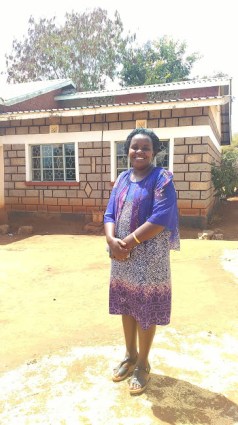
A lovely greeting at the priest’s house from Veronica the project leader, beautifully dressed in blue. We wait in a soft breeze on the veranda and the cook serves us a simple lunch of vegetable stew, rice and the best chapatis I have ever tasted.


I do a quick tour of the project goats, pigs and cows, then Veronica takes me to the adjacent school. It is half-term, and nobody is there. “We have nearly 400 pupils, she tells me, both day and boarding.
David Baldwin’s charity, St. Peter’s Lifeline, has built four schools in the area, and the people clearly love him dearly. Forty children to a classroom, which are very basic and sometimes crumbling with use. The new school meals project is drawing in the children from far and wide.

Kajuki Eco Lodge Reception
I retire to the Kajuki Eco Lodge for an afternoon siesta and I am welcomed with a soft drink, and lovely cold towels to soothe my brow. The attendant leads me to my room, turns on the fan and goes. The double bed is inviting, and I am pleased to note the mosquito net and coils but see no matches to light them for the night. Loud music blares from the public rooms all afternoon, but I am too tired to get up and ask them to turn down the volume. After a while I have a refreshing shower under inaccurate spray from an erratic head. The toilet lid is broken, and the window latches don’t hold. But there is a plentiful supply of very necessary drinking water.
I wander into the public rooms by the back way, through the empty kitchen. Loud speakers are still blaring over the deserted gardens.
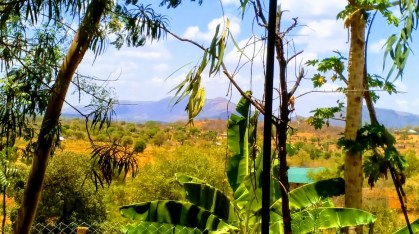
That evening I say goodnight to Veronica, who leaves for home – over an hour’s drive away on a rough track in the direction of Mt. Kenya. She offers to bring me freshly picked avocados and mangos from her trees in the morning. I spot some golden weavers, hadada ibis, wheatears, and I think I hear an oriole. Fires burn on the far hills. It is probably charcoal burners, I am told; dangerous in this severe drought.
Father Frankline hosts me, his assistant priest and my driver Joseph at another very tasty African meal at the presbytery. It is my first experience of matoke, green bananas which when cooked taste like mashed potatoes. Father Francine encourages me do most of the talking, and I learn that he is the third of nine children, only one of whom is a girl. He went to seminary for nine years in Langata.
I sleep reasonably at the Eco Lodge on the spacious bed under the net but have to leave the bathroom light on as there are no bedside lights. Nor is there a waste basket in the room…

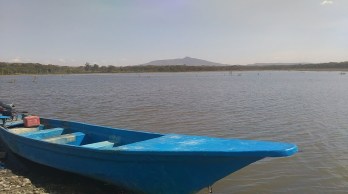

 Although the heat of the day beat relentlessly down, I went on my favourite walk round the island, my binoculars dangling from my neck. There were hardly any birds to be seen, and I retreated to the clubhouse for a glass of water. A sudden gust of wind caused havoc among the boats. Several capsized, to the consternation of the parents watching, helpless, from the shore, and the instructors brought them in for an early end to the afternoon. We left them to it, and checked in at Carnelley’s camp, further round the lake.
 was an oasis after the heat and dust of the road. Our banda was quaint. We enjoyed the solar-heated showers; and reclined on a padded seat on our veranda behind the campsite, which overlooked the lake through the fever trees.
 We drove to west side of the lake for supper at the Ranch House Bistro on the terraced lawn overlooking the “little lake”. My beef stroganoff was delicious. In the field below us Impala, warthog, guinea fowl, and vervet monkeys mingled. As evening fell, a small family of zebra passed through.




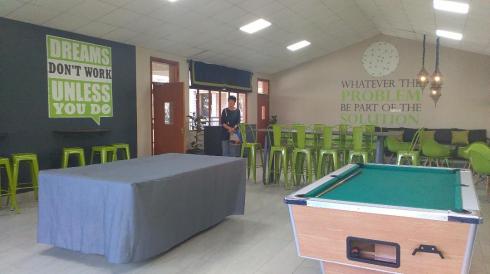 I wander towards the building, peering into the dining hall laid out with rows of seats facing a rostrum. I climb the stairs to the second floor, smelling new paint. The common room is pleasantly decorated and furnished. The study room equally well designed for groups or singles. Classrooms await action. The students will start using all facilities next week, I am told by a passing teacher.
 By the time I complete my solitary tour, others are being shown round. I pause to take a photo of people arriving under the banners below me, then descend the stairs to claim a welcome soft drink. There are no chairs. I go to sit down in the hall, but some students wander in, and I am politely directed back outside.
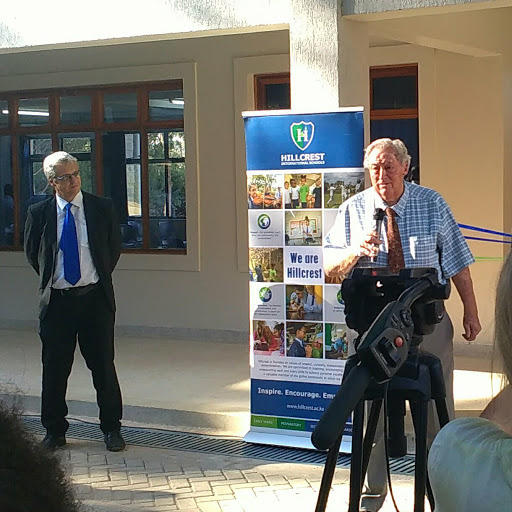 At last the doors open and Leakey reappears. A remarkable man, able to walk by himself




 In The Things We Leave Unsaid, Pete – a man who thinks with his stomach – happily selects Noosa as his preferred destination for a second honeymoon with his sweet wife, Clare, who hasn’t had the best of times. He toys between choice destinations to eat, while they enjoy walking along the beautiful Hastings Street, complete with glamorous boutiques.
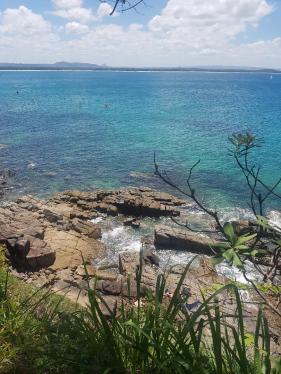 However, when Pete goes for a swim at Main Beach, will his hope for a second honeymoon end in tears?

 Jane Bwye