A Rookie in London

Thought you might like a change from Africa…. Here is an excerpt from Breath of Africa, to wet your appetite in case you haven’t read the book already. If you have read it, I would greatly appreciate a review on amazon – only 11 more reviews are needed to reach the magic number of 50, when amazon will raise its profile on their website, I am told.

It is the late 1950’s and Charles arrives in London for the first time on his way to University:

***

It was afternoon. It must be afternoon. The sun was thirty degrees from the horizon and yet his watch said ten o’clock. It was going to take time to get used to this strange phenomenon. That orb, weakly glowing through the smog, seemed to remain stationary all day.

Wet glistening streets slid past. The bus came to a standstill and men on bicycles weaved in and out of the traffic, incessantly ringing their bells. Monotonous brick buildings crept by, covered with grimy filth. Did people really live there? He stared at the terraced houses lining the street. No earth, no trees; just a front door and the pavement. He thought of his home, of the patches of maize and beans, of the endless sweep of the African plains, and wondered how anybody could survive in this teeming hurrying metropolis.

At the terminal, there were more people than he had ever seen in his life. He glimpsed one black face.

“Jackson!”

Waving frantically over the crowd, Charles pushed his way through to his brother, embracing him thankfully.

“Where’s your baggage?”

Noise, shouts, bangs, rushing figures, running feet, waving arms. No peace, no quiet, no rest.

A taxi took them to The Strand Palace Hotel. Charles trod gingerly over the plush carpets and wondered at the white porters, long corridors and dark rooms, comparing them to the mud huts he had left behind.

He flopped onto his bed, ready for sleep, but Jackson roused him.

“Come on, Charles! It’s only morning, you know. You’d better start shopping if you want my help as I have to fly to a dig in the Middle East tomorrow.”

He followed Jackson into the street, stopping once or twice to stare at the hundreds of people in overcoats that raced past. Footsteps pitter-pattered on the pavement in staccato against the steady roar of traffic, and only one or two individuals in that mass of humanity raised their heads to glance back at him.

They joined a queue at the bus stop. A double-decker loomed up and Charles was caught in the rush towards the entrance. For a second he felt at one with the surging throng and then, lodged in a seat, became a spectator again.

The way these people formed queues on any pretext astonished him. And there was a definite code among them too, for when somebody tried to push in they were severely relegated to the back. Nobody showed interest in anybody else. His eyes roamed over the pale faces half-hidden under soft caps, the pinstripe suits and shiny shoes. His hands strayed self-consciously into the pockets of his mud-coloured windcheater and he shivered. But nobody noticed.

In a department store, Charles searched doggedly through the hangers for a pair of warm slacks. A pimpled assistant spoke at his shoulder, and a torrent of unintelligible sound filled Charles’s ears. He turned to Jackson in bewilderment.

“What language is that?”

“It’s only cockney – London speak; he’s asking what you’re looking for.” Jackson addressed the man politely, “We’re looking for trousers with turn-ups.”

The youth produced a pair on special offer. Charles walked to the cashier’s desk, two people rushing past him on the way. He emerged from the queue, his pocket heavy with change.

“There’s one thing you must always remember, Charles,” Jackson warned as they rode the lift to the rooftop café, “the UK is not Kenya, where most people are friendly. Nobody here talks to strangers.”

What a place. How can you make friends if you can’t talk to strangers? In the café he studied the people reading their newspapers. One man stretched for the sugar.

“Excuse me.”

“Sorry.” There was no interest. Why bother to come here at all? Ignoring Jackson’s warning, he caught the man’s eye, and cleared his throat.

“Do you live in London?” The man muttered beneath his breath, then folded his newspaper, drained his cup and left the table, tripping over in his haste. Charles, grinning, glanced at Jackson.

“What did you think you were doing?” Jackson was laughing at him. “If you must talk to strangers you’d better learn to discuss the weather; it’s a safer topic.”

Out on the pavement his steps quickened and there were fewer collisions. There was something in this hurry he supposed. But hopefully Oxford would not be quite as bad.

***

Amazon uk link      Amazon.com link
breath of africa - 902kb.jpg

Posted in Breath of Africa | Tagged , , , | 1 Comment

Setting and Stratification

Welcome to Scott Simon, a multi-talented musician who has dared to write books. I hope you enjoy his account of growing up in New York as much as I have.

Chicago- Me and Keith re-size

Thank you for inviting me to discuss setting in the writing process, Jane. Your blog is a treasure chest of ideas and experiences. I hope my small contribution adds to the discussion.

The Simons settled in Five-Points during the 1830s. My love affair with New York City began in 1963. The school year had ended and autumn sat somewhere in the distant future. My father, a fourth generation Manhattanite, hustled me into a cab for the short ride to The Museum of Natural History. Back then most vehicles spewed black smoke, which caused a gray veil to drape the skyline from The Battery to The Bronx. It was a time when women wore day dresses to do the laundry and garbage collectors suffered neckties. Mad Men controlled lives in American living rooms.

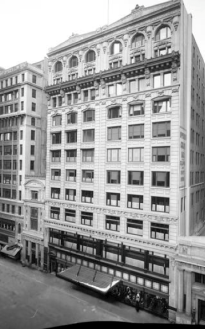
My father and I headed north on Sixth Avenue. He pointed to a building on Thirty-Fourth Street and a sign that read FRANKLIN SIMON. It was my grandfather’s name painted in bold letters running up the side of a ten-story fashion retail outlet. I had seen the ads in the New York Times and magazines, but this was a face-to-face. My heart soared and pride swelled for our family.

SC1Twenty years later, the seventy-five year old business fell prey to “the mall” phenomenon. Shoppers no longer made the trek from the suburbs to an increasingly dangerous inner city. The company failed along with the other “gems” of Thirty-Fourth Street.
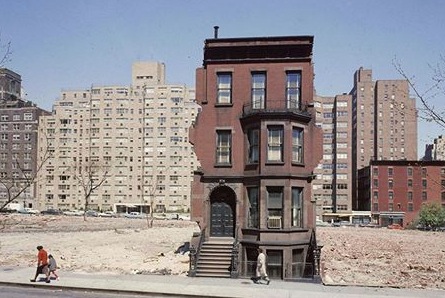
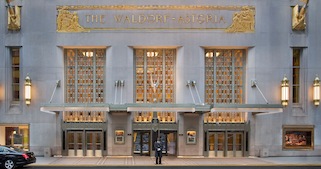
I was a pop musician then, signed to Capitol Records, living in five-star hotels and performing on stages around the world. But whenever I passed the brick building bearing my surname I knew my roots were in the bedrock of New York.

Not long after, though my group had sold a few millions records and was celebrated, I found myself without a label, without a band, and no creative outlet. I had fallen victim to younger audiences who were in search of younger music. The city became a predator that devoured what financial resources I had. If not for fear, I would have laughed. This was a grand joke. I was born into money, but had none. My father had lost what was meant to be a sizeable inheritance. Now, on the Lower East Side, around the corner from my grandfather’s 1865 birthplace, I scrounged for meals.

BUILDING

My degree in foreign language and writing had sat dormant since the early seventies. I earned whatever a bodega worker earned. One day as I sat on the stoop of the walk-up I shared with my wife-to-be, among crack heads and their spent vials, I jotted my experiences into a spiral notebook. It was then that I began to appreciate stratification. I wrote of New York riches, of poverty, the educated, the ignorant, the disabled, the able, the drug addicted, and the sober. The city was a tree that yielded many fruits.

waldorf

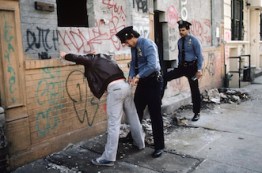
Whenever I came upon an arrest in progress I’d stand and listen to the exchanges betweenarrest cops and perpetrators, noting the jargon, radio-call lingo, the facial expressions. The subway offered a smorgasbord of humanity. Underground drummers beat on anything the mind could conjure: soapboxes, water buckets, tortoise shells, professional drum sets, or the head of the kid standing next to them. Rhythms ranged from the heaving pace of Soweto Township to a Memphis-style shuffle.
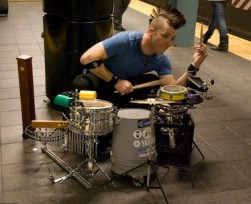
In the parks, I observed well-dressed women escorting pocket-size dogs past kids whoDrummer juggled broken bottles. There were lovers on blankets; men on dope and women pursuing tricks under the watchful eye of poorly concealed pimps. People with varying degrees of physical disability languished in wheelchairs while nurses chatted and chain smoked. As all this took place I became aware that there were other stories waiting to be discovered, to be dug up and polished. I saw New York as a king-size terrarium. It was all there. It had always been there. I just needed to peel back the layers.

Executive Thief, my latest novel, is set in present-day New York City. It explores the adventures of Jedidiah Alcatraz, the son of a deceased nun, a young man in the throes of autism spectrum disorder. With an uncanny ability to see what most people ignore and a compulsion all his own, he sets out to find the Queen’s Diamond Jubilee Crown, which has been secretly shipped to New York, where it is stolen.
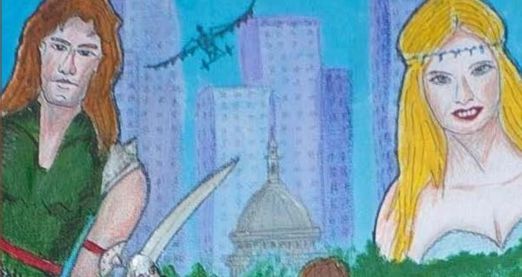
The theft occurs in view of video cameras and a trusted guard, who is missing and presumed dead. If the crown isn’t found and returned to London, where it is soon scheduled for public display, the crime will become fodder for a scandal-hungry media, and Her Majesty will be humiliated.

The prime suspect is rich, beautiful Piper Sutton, a young jewelry executive in charge of special clients. Despite her vast wealth, she is haunted by a compulsion to steal.

At Jedidiah’s side is a childhood friend whose skills might be just this side of legal and a Russian cabby with a sense for adventure. The trail leads them from Chinatown to the elite environs of York Avenue; from Fifth Avenue penthouses to a down-at-the-heels Coney Island strip club. And as evidence against Piper mounts, Jedidiah wonders whether she’s the key to his obsession.

Scott’s FACEBOOK link.

Amazon.co.uk link;     Amazon.com link.


Posted in Authors | Tagged , , , | Comments Off on Setting and Stratification

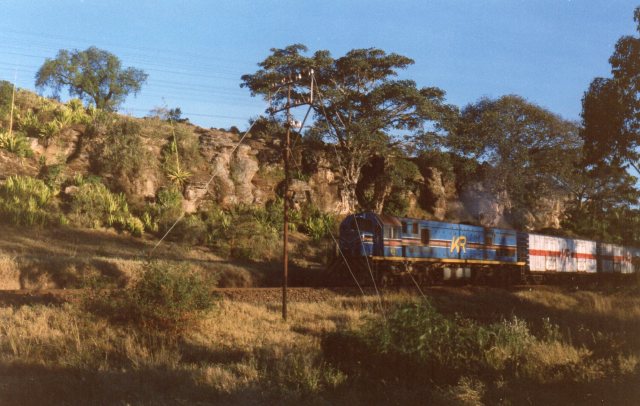
Memories of Kenya Railways

When we first came to Kenya by boat in 1946, I suppose we must have travelled to Nairobi by train. I can’t remember, because I was only five years old.

Flamingo cormorants

My first recollection of matters to do with railways was when we lived in a little wooden house on stilts among the thorn scrub on the plains south of Lion Hill, bordering Lake Nakuru. My mother worked for the Shell Company in Nakuru, and my grandparents came over from England to look after my sister and me. Nana took us on daily walks along the track to salvage lumps of coal dropped by the engines. She made it exciting – like looking for mushrooms – and we picked up at least two or three lumps every day. I think she used them to insulate our makeshift cool store in the garden. Each of its legs stood in a small tin filled with kerosene to ward off the ants.

In the 1950’s I was sent off to boarding school in Eldoret by train from the brand new passenger station in Nakuru. Town residents were rightfully proud of this station when it was opened, although I remember them wondering whether it was justified, as far more goods than passengers used the railway.

Children from the secondary schools in Eldoret were closely chaperoned by a teacher in the cramped compartments at the beginning and end of term. We would bring a packed meal and travel through the night, stopping to pick up students along the way. The highest train station in the British Empire we were told was Timboroa, at 9001 feet above sea-level, but for us it was just another tedious stop in the night. I remember trying to make myself wake up to mark its passage, but think I only managed to open one eye, once. We would arrive in Eldoret at the most ungodly hour of the morning. On journeys back home at end of term I remember the train turning in on itself like a coiling snake near Moiben, and we would call to each other not to miss the spectacle.

When we moved to Njoro the railway made its presence felt on a daily basis. The rough dirt track to our home climbed up a steep slope to the crossing. It had to be negotiated with care, as besides the need to look out for downward rushing trains, you could see nothing but sky as you went over, and sometimes there were gaps between track and road, due to erosion. Our car would groan bumpily across the rails and dip over the other side and I often imagined it breaking in two. When I was learning to drive, I stalled the engine as the car straddled the line, but luckily there was no train coming. My father made me practice hill-starts there. He would keep an eye out for a train as it chuffed up the track parallel to the Nakuru-Njoro road, and slow down to let it pass us before we turned up our drive to negotiate the crossing.

The train journeys to Nairobi for my two A-Level years in Nairobi were dramatic as we snaked up the escarpment in a slow chug, catching glimpses of the Rift Valley plains through the dense trees of the Aberdare Forest. I would gaze out of the window in a dreamy daze for that whole section, ignoring the insistent cries from local vendors at stations along the way.

In the 1960’s I would take the children by train to visit their grandmother at the coast. Here, they learned their manners as we assembled in response to chimes announcing the first sitting for dinner. We ate from crockery marked EAR&H, using silver service cutlery and wiped our mouths with starched damask table napkins. I taught them how to take the outermost knives and forks for each course, working inwards, while smiling white-clad waiters danced attendance on us. I’ll never forget the furore those innocent words caused when I used them in a Cookbook, Museum Mixtures, published in aid of the National Museums of Kenya. The words were patronising and demeaning, I was told. But when I asked Richard Leakey’s successor as Director if he thought there was anything amiss with them, he gave me a mystified smile and said he considered them harmless, and accurate!

On our journeys, there was always a scramble for the top bunks and a sulky face as one of the three children was forced to sleep opposite Mum on the bottom. There was a romance about the gentle rocking motion as the wheels clacked along the track and the occasional haunting whistle sounded in the night as we struggled to keep the blankets from slipping off. If you were alert as the train pulled into a station in the night, you would hear the guard shout, and see him exchange the token key – a long stick with a basketlike top, much like a lacrosse racquet.

As dawn broke and palm trees appeared, Giriama women could be glimpsed balancing baskets of mangoes on their heads, their grass skirts covered with dreary cloth. Near Mazeras, remembering my own childhood, I would hustle the children to the windows to gawp at the astonishing sight of the train’s engine passing in a spiral below the guard’s van, like a snake attempting to swallow its tail. The exciting first glimpse of the sea as we clattered over the causeway and the sticky humidity of the coastal belt quickened our anticipation of that first dip and the scrunchy feel of sand between our toes.

On the night journey back towards Nairobi as the sun rose over the plains, our eyes would scan the vistas for sight of Thomsons Gazelle and Grants Gazelle, and I would challenge the children to distinguish between them. We also spotted kongoni and if we were lucky, the occasional giraffe. We never did see anything bigger on these trips, and arrival in the dingy busyness of Nairobi Station, with everyone hurrying away as fast as they could was always a let-down after the romance of the outward journey.

The railway came to our rescue once in the 1970’s when our green VW Kombi-cum-camper-cum horsebox finally died on the road between Hunters Lodge and Mac’s Inn. It was the one time I had stuffed all our clothes into the cupboards instead of taking a suitcase. I hadn’t even bothered to bring a handbag with me. Roy and I hitched a ride to Mtito with the children, carrying our possessions bundled into sheets between us. But the Inn refused to give us a room unless we paid for the whole night, and our cash was limited. Not wanting to forego our holiday, I went to the station to buy tickets to Mombasa, and the man’s eyes popped out of his head when he saw this mzungu woman delving into her cleavage for the money. We “camped” in the hotel lounge, our belongings heaped beside us, until midnight. The train was late.

img013

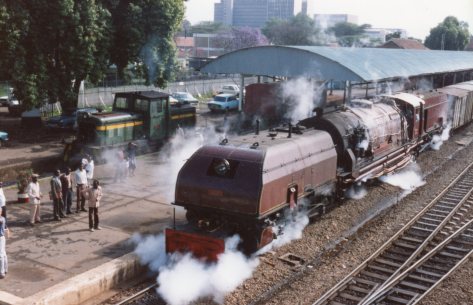
By the time our youngest son arrived, steam trains were part of Kenya’s history, but we ensured he savoured its delights when the Museum hosted a re-run between Nairobi and Naivasha using a gleaming reconditioned engine in the 1980’s. Roy took Dennis for his very first train journey, and he wore a bemused look on his face when I collected them from Naivasha later in the day.

There are a couple of descriptions of train journeys in my novel, Breath of Africa


Posted in Kenya | Tagged , , , , , , , , , , , , , | 2 Comments

The Journey Through the Urban Landscape

Welcome to my mysterious guest Grey Wolf today – with a different take on settings which for him merely wait for the story to come along. Nor does he set much store by pictures, preferring to let his words do the painting. Enjoy the journey…

slayer-slice

In upbringing I was very much an edge of the city boy, I could go inwards into the urban jungle or outwards into the woods and fields. But whilst I could find nothing particular to write about where a farmhouse or a field of corn was concerned (except in poetry) I have always been drawn to describing the grandeur of an urban landscape.

Most of my stories are in the genre of Alternate History and this offers a lot of scope for invention. On the one hand this can be tinkering with a real city and adding small changes from the backstory, maybe somebody other than the royal family owns Buckingham Palace, or maybe a different railway conglomeration came into being through mergers and acquisitions. Whilst apparently staid, the latter offers a lot of opportunity for ‘colour’ in a story, as do things like tweaking the streets and squares of an alternate London (not too hard to do if you have an atlas of how the city grew by developments).

But my greatest passion is in the complete redesign, or invention of urban landscapes, either by setting the Point of Divergence for the story so far back that several centuries of alternate history have happened, or by having such a major change somewhere along the way that, for example, the capital of an alternate Britannia is in a city such as Lancaster, or even across the ocean in the Americas.

In a way, alternate history writers can ‘own’ their urban landscapes more than any other writer, except perhaps for those in science fiction and fantasy. London is London, but Barnard’s Castle may be the home of the brutal secret police, or there may be a giant park in Camden where a nuclear bomb exploded in the 1960s.

Creating alternate history offers one the chance to create majesty and solemnity, beautiful buildings, parks and avenues. As Jaimé de Vos said about my unpublished novel ‘His Peculiar Domain‘ : “What a beautiful world you have created! It’s doing wonders for my imagination. My mind’s eye is filled with images of luxury and decadence, long majestic streets, stylish shop fronts 1900’s chique and lots of cigars and pipes.”

Yet, urban landscapes don’t need to hark to some imagined Victorian or Edwardian heyday. In my short story ‘Ethereal Light’, the city of Southampton boasts a huge soaring skyscraper with a docking station for an Imperial Airship, whilst down below the battleships in the naval dockyards shine brightly in the sun.

Contrariwise, my short story ‘The Rat’ focuses on the grit and the dirt, the thieves and the doxies, the runners and the cutpurses. Its in an urban landscape of my imagination, but its a harsher, darker and more dangerous place.

Sometimes, as with film companies, one place stands in for another. I wrote ‘The Library’ setting it in a fictional university on the edge of a fictional town in the Home Counties, but it was consciously based on the college where I went to university, the same sort of buildings, the same general geography, the name of a long-vanished pub still visible in the ceramic tiles of the doorway to a shop. It wasn’t there but it could be, just as Marrakesh can stand in for Cairo, or Vancouver for San Francisco in the filming of movies.

Yet a setting is just a setting, waiting for the story to come along. Without a story, without a plot, the urban landscape you have patiently built up becomes just a series of  documents in a folder, no matter how beautifully imagined and described it might be.

To me, the urban landscape creates a device whereby a narrative can flow through the streets and the parks, the pubs and the shops.

In my unpublished novel ‘To Soar Like Icarus’ the urban landscape is literally the background to us following the young girl Sapphire as she sets out on a mission for her master. We go down the same roads, into the same shops, across the parks, and into the heart of the city with her, or at least in her wake, and we experience what she experiences and feel the heartbeat of the life of that alternate history’s London.

In my novel ‘The Slayer’ (published by the Wolfian Press), we follow the first person narrative with the ‘hero’ Jason Wolfe as he tries to make sense of a world beyond his experience. In the city he finds himself in there are no cars except the giant tank-like behemoths of the rich and the nobility, there are underground railway stations with strange names that hark to a history that is not of his world, events, battles, and famous persons who never were, but who are the most important where he has found himself.

In my unpublished novel to go alongside the soon-to-be-released narrative timeline ‘Tsar Michael The Great‘ we join the characters in a 1950s London not too far-removed from reality, where King’s Cross Station is as King’s Cross Station was, and where The Princess Louise public house stands proud on Holborn. As air raids descend upon the capital, we follow the characters as they make their way through a landscape almost the same as it is today, but where the sights, sounds and context all reflect the backstory to the novel unfolding around them.

And an urban landscape can serve another purpose. It can be a metaphor for something or it can be a device for exploration.

In my short story ‘Writers’ Block’, Nial walks the streets of Lancaster, in this world a Soviet-style city, capital of a dictatorial Britain. The ministries are metaphors within the metaphor, the walk is an attempt to break out from the author’s point of view, it is an exploration through prose of what might otherwise be explored through poetry. But it creates a landscape both stark and memorable in itself, a setting that breaks the rule set out above, for it doesn’t have a story, only a message.

Which leads me to a final use of the urban landscape, in my collection of essays ‘How To Write Alternate History’. Here in ‘A Day In The Life Of’, I take the reader on a journey of questions, designed to flesh out and anchor an alternate history world, not within the pages of a novel, but behind the scenes, in the background, in the backstory.

Here, I ask what is on the wall when the character wakes up, what does his tube of toothpaste look like, what is outside the window of his city flat? We follow the character on a journey of questions – are there booths selling things in the street, what newspapers are advertised on the boards, are the pubs open early, do people spit on the floor, do they eat there or just drink, are there crowds heading for a sporting event at the stadium, and if so what sport is it, what is the team called, how vicious are the rules?

The writer can paint this detail into the background of his urban landscape using what might otherwise be a mind technique, and in writing it down help to firm up those ideas and elements which eventually go into the novel. The journey through the urban landscape can be anything the writer wants to explore – maybe he goes to the park, is it segregated, are there armed police, or nude sunbathers, are people sitting on blankets sipping wine from crystal glasses or are they staggering in debauched high spirits swigging from bottles of beer?

***

Grey Wolf is an author, poet, photographer and editor currently living in South Wales. He has several books published by the Wolfian Press including ‘The Slayer’ (ISBN 9781492778714) and ‘How to Write Alternate History’ (ISBN 9781490423043). Out later this year is the timeline narrative alternate history book ‘Tsar Michael The Great’.

Grey Wolf is about to launch a new magazine ‘AHF Magazine’ on a quarterly basis from March. If any blogger wishes to submit an article on the art of writing (for whichever genre) ‘AHF Magazine’ would be happy to consider it.

His website is at www.greywolfauthor.com


Posted in Authors | Tagged , , , , , | Comments Off on The Journey Through the Urban Landscape

Life in Africa – Then and Now

It is still Black History Month, and I’ve been casting my mind back over my years in Kenya, digging out old photographs of colonial days. I know that’s not a popular word nowadays, but I couldn’t help being a “colonial.” And we were just living life to the best of our ability.

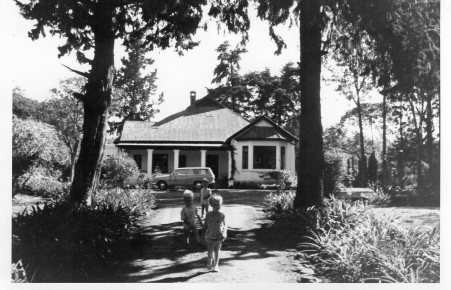
Teenage memories are full of carefree happiness, in our 12 acre small-holding at Njoro, in the middle of a geranium farm. At Windmill cottage, we had to hand-pump the water into the tanks, and our outdoor fridge was kept cool by pouring water over a cladding of diatomite, which we would gather from the mine by Lake Elmenteita. We had a tame chicken called Tooky, which insisted on perching atop the dining table during meals. “Tooky took what?” my father used to say, and everybody would roar with laughter, but when she caused table cloth, plates and everything else to crash to the floor, she was banished, and I suspect she ended up in the pot.

img043

I was a bit of a rebel when I first went to boarding school by train to Loreto Convent, Eldoret (you can read about my escapades in the first chapter of my book HERE).

But I did belong to the Young Farmers Club, and actually judged pigs at the local show (you have to imagine the pigs!).

And in the holidays, I would watch rugby, play hockey or tennis, go to the races, and ride.

riding

We couldn’t afford to go on safari. My first experience of a safari was a weekend at Treetops just before Elizabeth became Queen, and before I went off to University in the UK.

Treetops

Bringing up a family in Kenya as a widow with three small children, was easier in Africa than it would have been anywhere else in the world. Just after Independence, I was able to buy the substantial home of Sir Ernest Vasey, Kenya’s colonial Minister for Finance. It was ideal to run as a guest house, while two ayahs coped with my toddlers and I temped as a Secretary for a time in Nairobi.

Slaters Road House

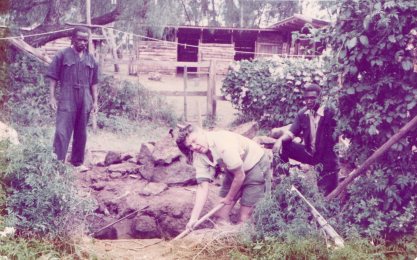
I was lucky enough to remarry, we lived on a shoe string, but our quality of life was amazing, considering – and it was always easier to do things oneself…

Sewage ditch

Having servants (they weren’t slaves, they were grateful to have a paid job) was not the doddle you might expect. Rushes to hospital in the middle of the night were not infrequent; medicine was dispensed for minor ailments; not-so-petty thefts managed; and you never had your home entirely to yourself. You were constantly badgered with monthly requests for advances and yet more loans. (When we finally came to live in the UK, I must admit in that respect it was a blessed relief.)

But as time went by, we were able to enjoy the wonders of Africa with the family, and went camping whenever we could. We were privileged to bring up our children in such a wonderful environment, and they learned how to be resourceful.

Champagne ridge closer

Fast-forward to the present day, and what do we have? Traffic chaos, but the roads are better than they’ve ever been. It’s just the drivers who need to educate themselves, and it can take five hours to traverse from one side of Nairobi to the other, through sheer density of traffic, which doesn’t help.

Traffic

But nothing can change the beauty of the wide open spaces, and the opportunity to savour the wonders of nature. I make no apologies for including this final photo of a recently discovered place which features in my next book. Watch this space!

CIMG2003 (1024x575)


Posted in Kenya | Tagged , , , , , , , | 2 Comments

Travelling Through Words in a Book

A warm welcome to Patricia Steele from Arizona, a genealogist and prolific writer who shares my love of travel and talks about the settings for her novels.

Thanks so much, Jane, for inviting me to your blog.  I have looked over the postings and spent over an hour “visiting” all the wonderful places you and your guests have written about.  And I loved all the photos, so I will add some of my own, since they always bring the words to life.  I love the settings I use in my books because living vicariously through others’ travel memories appeal to me and I love taking readers there along with me.

When I was growing up, my mother always said I must have gypsy blood; I loved to travel as a child and when I became an adult, the burning desire only intensified.  Add that to my passion for writing and urge to see around every corner bloomed and grew.  As a writer, many people have told me the importance of basing stories in a city, country or venue you are familiar with.  To a point, that is absolutely true.  However, with the advent of the internet and Google Earth, you can ‘go there.’

That said, I must admit that writing about places I have walked through makes it much easier to write in order to put the reader on the spot.  So, I typically (nearly always) write about my favorite places; places that take me away and places I want to take my readers away to… And so I do.

My first novel, Shoot the Moon, and Tangled like Music were both based in Oregon, where I spent over forty years of my life off and on from the time I was nine years old.    I love Oregon, especially Portland where I raised my children.  I can get to the ocean within two hours, so my main character in the Callinda Beauvais mysteries also loves the beach.  But, with my gypsy spirit and love of travel, I also take her to Paris and the south of France, to San Francisco and all the places in between.  My newest book also takes place in Oregon, but the final book in the series will take her to Spain.  She obviously has gypsy blood too.

France.  Magic. The first country I visited on my virgin European visit will always be my brightest and best memory.  I was nearly black and blue after pinching myself.  Was I really there?  Could I possibly push enough words together to bring readers there so they could feel the magic of stepping in red dirt, on gray cobble stones and smelling the lavender?  The air I inhaled gave me the feeling of unearthliness and I wanted others to see and feel what I felt.

castle

My main character, Callinda (aka Callie), has family who lives in the house where I first laid down my hat.  It is located in Pertuis, north of Marseille, and my mind flies there periodically where I smell the lavender and feel the breeze in my face.  The old couple who welcomed me was a host family for my friend whose friendship remained strong for over thirty years.  On a fluke, I went to France with her because her sister couldn’t go at the last minute.  Was I afraid to fly across the ocean?  No.  Did I take more than two seconds to agree to go?  No.  And readers (myself included) love “traveling” through words in a book.  So, the manse they lived in is the manse Callie goes to when she flies to France.  And then I let her ride a bike in nearby La Verdiere.

La Verdiere

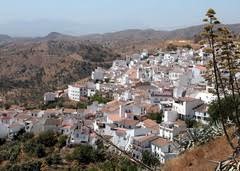
When I learned I may truly have gypsy blood in my veins, my focus flew to Spain.  And that is where I walked the streets in the small villages of my ancestors.  Touching Spanish soil is something I dreamed about for many years.  Once the genealogy bug gripped me, Spain is where I landed.  How could I write about my grandmother’s flight from Spain when she was nine years old without my walking in her shoes, over her land or seeing Spain through her eyes?  It helped seeing, breathing the spaces and feeling the old villages for my book, The Girl Immigrant.

Tower in SevilleI “found” her there in 2012 when I visited Fuentesaúco, Spain with my brother, Steven.  (He speaks Spanish and I couldn’t have done it without him.)  We met Spanish cousins and visited the town where our great grandfather tutored children in math.  We ate Paella, a Spanish rice dish, made by an old Spaniard who spun tales on his sun-bleached patio among the Bougainvillea.   We drank Spanish wine, walked along the ramparts of castles and saw the huge Spanish bulls erected along the highways.  We got lost on streets that snaked through small villages and laughed as we found our way out again.  So, of course, I had to take Callie there in the last book I plan to write about her crazy life.   She will go to Seville (this tower is in Seville), Madrid, Algodonales, Marbella and Nerja to play in the sandy beach.
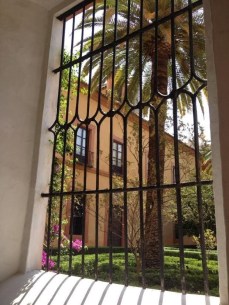
paella

She will, of course, eat Paella in the sun.

arches spain  The history in Spain called to me the minute I got off the plane and I hope to return one day.  Callie had a short visit in book two of my series, Wine, Vines and Picasso… but she must learn to speak Spanish for the plans I have for her in book four.  So, I must learn the language because how can I plop her down in Spain if I can’t understand it myself?

These arches are old Roman ruins in Merida, Spain.  The beautiful tile railing is part of the huge Plaza de España, a plaza located in the Parque de María Luisa, in Seville, Spain built in 1928 for the Ibero-American Exposition of 1929.

Yes, writing about places I have visited helps me smell the flowers, the food, feel the breeze and hear the sway of voices around me. I pull out all the photos from each of my trips, close my eyes and go back in time.  Videos are even better.  Putting myself there first puts my reader right in the middle of the story.

Links to Patricia Steele’s books:

Amazon.uk Author Page             Amazon.com Author Page

Her website: http://www.patriciabbsteele.com/


Posted in Authors | Tagged , , , , , , , | 3 Comments

In Love With Africa


Breath of Africa

Menengai Crater, Kenya – the third largest in the world

There’s something about Africa – especially Africa south of the Sahara – which gets to you. You only have to live there once for a short time, to get the bug.

Perhaps it’s the extraordinary light, translucent, clear, pristine, that lies over the land especially in the early mornings and when the sun sets. Wonderful delicate colours in the highlands over the equator which wash the sky. Or the warm orange glow over coastal beaches and plains, heavy with languid humidity.

Life slows down the minute your feet touch the tarmac at the airport. There is an air of quiet expectancy as you take your first breath and look around you. Wrizzled grass stalks line the runway. Perhaps there’s an impala grazing unconcerned, half-visible in the encroaching bush. Dust clouds the air. Customs regard you with measured, unhurried movements. There’s always tomorrow – even for the finding of lost baggage.

The people greet you with smiles. Even the most snotty-nosed kids barely clad in ragged garments as they emerge from makeshift dwellings in the remotest areas. They are warm. Their needs are few. Their smiles wide with hope. Laughter is ever waiting round the corner. If you look into the eyes of a wrinkled elder, a busy official or a new-born baby, you will find a twinkle.

Life goes on, whether you are there or not. You are but a tiny spec in the scheme of things. Especially so in the wild which can be found within a stone’s throw from human habitation. Majestic lion, haughty cheetah, leopard slinking silently through the bush. And elephant – one moment you’re surrounded by these overpowering gentle beasts, the next, they have melted away leaving a sense of awe and wonder. Were they really there? And the birds – tiny treasures flitting among the trees and bushes, going about their business, oblivious of gasps from the watchers or the glint of binoculars.

You are free to live your own life here, make your own mistakes, be responsible for yourself – there’s nobody else to blame. Perhaps that’s what I like about Africa. There are many insects and creepy crawlies – fearful obscure diseases and the danger of sudden violence. But once bitten, the lure of Africa lies in your blood. You do not want to escape and it will always be your home.

I lived in Kenya for over half a century. My novel, BREATH OF AFRICA is dedicated to its people. website: www.janebwye.com

  Feel the Breath (640x237)

Amazon UK;      Amazon Author page      Amazon.com
Posted in Breath of Africa, Kenya | Tagged , , , , , | 3 Comments

The ‘You are There’ Experience

It is a privilege to welcome award-winning author Margaret Skea as my guest today. She gives us a unique take on the subject of settings in her historical novels, so sit back and enjoy the journey.

PortraitFirst of all, thank you, Jane, for inviting me to your blog.

Two historical novels and several awards later, I still find it hard to believe, and even harder to say, ‘I’m an author’ when someone asks me what I ‘do’.

But ask me about ‘setting’ in fiction and I hope you have half-an-hour to spare, for giving the reader a ‘you are there’ experience ranks highly amongst my many writing ‘passions’ and I’m never short of words on that topic.  Not because it was easy for me.  Quite the reverse.

My first (and best) advice to any other fledgling writer is always, if at all possible, to visit the locations they want to use. Probably not too difficult if you’re writing contemporary fiction, but rather more tricky, time-travel aside, when writing about historical characters in 16th century Scotland. The county of Ayrshire still exists, but not the Ayrshire I need to depict. Some features of landscape remain relatively untouched – the hills haven’t moved, though it appears from early maps that the coastline has.

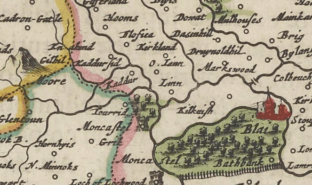
Screen Shot 2016-02-06 at 15.42.37The early maps are beautiful, as this section from Timothy Pont’s map, reproduced in Blaeu’s Atlas of Scotland, shows, but not the most reliable, for the process of map-making was still very much a work-in-progress. Inland, towns and villages have sprung up to mask the original terrain, woods have been cut down, fields enclosed and marshes drained. Roads have cut across valleys and even rivers may have changed course and lochs silted up, so that it can be hard to imagine the Ayrshire of the 1580s and 90s.

Turn of the Tide, my first novel, opens with a well documented Screen Shot 2016-02-06 at 15.20.38historic massacre at ‘the ford of Annock’ but it’s no longer possible to establish the site of the ambush with any degree of certainty – it’s likely it’s been swallowed up in modern Stewarton, and when trying to choreograph the event all I had to go on were a couple of sentences –‘the Cunninghams assembled to the number of thretie-four… and concealed themselves in a low ground near the bridge of Annock … all of a sudden the whole bloody gang set upon the earl and his small company …’  This summer, as it happens, I’ve been asked to meet up at Annock with some members of the Clan Cunningham Society of America and I know they harbour hopes of seeing the massacre site, but the best I’ll be able to do will be to walk a stretch of the river with them and hopefully provide a sense of what it would have been like waiting for the opposing clan to appear.

‘Place’ was an extremely important concept in 16th century Scotland – men were often referred to by the name of their home rather than their surname. The fact that many of the relevant castles no longer exist, nor can their exact locations be pinpointed, was another very real problem for me, both practically and emotionally, as I tried to think my way into the heads of real people, without the clues that their own environment might have provided.  Take Braidstane, for example, where Kate Munro and her children live in A House Divided.  From the Montgomery Manuscripts I know that Braidstane was ‘in the bailliary of Kyle in the county of Ayr’, but no trace of the tower remains.  Admittedly that gives me lee-way – for the sake of the story Kate can live in a bastle house associated with the main tower, whether or not one actually existed there, and I can conveniently imagine a gable window facing whatever direction I please, but fiction writer or not, I’d happily have traded in those advantages for a glimpse ofScreen Shot 2016-02-06 at 15.49.20 the real thing.  There are some stumps of castles of the right scale, but there’s a world of difference between standing within the crumbling remains of a tower house and imagining what it must have been like to live there.  (Photo www.louiseturner.co.uk)
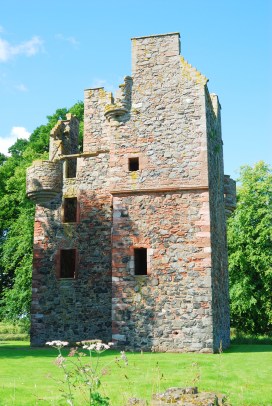
Fortunately small-scale 16th century tower houses were little more varied in layout than those in the average modern housing scheme, usually conforming to one of several basic designs, the most popular being rectangular, L-shaped, or Z-shaped. Plans are readily available – in fact Nigel Tranter, aside from his prolific fiction output, also produced an illustrated five volume series – The Fortified House in Scotland, which happily my local library had in stock. But the choice of decoration, and evidence of the placing of amenities such as the kitchen range and garde-robes (the 16th century equivalent of en-suite) would have provided welcome insights into the individual tastes and characteristics of my characters and have helped to transform them into living, breathing people.

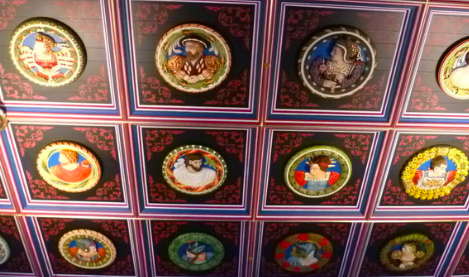
dreamstime_l_25845345Screen Shot 2016-02-06 at 15.58.11The tower houses in my novels are amalgams of many that I’ve visited, both ruined and complete. There are however three ‘real’ towers that were particularly important to me. ‘Greenknowe’, featuring on the cover of A House Divided, a ruin with most of its outer walls remaining, is a typical tower of my period, built in 1581.  Its near neighbour, ‘Smailholm’, is almost 100 years older and simple in form, but complete. Although unfurnished I could count the stairs between each floor, time myself running up them and feel how out of breath I was by the time I reached the top. I could perch in a window reveal and see the ground stretching away below me and hear the wind howling down the chimney. It is set in a rugged, untouched and utterly atmospheric landscape, and as it, like the others, is within easy reach of my home, I was able to experience it in all weathers. The third goes by the interesting name of ‘Fatlips Castle’ (don’t ask) which, though semi-derelict, retained a beautifully decorated timber ceiling, similar to the one shown here. If you think that the austerity of the exterior of Scottish tower houses was matched by dull interiors, think again.

margaret skea

It was easy to set scenes in royal palaces, such as Holyrood House and Stirling Castle (now beautifully restored, including the original ‘Stirling Heads’ and their painted replicas pictured below). However, the key characters’ homes I designed, as I might a modern ‘kit house’, with elements chosen from all the available authentic options, in order to best satisfy the needs of both setting and story.

Screen Shot 2016-02-06 at 16.10.23

Margaret’s webpage: http://margaretskea.com/

Layout 1

A House Divided, Amazon UK        Amazon.com

Turn of the tide Card 1 copy 2

Turn of The Tide:  Amazon UK       Amazon.com


Posted in Authors | Tagged , , , , | 10 Comments

Shillingi, and Kenya’s Black History

This year in the UK we are celebrating Black History in this month of February, 2016. Its purpose is to make people aware of the so-called Dark Continent which is often forgotten, cast aside as of no importance in our rapidly moving society, with its frenetic politics and economics, all tied up in red tape.

The biggest Lake in Africa is on Kenya’s western border, Lake Victoria, source of the Nile, from where the nomadic Nilotic tribes – like the Masai and the Kalenjin –filtered down from countries in the north (Ethiopia and Sudan). To the East lies Somalia. The problem of the Shifta bandits has been there ever since I can remember. They now call themselves Al Shabaab terrorists. The root cause of their hostility is still desperate poverty and jealousy.

Explorers in the 19th century looked for the source of the Nile, and the British built the railway from Mombasa to Lake Victoria to open up the interior, and provide them with a foothold into what they believed would be undreamed riches from trade.

Coolies imported from India worked on the railway and fell victim to man-eating lions. The tsetse fly menace held up progress in the first hundred or so miles. Then the Bantu agriculturalists who had filtered in from the west of Africa formed a hostile barrier. More delays were caused by the fish-eating Lake tribes who sabotaged the railway, filching the sleepers for firewood. The colonialists finally won through at great cost to reach the shores of Lake Victoria in 1901. But it gained them an advantage over other European countries – Germany, France, Italy, Belgium, Holland – in the “Scramble for Africa” up to the First World War.

After all this, came the “white settlers”, encouraged by the British Government to farm the “empty” lands along the length of the new railway, and prove its worth; lands which had been left to recover – sometimes for years on end – by nomadic people passing through with their cattle, goats or camels in a lengthy cycle. Land did not “belong” to the nomadic people (although livestock did). Capitalism was an unknown word. Land was used for as long as it was useful, then the people moved on to look for pastures new. There was plenty of land, and life was simple in those days. Until the Europeans came along.

Then came the devolution, when country after country fought back its Independence. In Kenya it was the terrifying Mau Mau uprising which triggered the change, and this is where my book, Breath of Africa, starts.

img104

But let’s go back a moment. Surviving through all this history were the hunter-gatherers – elusive bushmen. Nobody knows where they came from. In Kenya, they are called the Wanderobo. They hold the secrets of Africa’s essence – its herbs and wildlife. There is a legend connecting Africa’s insects, birds, beasts and people in an unbroken chain which has a vital message to offer our modern world.

The African bee is the world’s most aggressive, and its honey is the world’s sweetest. There is an insignificant brown bird in Kenya, known as the honey-guide. Its diet is the wax from honeycombs, and the larvae inside, and its ability to digest the wax has helped scientists to find a cure for tuberculosis. But the bird has to entice others to brave the beestings and break open the hive. It displays energetically before a honey-badger leading it towards its favourite sweet. The honey-guide entices man in the same way. Even today, the Wanderobo are led by the noisy, fluttering bird towards the treasures of the beehive. Man and beast can break it open, satiate themselves on the honey. But they have to remember to leave aside a piece or two of the honeycomb in gratitude to their guide – or else next time … it will entice him to a viper’s lair.

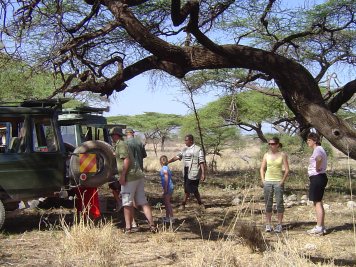
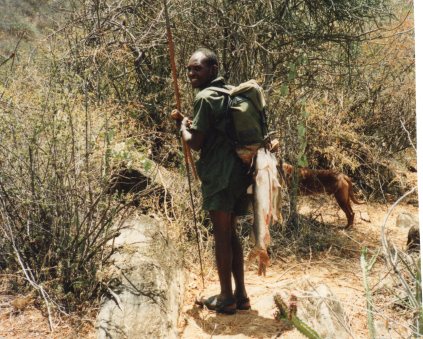
Let me introduce you to Shillingi, the Nderobo guide who led our camel safari in northern Kenya about thirty years ago. He hid us under a scraggly tree in the desert and with finger to his lips made us squat in utter silence for minutes on end as he emitted a strong shussshing noise. What on earth was he doing? With a ponderous flap of wings, a hornbill alighted on a flimsy branch… then another… then a myriad of birds of all sizes flew in, chattering and squabbling with excitement. Shillingi stopped shushing, but warned us to remain still and silent. The whole tree was full of birds at a mere arm’s length. Then somebody moved, and with a flurry of flapping wings they disappeared.

img105

Shillingi was a skilled fisherman too. The men in our party cast their rods for hours for catfish in a swift flowing river while hippos wallowed in a pool nearby, but Shillingi caught several on his simple line in the twinkle of an eye and we enjoyed a delicious supper that night.

The Wanderobo have survived to this day. If you were to visit Kenya as a tourist you will find more often than not, that your safari is led by none other than an Nderobo man.


Posted in Kenya, Travels | Tagged , , , , , , , , , , , , , , | 2 Comments

In Six Hours … the world will change

Posted in Authors | Tagged , , , , , , , | 11 Comments