What an interesting piece this is! A warm welcome to Jennie Ensor from Authonomy days. She has certainly taken herself through the mill to get what she wants. I take my hat off to her, and leave her to tell us how it all happened. And if you want to ask her any questions, please use the comments section of this blog!

My journey into crowdfunded publishing: How I faced my fears, ignored advice and raised over £3000 – and now await the launch of my debut novel
A growing number of books are being published in radically different ways – one of them is my debut novel. As a result of the funds I managed to raise recently, my domestic noir thriller Ghosts of Chechnya is to be published this summer by Unbound, a dedicated crowdfunding publisher. I thought it might be interesting to look back at how it happened.
In search of that lucky break
After starting to write fiction in the late 1990s, I had many years of failing to find that ‘lucky break’. I’d worked as a freelance journalist and had poems published but couldn’t find a publisher for my novels. I’d done all the usual things such as submitting to agents (how many hours rejigging sample chapters, I hate to think) but all I had to show for this was lavish praise from an agent or two and a ton of rejections.
Authonomy

In early 2014 I realised I needed to ‘put myself out there’. I’d pretty much avoided social media and online forums. With trepidation I joined the Authonomy online writing community run by HarperCollins and put Ghosts up for review. It reached the Editor’s Desk in July 2015 (just before the site closed). Though I still had no agent or publisher, reaching this goal increased my confidence as a writer.
Facing my fears
Along with many writers, for years I was anxious about the idea of using social media, especially Twitter. Though by 2015 I was on Facebook a fair bit and had made some online writer friends, the idea of blogging (micro or macro) felt terrifyingly exposing, not to mention time absorbing. A publisher I’d submitted to advised me to start a blog and get on Twitter… so one soul-searching night in May 2015 I decided to embrace the digital world. I created my author website/blog, posted my first blog and a tentative tweet.
An opportunity
A few months later, on the off chance they might be interested, I submitted Ghosts of Chechnya to Unbound, emphasising my efforts at building a ‘platform’ and reluctance to give up on any task. To my great surprise I received a conditional publishing offer – my novel had been selected for Unbound’s new digital genre fiction list.
Given that this sounded like a wonderful opportunity, I accepted despite knowing that 30% of projects fail, and advice that one needs a large network of contacts and strong social media presence to be successful – I didn’t believe I had either. (As luck would have it, I had an offer from another publisher three days after signing with Unbound.)
The ups and downs of crowdfunding
So, how did I raise well over £3000 in 3 months?
Without a doubt, my attempt to do this is in the Top 3 (1?) challenges of my life. I was given a week or two to make a pitch video and decide on my pledge rewards (such as a tour of the novel’s settings – Ghosts is set in London in 2005, before and after 7/7). Then I had three months to get my book project funded, or deal off. I found a friend of a friend to make my video, wrote, shot and edited it in a week while suffering from my worst cold in years, then set to work trying to find supporters.
WHY AM I DOING THIS?
After the ‘easy’ bit (30% raised in a few weeks from friends, relatives and others, including some wonderful ex-Authonomites and ‘real-life’ writers) I began to realise this was going to be… well, effing hard. Around Christmas people stopped pledging. My stress soared (weekly ‘progress’ reports didn’t help), I became fixated on my ‘Percentage Funded’ and woke in the night deeply depressed at the thought of having to spend hours badgering friends yet again (I nearly fell out with several) and dreaming up bizarre schemes to encourage people to part with a tenner for my not-yet-ready e-book.
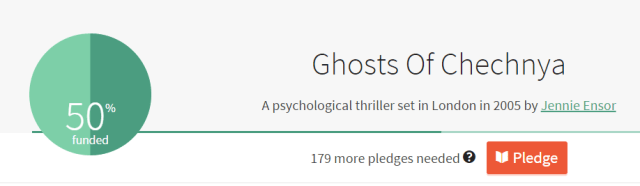
I considered giving up – and might have, had it not been for my husband’s encouragement along with my determination not to let this thing beat me.
So, what did I do to get there?
What didn’t I do? Loads of things that turned out to be next to useless – churning out posters advertising book readings, going door to door and around local cafes with my book info, hunting down celebrities who might just pledge… Some things I thought would work took too long to organise (talks at book clubs, etc). Twitter didn’t yield much though I was on it quite a lot in case someone mega famous decided to pledge. I spent days emailing all and sundry.

Feeling down after Christmas, I contacted other Unbound authors going through the same thing via Facebook. I organised a ‘live pledging’ event with readings from four of us, which resulted in modest extra support and much stress (a network failure halfway through made live pledges impossible). But the solidarity gained lifted my spirits – I gritted my teeth and kept going. I did my first author interview, for a Russian language newspaper. Pledges kept trickling in. However, in mid February I was only 68% funded and perilously close to my February 26 deadline. (An extension was asked for but looked uncertain.)
Outcome
I made my target 3 days before deadline while in Glasgow for a reading with fellow funding author Ian Skewis. I’d been planning a final desperate pledge hunt en-route; fortunately an anonymous donor (cue much excitement, mystery and speculation) took my book to 95% funded in one fell swoop. In the next 24 hours a flurry of pledges took it to 100%. I was overjoyed and overwhelmed, and spent the next week on a high.
Other outcomes:
- Crowdfunding experience to add to my CV
- ‘Going from shy and retiring into a brazen hussy’ – words of a friend
To wrap up
My thanks to anyone reading this who has supported my book. Please note, pledges can still be made (until May I think), with all supporter names to go inside a special edition.
My advice to anyone considering this route:
This crowdfunding thing is not for everyone. But you never really know till you try it. While it may not be true that anything is possible, a great deal that you don’t expect is.
Ghosts of Chechnya is due to be published by Unbound in early summer 2016 www.unbound.co.uk/books/ghosts-of-chechnya
Jennie Ensor’s blog/website: www.jennieensor.com


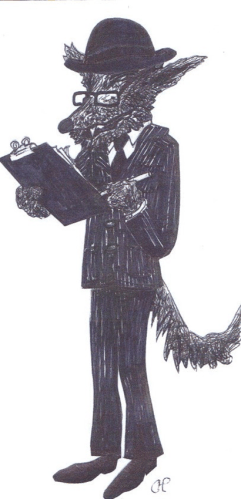 Ms Bacon? I am here on behalf of the Planning Department. I am afraid I have the unpleasant task of giving you notice to vacate this property.
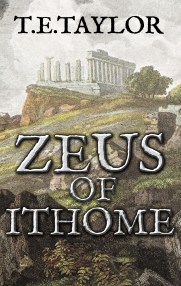 posed rather different challenges in this regard. Zeus of Ithome charts the historical struggle of the Messenian people to liberate themselves from their Spartan neighbours, and was set in southern and central Greece in the 4th century BC. It was important to convey a vivid sense of place as my central character Diocles, a runaway ‘helot’ slave, travels around Greece seeking support for his cause and returns to Messenia to begin the revolt. But there was a problem. I had been to some of the locations that feature in the story, such as Delphi (a magical place, half way up a mountain), but there were others, including Sparta and Thebes, that I had never visited, and sadly my budget did not run to an exploratory trip to Greece!
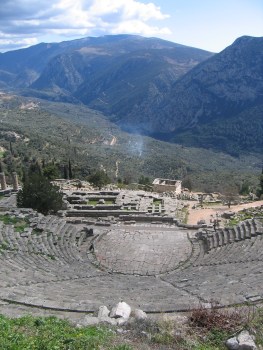 To illustrate, here’s a short scene from the book. Diocles arrives at Delphi, where he is to consult the oracle how the Messenians can achieve their freedom.
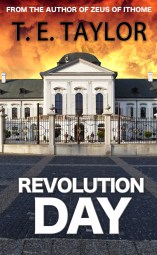 By contrast, Revolution Day is set in a fictional Latin American country. It follows a year in the life of ageing dictator Carlos Almanzor, clinging doggedly to power as his vice-president, ostensibly loyal, orchestrates a complex plot against him.
 fictional diary written by a dog, I didn’t have to worry too much about vital things such as settings, hooks at the end of chapters and the five senses. Of course dogs do have a highly developed sense of smell, but are more interested in the aroma of sausages than the scent of a rose. Beautiful sunsets are unlikely to be noticed and architecture seen as a post to pee against, as opposed to a work of art.
 I thought I’d use my own experiences as a free-lance chef and send Tilly Carey to a stately home to cook for a funeral. It’s her first job out of catering college. Deaths occur. If it’s poison, is she to blame? For the settings in Recipe for Murder, I decided on large rambling houses in Gloucestershire, Malta and Bristol.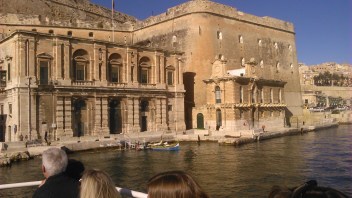
 Dougal’s Diary, published by
 Amazon link:
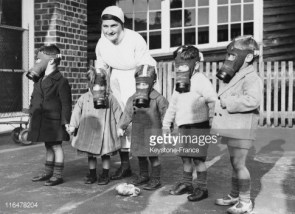 A Relative Invasion is a trilogy set in the Home Front of WWII. It all began with one tiny thread. An elderly man chatting to me mentioned that he had been the last child to be ‘chosen’ by the villagers where his school had been evacuated. The children had been walked around the village in a crocodile. This man had been a tall seven-year-old, (‘He’ll cost a bit to feed and clothe’) and was only taken in reluctantly.
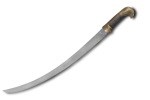 supported. So he needed a secret symbol of power and a supportive adult to advise him as a contrast to the ineffective parents. I hit upon a Cossack sabre, owned by this kindly man. The sabre then needed a background story of its own. This story led me into Russian/Germanic conflict at the start of WWI. And the sabre as Billy’s icon of power would need to filter through all three books.

