Some Men Fear the Needle

It was AIDS and the need for education that made the people of Kabubbu choose Geraldine and Geoff Booker as their benefactors.

“We are so glad to see you,” they cried. “You have come to bring us a hospital and a school.”

Nothing could have been further from the minds of this couple. They came to Uganda to visit friends, who brought them to the village, perhaps to find a child to sponsor. Since then, they have stumbled from one task to another and watched in wonder as the project grows from tiny seeds of hope and faith; not only their faith, but that of the villagers in equal measure; a mutual quickening. And so the Quicken Trust came into being.

I am a witness to what has happened here, and I am amazed.

My experience with hospitals in the past has been limited to family accidents, the occasional removal of internal organs such as tonsils and appendix, and having my children. It is with a sense of the unknown, and no little trepidation, that I set out to spend an anti-natal day at the Kabubbu Health Centre, built in 2004.

Dennis talks me through HIV. It is a virus which evolves into AIDS when infections start. TB is another trigger. Blood tests determine the levels of white cells. If they fall below 500, then the patient is issued with free retro-virus tablets.

Dennis’s story is similar to that of other Kabubbu volunteers who after a trial period may – or may not – be offered a job. A gentle, soft-spoken counsellor, he graduated at Makerere University in Kampala in clinical medicine. He couldn’t get a job elsewhere, so volunteered at Kabubbu Development Project (KDP) for six months in 2011. Then KDP assisted him with expenses for one year, before finally offering him a full time job.

We wade through a dozen files as I help him input the daily patient records onto computer. Then he passes me on to the ante-natal clinic in a spacious shaded area outside. There is an air of quiet resignation over the rows of expectant mothers as they come up to the desk in turn, carrying their plastic chairs.

I watch another volunteer take blood pressure readings, and I step forward to invite the mothers onto scales so I can record their weight. At least I don’t need medical knowledge to fulfil that task.
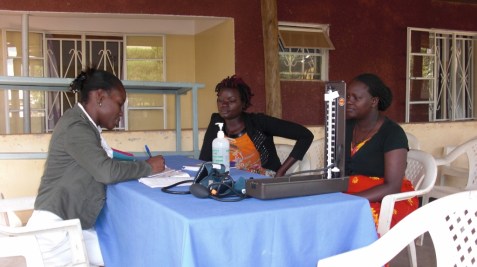
CIMG1976 (1024x575)

I forget to take a photo until the mid-wife is called away to attend a birth. She passes responsibility to a girl who does not shy away from the task. They are accustomed to having their photographs taken in Kabubbu, and welcome the chance to show their appreciation of the help they receive.

CIMG1977 (1024x575)

Women spend all day at the ante-natal clinic, and I begin to understand their logic in carrying their own chairs. Orderly lines form outside separate areas as they sit in the sun and wait for blood tests, then counselling if necessary, or the nurse, and treatment.
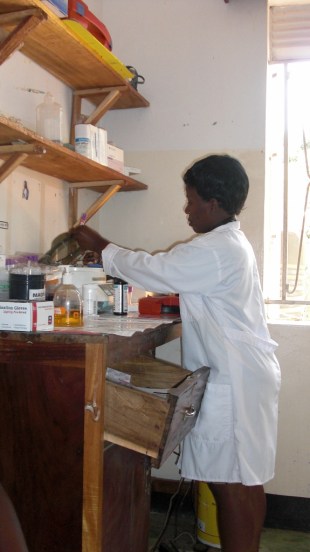
CIMG1978 (575x1024)

If this is a first visit of the patient, Dennis gives one-to-one counselling. With their permission, I sit in for one or two sessions. The counselling room is pleasant, airy, light and comfortable. All women are well advanced in their pregnancies. Dennis explains to me afterwards in English what they have talked about, but I can deduce their emotions from the body language.

A very young woman enters the room. This is her first pregnancy, but her husband has made excuses. Dennis gives her a LINKUP card (for youths aged 10 – 24) which is a free pass for him for any illness, treatment or tests, as they want to catch the youths and start educating them early in good health practices.

Another is expecting her fourth baby; this is her first visit and she’s six months pregnant. She is voluble when recounting her distrust of her husband, who refuses to come for AIDS testing. She thinks he’s off with other women. Dennis tells me some men fear the needle, others just don’t want to know; others say if their wives are okay, they must be okay.
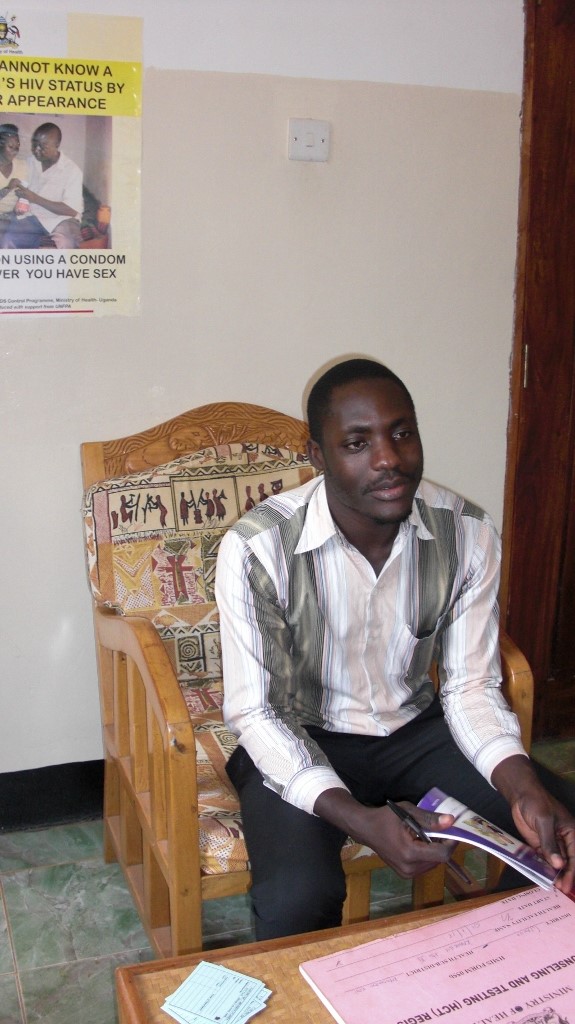
CIMG1979 (1024x575)

The final patient raises her voice halfway through the interview. She leans forward urgently, shaking her head, and despite Dennis’s calm responses, I can see that he is challenged. This one has been tested HIV positive, he tells me afterwards. Three months ago, she was negative. She is in denial (not unusual). He has refused her request for an immediate re-test, saying it is superfluous, as the result will be the same; so she is going to another clinic and will report back.

No mother at the KDP Health Centre has passed the HIV/AIDS virus to their baby since 2011.

Posted in Charity | Tagged , , , , , , , , | 2 Comments

It’s Thriller week at Crooked Cat Books

Brilliant books – I’ve read two of them, and one is on my to-buy list!

Stephanie Patterson's avatarCrooked Cats' Cradle

You could say it’s a killer week, with three fast-paced, yet very different killers showcased on our new Crooked Cat Books Facebook page! Nip over now and read excerpts, chat with the authors and find yourself a new addiction or three…

1

Here is the unholy trio:

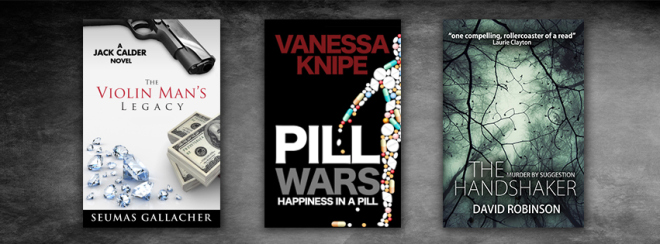
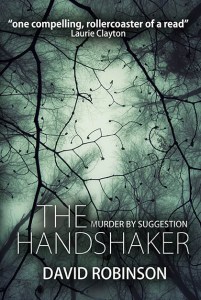
Meet The Handshaker in David Robinson‘s dark, gripping novel. 

The Handshaker: to take his hand is to invite death.Handshaker

In the darkest corners of hypnotic trance, who is in control? The Handshaker has put eight women to death. When another woman commits suicide, hypnotist Felix Croft believes he has the answer. Then The Handshaker takes Croft’s girlfriend.

The game changes.

A puppet dancing to the killer’s tune, Croft is first the hunter. In a dramatic turn of events, he becomes the hunted, running from the law, desperate to find the madman before he can kill again, and brought face to face with his own mortality in…

View original post 354 more words

Posted in Authors | 1 Comment

NINE THINGS I’VE LEARNED ABOUT BEING AN AUTHOR

These are valuable tips indeed. Jeff Gardiner, editor and master of several genres, is well qualified to write a continuation to my “Author Countdown” which started by accident a couple of weeks ago, when my blog “TEN THINGS…” broke hit records last month.  We’ve shared a successful library talk, and a book signing. A quiet, self-effacing man with a lovely family, and we have Africa in common. Welcome back, Jeff.

1.  Cope with rejection. This one is important. You can’t afford to be overly sensitive or sentimental about your creativity. Very few writers get their stories or novels accepted immediately (follow this link to make yourself feel better – http://www.literaryrejections.com/best-sellers-initially-rejected/). Rejection is part of the process. As one of my friends likes to say, “Cry me a river, build a bridge and get over it!” Have faith in yourself and your book and send off some more submissions. If you’re too scared to submit then you’ll never be a published author – or you could go down the self-publishing route.

2.  Accept criticism and harsh reviews. Along similar lines, you’ve got to steel yourself for critical comments and suggestions for improvements. Take the opportunity to learn from these opportunities and don’t let them deflate you (All together now ‘You gotta accen-tuate the positive, elim-i-nate the negative…’). Hopefully, you’ll get praise and encouragement too. It’s easy to forget the nice comments and to allow the pessimism to dominate your darkest, loneliest moments. Don’t. Just don’t. Be professional, and humble enough to accept advice.

3.  Improve your time-management skills. Authors work alone and you’ve only got a publisher (possibly an agent) and your friends and family to answer to. But essentially you’re the boss. Sometimes you have to learn to make the most of half an hour here and there, while your busy life whirls around you. So be it. Be effective in how you use those half hours. Work out when you write best (are you a morning or night person?) and utilise those times. Watch less TV. It’s not only about writing but using the time to answer emails or to plan your publicity or marketing.

4.  That I must improve my publicity and marketing strategies. This is the hardest bit for me. I’m not good at pushing myself or my books, and I’m very conscious of annoying my friends on Facebook and Twitter with constant hard-sell posts. I spend many hours trying to get reviews; writing blog posts; answering interview questions; organising spotlights or guest posts on other people’s blogs, and so on. Yes, folks it takes hours and hours, even though you wonder if anyone is even the least bit interested. I’m still learning about this one and if any readers have any new ideas or tips then I’d love to hear them.

5.  Juggling work and family life. Having kids is awesome. It’s the most wonderful, frustrating, fulfilling and difficult thing I’ve ever done. Children eat your time; they demand (and deserve) attention. They also don’t understand the concept of silent concentration. What I’ve learnt is that school holidays and weekends are not good times for writing, and my work has to take a back seat at these times. This is good for me, in terms of becoming a better parent, and because it also stops me being too self-indulgent or obsessed with my writing.

6.  Don’t give up the day job. Unless you’re very lucky you will not be rich like J.K Rowling. When people hear you’re an author they immediately assume you’re rich and lazy. I wish. Unless your book is a bestseller, or you sell the film rights, it’s unlikely you’ll even earn a living wage. I do other jobs around my writing. Many fiction writers are also journalists, freelance article writers, editors, proofreaders or work in publishing. Many great writers also hold down full-time jobs (or marry a rich spouse). When you get your first acceptance letter from a publisher don’t get so excited that you make the mistake of phoning your boss to tell him or her where to stick their job!

7.  Learn about tax returns and self-assessment. A published author is essentially a self-employed person. If you earn more than the tax threshold (or even if you don’t) you’ll probably have to complete the dreaded tax self-assessment form. It’s essential to read up about it (https://www.gov.uk/personal-tax/self-assessment). If you don’t declare your earnings then you could receive a fine. Most importantly keep all receipts and remember you can claim back on things like heating, lighting, petrol, computer purchases, paper, stamps etc. Once you’ve familiarised yourself with what’s required it isn’t too daunting.

8.  Get used to working alone. Solitary confinement is a punishment in some societies, but writers choose it as conducive to the state of creativity. I cannot write with distractions or music playing. I like to be alone and in silence. We’re all different though. It’s important to find a space where you’re happy and comfortable. It’s important to look up from your screen regularly and to go for walks or include exercise in your daily routine. I say make the most of being alone. Let the chance to concentrate free your imagination and allow you to make your writing the best it can be. Just be wary of those little voices that come back to haunt you at 3am (or is that just me?).

9. Take part in events such as signings or talks. Part of being a professional writer involves you talking to groups, visiting schools or colleges, going to literary festivals, organising launches. One word of warning: be ready for nobody to turn up, and don’t take it personally. Nobody said being a writer will be easy or glamorous. But if you’re willing to put in the hard work then success will arrive… eventually.

About Jeff:

Jeff Gardiner is a UK writer who was born in Jos, Nigeria. His first novel, Myopia explores bullying and prejudice among teenagers. Igboland is a novel of passion and conflict set in war-torn West Africa. Treading On Dreams is a tale of obsession and unrequited love. He has recently signed a three book deal with Accent Press for a trilogy of YA fantasy novels beginning with Pica.

His acclaimed collection of short stories, A Glimpse of the Numinous, contains horror, romance and humour. Many of his short stories have appeared in anthologies and magazines.  Jeff also has a work of non-fiction to his name: The Law of Chaos: the Multiverse of Michael Moorcock.

“Reading is a form of escapism, and in Gardiner’s fiction, we escape to places we’d never imagine journeying to.” (A.J. Kirby, ‘The New Short Review’)

Jeff’s website: http://jeffgardiner.com/

Jeff’s blog: http://jeffgardiner.wordpress.com/

Jeff on Facebook: https://www.facebook.com/jeff.gardiner2

Jeff on Twitter: https://twitter.com/JeffGardiner1

Posted in Author Countdown, Authors | Tagged , , , , | 41 Comments

How Charity Does – or Doesn’t – Work in Africa

CIMG1994 (1024x575)

Makerere University campus, Kampala

 I feel shattered after a 5am start and seven hours’ travel. A smooth flight from Nairobi to Entebbe, then a slooow drive through crawling traffic for about one and a half hours through the sprawling outskirts of Kampala, much greener than drought-stricken Kenya.

CIMG1993 (1024x575)

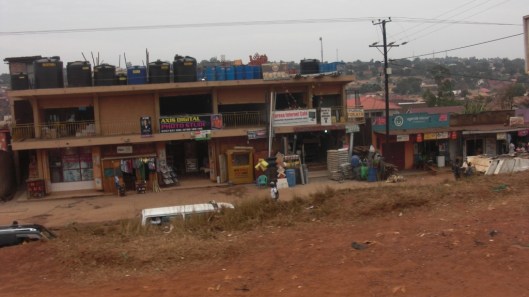
The red soil and grassy banks behind which the Ugandan shops ply their trade remind me of rural Kenya.

CIMG1959 (1024x575)

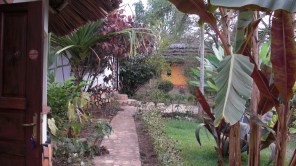
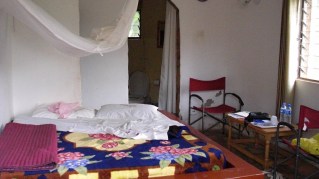
CIMG1958 (1024x575)My room in the Kabubbu Resort centre north of Kampala is lovely; basic, clean and serviceable. And my eyes light up at the numerous Great Blue Turacos that flop among the foliage. I’d only ever seen a single one in Kenya’s Kakamega Forest before.

I lunch in the dining room and remark on the heavy, solid chairs.

Geraldine and Geoff Booker are the Founders of The Quicken Trust charity in East Sussex, somewhat dazed at the journey that has been imposed on them since 1999 when the Kabubbu concept was born.

They never had a plan – or a “model”, as somebody asked them. Kabubbu has progressed over the years, as part of God’s accord, and they’ve gone along with it.

We discuss the reason for my visit. Children from local schools in East Sussex go out on holiday projects, and adults from all walks of life become sponsors of children, home projects, and even grandparents. Lives have been changed dramatically by the experience – of both the givers and the receivers.

I want to know how their volunteers react to the Project. They rejoice in the freedom from restraints of modern Britain, I’m told: “We can touch and hug the children without fear of attacks and accusations of ill-intent.”

“And the people of Kabubbu?” I ask. Geoff says they are like all humans. Some embrace the help given through Quicken Trust, they take responsibility and run with it. Others grab what they can, then sit back and do nothing; yet others are suspicious, they wait and watch, wonder why help is offered, then in time might acquiesce, or turn away. It all takes time, he says; it’s barely 150 years since Uganda saw its first missionaries. It took UK since Roman times to get where it is now.

Perhaps that’s the secret of this extraordinary Project: time, patience and collaboration?

After lunch I go on a two hour walking tour with John Kisakye, who went to school about 8 km away, and started work in the project library before he took up guide duties. His 85 year old father used to be the local pastor.

The Kabubbu Development Project (KDP) is a locally registered Non Government Organisation (NGO) which owns and manages various projects. Quicken Trust works in partnership with them, raising funds.

CIMG1989 (1024x575)

Boda Bodas

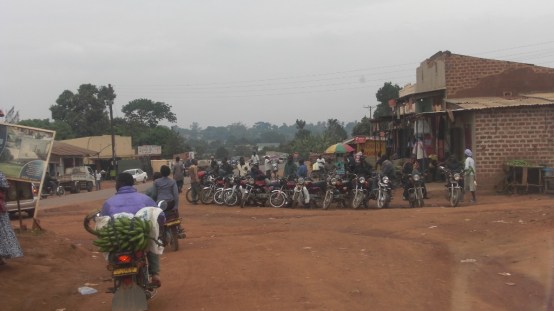
“Projects” are scattered seemingly haphazardly over a sprawling area, which cannot be compared with the compact villages of the western world. A dirt road, where boda bodas (motorbike taxis) ply their business, is the “village” backbone. Four boreholes have been built, and people draw from them daily. But for John, the advent of electricity was the turning point for the village. It drew outside business and raised the price of the land.

He shows me the piggery. Piglets scamper along the dividing passageway while the sows grunt at us. A toad lurks in a corner by the door. The pigs belong to different families in the village. When a household is given a pig by a sponsor (who buys it from the Project), the first litter is distributed freely among the community. The second litter, however, belongs entirely to the original recipient, who can then start a business. The gift is thus “passed on.” This idea was devised by the Project Trustees, says John.

“Like AIDS, but in a positive, good way!” said John Sibi Okumu, a friend of mine, when I tried to explain the concept to him.

For the villagers, the focus is on “the KDP”. There is no mention of Quicken Trust. Quite natural. Conversely, the sponsors and volunteers see it as the Quicken Trust project. Interesting…

I spend a week at Kabubbu probing into the inner rationale of this amazing place, for I am writing the sequel to my book, Breath of Africa, and am interested in how charity does – or doesn’t – work in Africa.

I shall be digging deeper over the next few weeks.

Posted in Charity, Kenya, Travels | Tagged , , , , , , , , , | 3 Comments

Sham-Loose … Definitely Somebody to Know

At last – Crooked Cat’s most intriguing member is gracing my table today. Welcome to Master Blogger Seumas Gallacher. I dont always understand what he’s going on about, but he’s definitely somebody to know…

Seumas, I’ve been intrigued ever since you joined the Crooked Cats. Do you always talk the way you write on Facebook?

If you mean the lapses into Docklands Govan, Glasgow-ese, the answer is a definite ‘No’… I’d never be understood anywhere, except p’raps in Govan itself.  When I first transferred to London all those years ago, I truly had to slow down my speed of speech delivery, and to learn to enunciate in a way that my English could be understood in the Big Smoke. 

I see you live in the United Arab Emirates. It has the best airline in the world for food (though I don’t appreciate the terminally long waits in Dubai between flights). Care to tell us what it is like living in the desert and why you chose to be there? 

I came to Abu Dhabi 11 years ago on a supposed one-month corporate trouble-shooting assignment to help a friend, who happened to be the new CEO in a bank there. After the month was completed he made me ‘an Irish mafia offer’—one I couldn’t understand!… I accepted and I’m still in the region, having left that bank 6 years ago. The locals whom I’ve been privileged to deal with corporately and personally have been among the straightest dealers I’ve known. You keep your side of a deal, and they will deliver on the other side…that’s been my experience, anyway. As for the heat, it’s back to the Noel Coward thing, only ‘mad dogs and Englishmen go out in the mid-day sun’… and I’m Scottish!

You must have visited many countries, judging by your books. Which destinations have produced your most amusing memories?

I’ve found humour everywhere I’ve been…I think maybe I carry a twisted, droll, dry Scots slant on things. Amusing scenes have included people and sometimes just watching tourists being, well, being tourists… hilarious creatures in the main. ‘Lost in translation’ scenarios are ripe with humour.

…the pronunciation of my name. ‘Seumas Gallacher’ was a constant source of amusement as fractured by various local secretaries in Chinese Hong Kong over the years ‘Mister Galloper’ and  ‘Sham-Loose’ were two favourites..
On one occasion, I was on an outside meeting, away from my office. I called back in to my own, quite new, secretary (a really charming Chinese girl). 
I opened the call with, “Hello, this is Seumas here,” to which her reply was, “Sorry, he not here right now”… 
I said, “I know… I AM Mister Gallacher,”… again she replied, “I tell you he not here.. Who can I say is calling?” 
“It’s me, MISTER GALLACHER !”..
“No, he come back later, I tell him you call. What your name?”
…I gave up

You are the self-professed “oldest computer Jurassic on the planet.” Please translate! I first used a word-processor 27 years ago, and bought a laptop 25 years ago. I don’t suppose I can compete…

What I mean by that is I bought my first-ever laptop only 6 years ago to type the first Jack Calder thriller, one finger from each hand at a time—still the way I work. The simple so-called ‘logical’ process of computers seems totally illogical to me—that  has caused great anguish in punching wrong keys and misinterpretation of instructions…it’s a bluudy wonder any of my books got produced. So by ‘Jurassic’ I mean it all passed me by.

I’m impressed at your blogging expertise. Care to give us some advice on how you became Blogger of the Year 2013? 

It defeats my understanding—an international voting system, of which I was blindingly unaware, went on, and I was informed when my name appeared in the top 10, then the short list of 3, then Hey Presto, Blogger of the Year… all I can say to that, is there must be a dearth of good bloggers out there!

From where do you find the inspiration for your fast-paced thrillers? 

When I was in the Far East, one trouble-shooting engagement in the Philippines involved a difficult turnaround of a shipping company. I was obliged to fire hundreds of trade union dock workers, plus local policemen and local mayors who were not best-serving the company’s profits. It was recommended that I have an armoured car and armed bodyguards for the ensuing three years. The guy who owned the security firm was ex-SAS. Ten years later, that became the nub for the genesis of Jack Calder and his colleagues. The story lines are easy… just watch the cable news channels and change the names to protect the guilty!

Like to give us your thoughts on the advantages and disadvantages of self-publishing? 

It may not work for everyone, but I liked the idea of being, or at least thinking I was being, partially in control of my writing destiny. I had a steep learning curve on the ‘business of writing’ including editing, proofreading, artwork, Kindle, marketing and promotional activity. That experience carries easily into having a good publisher alongside. 

How did you find the Crooked Cats? 

Several of my social networking connections were already aboard with Crooked Cat Publishing, and spoke highly of Stephanie and Laurence Patterson, the owners. When they had an open month of submissions, I applied, and am delighted to be moving ahead with them. 

You’ve had an eventful life, so I’ll just end with asking where in the world you fancy finally finding a peaceful retirement, and why? 

I’ve retired three times already in my life and became something of a professional ‘retirer’. My mind will not permit me to be idle. I like to be ‘engaged’ so now I still have my own corporate trouble-shooting firm, as well as being immersed in my writing, which I’ve embraced with a passion. So ‘retirement’ is not currently in my vocabulary.

Many thanks for a great slate of questions, m’Lady, Jane. Mwaaah! J

You’ll find Seumas’s books by clicking on the pics below….

wall copy 2

Posted in Authors | Tagged , , , , | 16 Comments

DEVASTATION? NOT A BIT OF IT.

CIMG1888 (1024x575)As far as the eye can see – earthworks, dozers, deep gashes in a disappeared hill. Or was it a mountain? It might have been a mountain for all I knew. Three forlorn palm trees stand along the far rim of the excavation, and a lone baobab is preserved elsewhere on a pedestal of sand.

Why such destruction by the hand of man?

I am so proud of him – my son – born over fifty years ago, pushing out one minute before his twin sister and twice her size. Throughout his life he’s seized the moment. He started with nothing. We could give him nothing … except the best education there was for what he wanted to do.

CIMG1912 (575x1024)Now look at him, the spearhead of the largest, most modern and environmentally friendly mine in the country. Winner of the Kenya National Chamber of Commerce and Industry Corporate Citizenship Award, 2015.

Base Titanium is the name, and titanium the main end product – the stuff of which hip replacements are made. Other products are rutile (more concentrated titanium) and zircon (used in ceramics). Water is the conduit of the vast tonnage of sand from which this valuable mineral is extracted.

Everything on this site in Kwale district on the south coast of Kenya has been built from scratch. A tarmac access road causes a flourish of local businesses, sponsored schools and pilot agricultural projects. A dam spills out for downstream farmers, with several boreholes for back up in times of drought.

CIMG1882 (1024x575)

A towering processing plant works by centrifugal force, magnetism, high voltage electricity and other things I can’t understand. There are on-site training programs for local Kenyans, groomed to take over from expatriate expertise, and already this is starting to happen.

But the crowning glory is an enormous ring of residual sand fortified with bitumen, destined to rise out of its own sludge and dominate the surrounding land. It will be topped by trees, already growing into saplings in preparation for the transplant into carefully preserved topsoil. The sludge drains away into man-made wetlands, which attracts exotic birds; and to complete the cycle, the wetlands filter back into the original dam. CIMG1895 (1024x575) On the horizon behind that bush at centre-right stands the processing plant. Sludge from the new growing mountain of sand drains into the wetlands in the middle of the picture. This filters back into the dam, from where water is pumped to carry the mineral-rich sand up to the processing plant.

And the whole area will be rehabilitated after consultation with local communities and stakeholders, once the thirteen year life span of the project expires.

http://basetitanium.com/

Posted in Kenya, Travels | Tagged , , , , | 1 Comment

People Matter More than Possessions

Sue Barnard author pic

Today I welcome back fellow Crooked Cat author, Sue Barnard as we chat about this and that. We have a few things in common, I see, for I, too, was adopted (for a different reason); and the bulk of my family also lives in Australia. I’m sorry we’re not going to meet again at our publisher’s get-together this year, Sue. Have a great time, all of you!

Sue – you’re a lady after my own heart: I too was a full-time parent, for twenty-odd years. How much did your family teach you, I wonder, and how many children / grandchildren do you have?

I have two grown-up sons.  No grandchildren as yet (at least, none that I know about!), but I am a great-aunt, several times over.  More about that later.

Being a parent taught me that it’s people, not possessions, that really matter.  Before I had children I used to fret over trivial stuff, such as if a book got damaged or a favourite cup got broken.  It didn’t take me long to see the error of my ways.  Objects are replaceable – people are not.  Now, if something goes wrong, I ask myself: “Does it matter?” In at least ninety per cent of cases, the answer is “No.”

Please give us a little of your background, which you say is stranger than fiction?

It’s a very long story, and would probably fill another book just on its own, but briefly: I was adopted as a baby, was brought up as an only child, and had lost both my parents before I was forty.  Then, a few years later, quite out of the blue, my birth family turned up.  Suddenly I had a mother, a stepfather, siblings, cousins, and nephews & nieces.  Some of those siblings were already grandparents, which turned me into a ready-made great-aunt.

A few months ago I wrote a blog post about one particular episode of the story.  You can read it HEREWhat a wonderful story, Sue!

One of your sons has given you the label “professionally weird”. Would you care to elaborate?

Some years ago (for reasons which I won’t trouble you with here), I became involved with composing questions for BBC Radio Four’s fiendishly difficult Round Britain Quiz.  This is the radio equivalent of BBC TV’s Only Connect, and both require a particularly warped (or weird) type of brain – both to answer the questions and to set them. I received a modest fee for the questions I supplied – I was being paid for being weird.  Hence: “professionally weird.”  It was quite a while ago, but somehow the label has stuck.

You’re quite a linguist. How have your languages helped you, and do you use them much these days?

I’m sure it’s accidental, but several of the books I’ve edited recently have included foreign words or phrases – it helps to know if these have been used correctly. And understanding even just a little of the local lingo certainly helps when travelling, even if it’s just being able to decode a menu or a road sign!

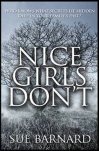
I am in the middle of reading your delightful romance “Nice Girls Don’t”. A great light summer read. Different from “The Ghostly Father”, although both are love stories. I can see myself becoming a fan of yours. What’s next in the pipeline?

IMG_3762
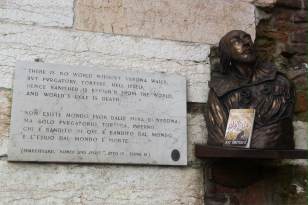
It’s very kind of you to say so!  As you know, The Ghostly Father is based on Shakespeare’s
Romeo & Juliet.  For my next book (The Unkindest Cut of All, due out in June) I’m returning to the works of the Bard. The story is a murder mystery set during an am-dram production of Julius Caesar – but (apart from making the Soothsayer female) I haven’t messed about with the plot this time!

You are a much-appreciated editor at Crooked Cat. Which do you prefer – editing or writing books… or poetry?

That’s a difficult one to answer, as I’m not really comparing like with like.  I love being creative, but it’s also very satisfying being able to help other writers.

Have you travelled? Which is your favourite place?

IMG_5124

I’ve been fortunate enough, over the years, to have visited all five continents.  I don’t have a particular favourite, but I’ll share a few photos from my many and varied travels.

IMG_4987

And, if there were no boundaries, what would you like to do / be / have?

Most of my family are in Australia, and I’d love to be able to visit them more often – and be able to afford to fly there in comfort, rather than having to endure hours on end in cattle-class.

And I love food and travel.  So if someone offered me an all-expenses-paid job as a restaurant critic and/or a travel writer, I think I’d be very tempted!

I know the feeling, Sue, as all my grandchildren live in Australia. Although most of them are now of an age where they travel by themselves.  But isn’t it amazing how the hours fly by when you have a good book to read!

NGD front

Sue’s links: Romantic Intrigue Nice Girls Don’t;  Historical Fantasy The Ghostly Father

Website: http://broad-thoughts-from-a-home.blogspot.co.uk/

Posted in Authors | Tagged , , , , , , , , | Comments Off on People Matter More than Possessions

It Is As If I’ve Never Been Away

There’s no better way to get around Kenya than from Wilson Airport in Nairobi. My one-and-a-half-hour flight to the coast is painless and speedy. And all the more delightful when I pick up Ndege, their in-flight magazine, to find a review of my book!

CIMG1935

Son Colin meets me in his 4WD, and we crawl along the road leading to Diani Beach. Kenya speed limits in built up areas is 50 kph, and the coast road could be classified as such. But sometimes you can’t go at more than a walking pace.

Colin has to work, and leaves me with friends in their spacious house on the sea front. I brave the rocky coral below the sea wall; I don’t remember seeing so much coral on this beach in the distant past, but find a sandy pool revealed by the receding tide. Then, leaving my binoculars hidden under a wrap beside the steps, I walk along the wide white sands of Diani beach. It is as if I’ve never been away.

A beach boy irritatingly keeps pace with me about twenty feet away, despite my dismissive gestures; I about-turn quickly and stride in the opposite direction, which does the trick. The beach is practically deserted. Due to international bans on travel to the coast after Al Shabaab problems, there have been no tourists for months. The whole area has a dejected, stagnated air and hotels struggle to remain open.

“Why don’t they reduce their prices and target the local people?” I ask.

“Why indeed,” says more than one of my friends. Prices are still preposterous, and National Park fees way beyond the means of most Africans.

CIMG1938 (1024x575)

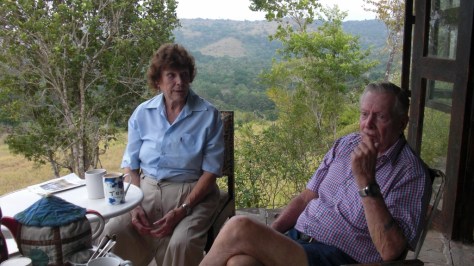
We drive to the Shimba Hills Reserve to spend the night with old Tigoni friends, Rosemary and Dick. I remember the view, unmistakeable after many years, and we enjoy hours and hours of interesting chat. Rosemary serves us Javanese chicken for dinner. The flavour is familiar – I used to serve this delicious dish to special guests in the past! And then I remember, it was Rosemary who gave me the recipe over forty years ago. Dick entertains us with many a tale of his escapades as a pilot in Africa.

Colin leaves for work in the morning, while Rosemary walks me round their “tree houses” erected to attract weekend visitors from Ukunda. They are now a little dilapidated because of the tourism downturn. Their isolated home has been on the market for quite a while.

Dick drives like a snail in their station-wagon along atrocious erosions down to Ukunda, the road winding through tiny deserted villages, passing small shambas of straggling maize and banana plantations. Half-finished buildings, crude shops and bars line the route, and we giggle at the grammar and miss-spelt signs. The occasional goat or cow is tethered in a field full of weeds; everywhere chickens cluck and scratch in the soil.

It is hot, but not unbearable, thanks to a faraway tornado over Madagascar, which produces a cover of thin cloud even this far north.

Posted in Kenya, Travels | Tagged , , , , , , , , | 2 Comments

Laura is No Newcomer to Writing

A big welcome to first-time novelist, Laura Huntley, and one of Crooked Cat‘s latest finds; her book, Black Eyed Boy, promises some dark excitement, but she’s no newcomer to writing.

Laura Pic

You say Black Eyed Boy is your first novel. Please tell us about your other writings and their genres

My work has appeared in several anthologies now. I mainly used to write flash-fiction and short stories. The vast majority of my published pieces are horror works; the scarier the better. I do love to add twists and turns and I am a fan of quirky characters so some of my stories are quite unusual.

One reviewer of Black Eyed Boy has commented on your description of the seaside town of Whitby, saying the “setting is as much a ‘character’ as typical teen Emily and gypsy Dylan.” That strikes a chord with me, as it’s been said of the setting in my book, too. Where have you travelled, and what is your favourite place?

whitby cover new

I was delighted to read that particular comment as it was vital to me that I did Whitby justice. Whitby is my most favourite place; a true jewel of North Yorkshire. I haven’t travelled much in my life, though I have been to some beautiful places. Whitby is the one place that I keep going back to and I leave my heart there, every single time

Do you have a particular theme in Black Eyed Boy?

There is a lot going on within those pages. It is described as a romance but there is certainly not much fluffy about it. I would say that there is a running theme of belonging. All Emily has ever wanted is to feel that she belongs somewhere, she is very much a lonely child. She experiences some truly heart-breaking and harsh realities but she manages to cling on to some hope.

I wonder if you are having as much trouble as I am, with writing a sequel. What is the most challenging thing about it? And are you using a similar way of going about it, or have you learned from past attempts?

The first (oh so rough) draft of the sequel has been written. I am now back in the editing process, eternally arguing with myself over words and punctuation. It has been strikingly different to writing the first one (I am now convinced that it wrote itself). This has certainly been trickier. It will be the middle book and it’s harder to get that right, I think. The third and final instalment will give me a chance to tie up all the loose ends. Also, several chapters of the sequel are incredibly tense, I have frequently likened penning this book to dangling off the edge of a cliff.

I see you run a writing group. How long have you been doing this, and how does it help with your own writing?

It will be a couple of years old soon. I love my writing group and I adore my writing group ladies. We have a lot of fun. I provide word or picture prompts or opening sentences and it often feels electric as the other members are talented and super creative. We read our work aloud and I set them work to do for the following session. It’s especially brilliant if you find yourself in the occasional writing rut or you simply need a little break from your current project. It’s a wonderfully relaxed and friendly environment and I always tend to feel happy with something I write there.

How did you find Crooked Cat?

Quite early on in my writing career I noticed a call for submissions. Crooked Cat were putting together an anthology (which later turned out to become two) full of horror stories. Well, I couldn’t resist. I had such a creepy and bizarre idea and I was delighted when they chose to include ‘The Lost Souls’ in Fear: An Anthology of Horror and Terror Volume Two. I enjoyed working with them and I had a strong feeling that it wouldn’t be for the last time. As soon as I had finished writing Black Eyed Boy, I knew exactly who I wanted to send it to. The whole experience has been a blast. Choosing the cover artwork was particularly exciting.

Something tells me you like to cook (or eat?). What is your favourite dish?

I am seriously hoping that my partner doesn’t read this question. He would laugh his head off as he gets stuck with making most of our meals. I’m not very good (or at least that’s what I have convinced myself). I don’t have huge amounts of patience for cooking although I do make a mean chocolate fudge Malteser cake when I can be bothered. I am a huge foodie though. I love food! I made a nacho pizza this week and it was insanely delicious. Italian and Mexican are my favourites so combining the two resulted in my own personal food heaven. For those drooling over the notion of the chocolate fudge cake, here is the recipe: http://www.bbcgoodfood.com/recipes/6652/naughty-chocolate-fudge-cake

What do you do when you’re not being an author or a mum? Favourite hobbies?

I love reading, I have a frankly stupid amount of books now and I can’t seem to stop buying new ones. I am interested in Tudor history, watching horror films and I adore high heel shoes. I like to teach myself astronomy, figuring out where all the different constellations and planets are in the night sky. Also, I am into crafts. I make jewellery, cards, hair accessories, cushions and purses.

If there were no barriers, what would you like to do / be / have?

Of course, I would write best-selling novels that are celebrated all over the world. And I would live in a gorgeous cottage I have seen called Poet’s View. I would look out at the North Sea and spend my days writing, inspired by the beauty around me. At night, I would walk around the old-fashioned cobbles of the Whitby streets and eat the best fish and chips in the world.

Huge thanks for inviting me over to your blog and for the interesting questions.

It’s been a pleasure having you, Laura.

You can find out more about Laura HERE on her blog.

And her book is on Amazon.co.uk if you click on the cover:

Product Details

You can dip into her other stories HERE.

http://twitter.com/laurahuntley

http://www.facebook.com/LauraHuntleyWriter

Posted in Authors | Tagged , , , , , , | 1 Comment

Unexplained Happenings in the House

A lovely peaceful day and two nights in Jackie’s home on the northern side of Lake Naivasha, in the Great Rift Valley.

CIMG1955 (1024x575)

We used to enjoy many a day playing games of bridge, with breaks for lunch and tea when she lived next door to us in Langata, a suburb of Nairobi.

“She lives in a container,” I was told. But Jackie had to point out and tap the tin container walls embedded within the stone house, to draw my attention to them. Large rooms, spotlessly clean after the pervading dust of my journey. Steps in unlikely places. Familiar pictures on the wall: African hoopoes, silhouettes of African faces, African scenes.

Piping hot solar heated water allowed me to wallow in the luxury of a bath. Jackie warned me the electricity was also solar, and it turned off after a certain time at night. But I didn’t need the torch provided as I slept like a log, despite Jackie’s attempt to “warn” me about occasional unexplained happenings in the house – like the TV suddenly turning itself on.  She told me not long after she came to live there, when nobody else was in the house, she felt a ‘push’ and went flying down a step several feet into the lounge, cracking a rib and suffering bruises.

In the morning I went to open the window to breathe in the sun, and tripped over a clothes horse standing in front of it. I fell, arms and legs entangled in the bars, and grazed my arm in a couple of places, but the wounds healed quickly.

Jackie is unhappy here. She is a gregarious soul and feels isolated nearly twenty kilometers from the main Naivasha Road, down the impossibly rough track coated with thick dust.

We did feel a few drops from tantalising dark grey clouds in the evening after our stroll round the 72 acres of land where her cottage stands. The farm is well planned; fields of drought-stunted hay, plantations of wattle and whistling thorns. Fenced off tracks between the neat fields. But a seeding of Rhodes grass has utterly failed.

Now the owners are wanting to sell; Jackie heard it on the grapevine. She’s hoping to return to Langata where a friend is applying for permission to put up a guest house for her, back in the bosom of her bridge-playing pals. We both know it may take forever, but there’s plenty of time in Africa.

Most of my time with Jackie is taken up with memory forays into the past, via a bridge four, lunch and chat. I also enjoy a magical two hours in her drought-stricken garden with its splashes of bougainvillea, geraniums and other hardy flowers.

I sit outside with my kindle, but read not a word as the birds hop and chatter around me. I catch them in my binoculars, delighted at my ability to recall many names buried in the over-loaded hard-drive of my brain.

Posted in Kenya, Travels | Tagged , , , | 1 Comment