The Location Chose Me

I am delighted to introduce new author Rosie Travers in my series on settings for books.

I thoroughly recommend the read, which took me away from my trials and tribulations into a wonderfully contrived, fast-moving story with all the ingredients of love, intrigue, endeavour.  Over to you, Rosie.

***

My debut novel, The Theatre of Dreams, is set in the fictional resort of Hookes Bay on the Hampshire coast and tells the story of an unlikely trio of characters who conspire together to save a neglected seaside pavilion from demolition.

Choosing the location for my story was easy, actually I think it chose me. Inspiration can sometimes strike in the most unlikeliest of places. Lee-on-the-Solent is approximately 8 km west of Portsmouth, in the borough of Gosport. As its name suggests, the town sits on the Solent, facing the Isle of Wight.  This is whole area is synonymous with Royal Navy activities – barracks, armouries, submarine stations, airbases. It’s not a holiday destination – or at least it isn’t today.

Lee on Solent today (1)

But Lee-on-the-Solent has a past – back in the late Victorian era, before the arrival of the Navy, the town attempted to establish itself as a resort. A pier was built, the railway line extended, and grand houses constructed along a marine parade. Then in the 1930s, an Art Deco entertainment complex comprising a ballroom, restaurant and cinema was added on the esplanade, topped by a 120 ft observation tower. Lee’s glory didn’t last long. The pier was destroyed after the second World War while the tower complex only lasted until the 1960s – the archetypical white elephant.

I knew nothing of any of this until a couple of years ago when taking a walk along the blustery and somewhat exposed seafront I came across a notice-board commemorating the site of the historic complex. Where once there was something quite unique there was now just a promenade and a car-park. How could they have let this happen? I thought. Why wasn’t this glorious Art Deco building preserved?  It seemed a travesty.

Lee Tower (1)

My imagination was well and truly captured. I conducted some online research, uncovering a whole bevy of Art Deco pavilions dotted across the country. I read about the De La Warr pavilion further along the coast at Bexhill-on-Sea in Sussex – restored into a contemporary arts centre after a public campaign and wondered why this hadn’t that happened at Lee.  Where was the vision, imagination, determination, ingenuity, oh, and the money of course, to conserve this little town’s slice of cultural history?

And so an idea was born, although I have downsized events for my novel. In The Theatre of Dreams my two leading ladies don’t need an observation tower and an entire entertainment complex to bring them together, just something small and meaningful – a family run theatre.

Hookes Bay is purely a figment of my imagination. Yes it does have some similarities to Lee – they share a pebble beach, they have a promenade, but Hookes Bay still has the remains of its pier, and of course, its Art Deco pavilion. Or at least it does at the start of the story…
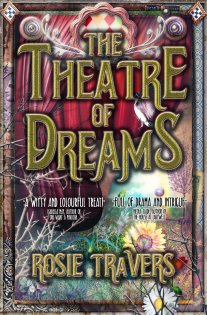
31143884_1914234175283048_8927325451584536576_o (1)

Mybook.to/theatreofdreams

Musical Theatre actress Tara is down on her luck and in need of a job. When terminally ill octogenarian Kitty invites her to take over the running of her former dance academy in the old fashioned resort of Hookes Bay, Tara thinks she’s found her guardian angel. But it soon becomes very clear Kitty is being far from benevolent. Too late Tara realises helping Kitty will signal the end of an already tarnished career, unless she can pull of the performance of a lifetime.

Website: www.rosietravers.com

Facebook: RosieTraversAuthor

Twitter @RosieTravers

Instagram: RosieTraversAuthor

IMG_0076 (1) (1)

Posted in Authors | Tagged , , , , , | 2 Comments

Just Like Old Times

Kenya visit, Wed 7th March 2018

I’d been looking forward to the Museum Wednesday Bird Walk with Fleur Ng’weno and it was just like old times.

We meet at the Nairobi racecourse, about 18-20 people, mainly museum trainees and guides. We don’t move far from the cars, as sightings are continuous.

African green pigeons are spotted first, lovely colourful birds. We list about 60-70 birds altogether. Migrants are still around: black caps, European bee-eaters and warblers.

Familiar African weavers, golden, grosbeak and baglefecht; bulbuls (I remember on my first ever bird walk with Fleur way back in the ’80s, being so excited at my first bulbul spotting, and Fleur patiently showing me how to find it with my new binoculars). Bronze and collared sunbirds busy themselves among the flowering trees. A crested eagle, fish eagles (I’ve never seen them in the city before), swifts and martins. Fleur spots a yellow throated long claw near the home straight of the racecourse, pointing in her familiar pose. You can see it’s been raining.

I have to leave at noon as I’d inadvertently locked the maid out of Anthea’s house. I have a quick shower, then go off to join Fleur for a sandwich lunch at the Museum.

The new Chinese tangle of roads at the junction filled me with confusion. I missed the turning to the museum (needless to say, there were no signposts) so had to go a very long way round.

Fleur had lost weight, after a heart replacement in the US, and had missed a few bird walks as a result. But she was very chirpy as we sat in the museum cafetaria, exchanging news. Outside, a Women’s Day function was in full swing. She directed me to the smart new Kenya Museum Society offices and I offered them 4 books to sell on commission. Astonishingly, VAT is charged on books in Kenya.

Leaving the museum on the way back to Kenton College, I took a wrong turning before the interchange and found myself crawling up the dual carriageway towards the city centre, inch by inch. At church corner, I doubled back past the United Kenya Club, turned right down Arboretum Road and up to Kenton College.

Ben Kadima was waiting for me at the gate of Anthea’s block of flats. It was good to catch up with him and reminisce about old times when he was my valuable technician in the computer lab at Hillcrest Secondary School. He looks well. His wife died a few years ago leaving him to care for two sons and twin daughters of 15. After a fiasco at a parastatal when he was framed for fraud, and had to use a pro bono lawyer to clear his name, he’s been freelancing IT and networking services. The political situation, and nervousness at what the politicians are going to do next – has caused an anxious slow-down of business. The country appears to be on a knife-edge and nobody can guess what will happen.

Before he left, Ben had a text asking him to go to Ongata Rongai to talk about completing a paused contract to install IT links in a new housing estate – a government requirement. So maybe things are looking up.

Anthea meanwhile had taken the car for a veggie/fruit shop for the weekend. She makes a delicious chicken /manche toux stir fry with baked potatoes and avocado and tomato salad for supper.

My legs are beginning to ache and I look forward to an early night.

Picture1


Posted in Kenya | Tagged , , , , , , , | Comments Off on Just Like Old Times

Trails and Trials

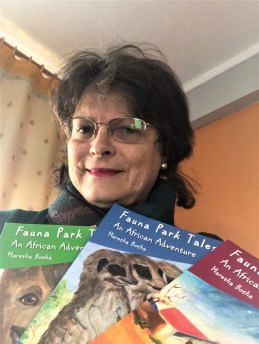
Welcome to a long-standing friend Maretha Botha, author of lovely children’s books set in down-to-earth Africa. My mouth is watering at the thought of your delicious pasta dish, Maretha – over to you…

Maretha1

Thank you so much for having me on your blog, Jane. I would like to tell you a bit more about myself and “Trails and Trials: An African Adventure” – the fourth book in the Fauna Park Tales Series. I’m an Italian National who grew up in South Africa and lived in Botswana for several years. I love expresso, and of course, pasta – just with olive oil and a bit of grated cheese, or a tasty Pasta Vongole with a few clams, cherry tomatoes, sprinkled with olive oil – an easy dish when I’m busy illustrating. Stopping to cook a fancy meal for hubby, might destroy the image in my head.

However, when I hit a blank – either with illustrating or writing the next big adventure – gardening also gives me a welcome break. Simply taking photos of what the garden has on offer or getting down and dirty, and doing some digging do wonders to kickstart my rusty brain!

book

https://www.amazon.com/Trails-Trials-African-Adventure-Fauna-ebook/dp/B06ZYJ3VG1/

In a way, “Trails and Trials: An African Adventure”, demonstrates my writer’s journey since 2012 – also filled with all sorts of ups and downs after my post as an assistant librarian was localised at one of the schools in Gaborone, Botswana. When I got over the initial shock of not having a job to go to after the short Easter break, I began to unearth all the bits and pieces I’ve written through the years.

With so much inspiration everywhere – we lived on the edge of a game reserve nestling in a valley surrounded by low undulating hills on three sides and a small rural village on the other side – it was only a matter of time before a new world began forming in my head.

Most of the local villagers keep chickens, donkeys, goats and cattle, and many found a way into the stories told in Fauna Park Tales.

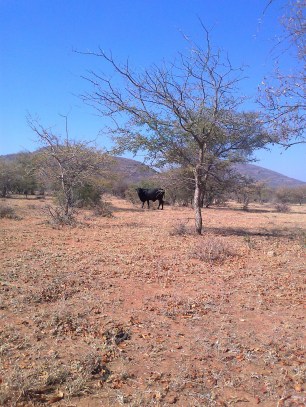
cowThe sand has an incredible ochre colour, and herds of cattle constantly move back and forth in search of new grasslands. Of course, the goat herds are very large, and they too, eat a lot. So, during the dry season, food and water often become scarce. Many times, we gave the cows water at night, because they would hang about our outer fence until we responded!
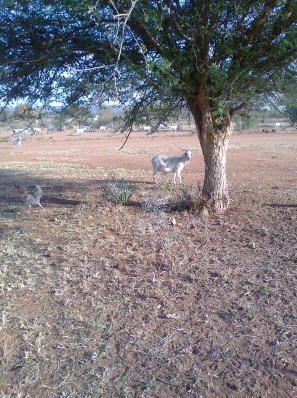
As unbelievable as it might sound, many villagers still regularly burn a ring around a tree – look how dry it is – and let the tree die to cut it up into firewood. Sometimes, such fires spread, causing large areas to be burnt to a cinder. So, there is a fire in book two –

https://www.amazon.com/Friends-African-Adventure-Fauna-Tales-ebook/dp/B00Y2WS82

and the hero Flame, aka as Jack Old Boy, rescues a young zebra and her foals during their migration when they are trapped by fires.

Book description: Four trails one destination, “Trails and Trials: An African Adventure”, is written from four different viewpoints, combining four smaller books into a complete book of 148 pages – each with its own title and subtitles, illustrations, descriptions and footnotes of foreign words – based on “African Adventures of Flame, Family, Furry and Feathered Friends”, a HarperCollins Authonomy Writers’ Website GOLD MEDAL WINNER.

Life continues to take strange turns for Flame, a working dog on a free-range cattle farm. He and three of his furry friends follow the trail of Tall Leader and his gang of poachers into the desert, after they kidnapped their beloved orphans and stole all the villagers’ cattle. To follow their enemies’ trail, the brave friends jump on and off trains, sleep under the stars, and find friends and foes while on their dangerous mission. Their loyal feathered friends – a martial eagle and a female eagle owl – are their scouts, helping them when they get lost, which is often.

All the characters – both human, and furry and feathered – strive to reach the last waterhole at the Tukani River as soon as possible. Here, a cattle stampede, heroic deeds, finding long-lost family and solving secrets happen in quick succession.

cattlegoat

“Hope’s Memories” is a backstory summary of book three, “The Orphans’ Plight: An African Adventure” and gives the reasons why Flame and his friends are on this risky mission.

marshall eagleBirds of prey – martial eagles and eagle owls are both endangered in many parts of southern Africa, especially martial eagles who have been mercilessly persecuted because of their ‘reputation’ to hunt smaller farm animals. You may have noticed the pylons in the photograph above. To protect their young, martial eagles often have nests high up on these pylons – also a dangerous situation. In the story, the martial eagle – Mars – keeps an eye on the movements of the cattle thieves while sitting high up on the pylons.


Author Page – https://amazon.com/author/marethabotha

Blog 1 – https://marethabotha2013.com/

Blog 2 – https://marethmbotha.wordpress.com/

Fauna Park Tales Facebook Page – https://facebook.com/flameandhope.co.uk

https://twitter.com/MarethMBotha

https://twitter.com/@FaunaParkTales

Should you wish to add the short links to the other books in the series, they are:

https://myBook.to/FlameHope

https://myBook.to/OrphansPlight

https://myBook.to/Evergreens


Posted in Authors | Tagged , , , , , , , , | 6 Comments

A Colourful Presentation of Memorabilia

During my visit to Kenya earlier this year, we called in to say jambo to old friends Tim and Wendy Davis.

Nothing had changed, as we drove through the gates of their Langata property, and climbed the familiar steps to their house. We exchanged family news while settling down to a cup of coffee on the veranda overlooking the sparse lawn.

Tim’s labour of love had come to fruition. His East African Safari Scrap Book, commemorating fifty years of competition, was published. I wanted to buy a copy for my brother-in-law, Robin Hillyar, who  won this prestigious event with his friend Jock Aird way back in the mists of time.

Tim's bookTim produced a copy of the coffee-table sized book and signed it, leaving a thoughtful message for Robin. It is a colourful presentation with snippets of interest on every double page, representing one year. Tim had been responsible for the news and press during the rally for many years, and was able to draw on his vast store of information.

Controversies are recorded, amusing incidents revealed, and facts faithfully reported. Drivers have been happy to come forward to offer anecdotes and correct perceived misconceptions before the book finally went to press. There are always several viewpoints to an event, and Tim has been careful to represent the truth as near as he possibly could.

Tim DavisAfter coffee, he led us into the house and showed us his pride and joy: a glass cabinet filled with carefully prepared memorabilia. Each of the fifty years has a separate section. The display contains models of the Safari start/finish ramp for every year, complete with miniatures of the winning cars. It was a privilege to be photographed with him beside it.

Tim’s dream is for the whole cabinet eventually to become a museum piece.

Tim's model cars


Posted in Kenya | Tagged , , , , , , | 3 Comments

The Sounds and Smells of Newgate

This series on settings for books has produced many intriguing pieces, and this week popular historical crime novelist Kate Braithwaite takes us to 17th century London, maps and all. Over to you, Kate.

***

The Road to Newgate is almost exclusively set in London. It’s a story based around a political crisis that took place in Restoration England when Titus Oates, an unknown preacher, claimed to have uncovered a vast Catholic conspiracy to assassinate Charles II and make the country Catholic again.

In some ways, 17th century London was not so different from London today. Much of the ‘bones’ of the city were well-established – the parks, some of the main thoroughfares and, of course, the Thames. In one scene in The Road to Newgate, my character Anne is determined to walk across the city from her home to Tyburn to watch an execution. I had decided her home would be on Love Lane (mainly because I wanted them to live near Pudding Lane and the monument to the fire!), and Tyburn was where Marble Arch is now. A couple of taps in Google maps and I was able to see how long it might have taken her to walk there. When writing something set in a real location, whether contemporary or historical, I think it is really important to get the details right. If a character is on their way from A to B, then they shouldn’t walk past C, if C is across the other side of town.

Section from Ogilby and Morgan’s map showing Love Lane, London Bridge and “The Pillar of where the fire began”

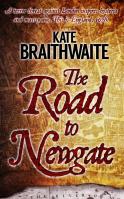
With that in mind, I checked every location on Ogilby and Morgan’s Large Scale Map of the City as Rebuilt in 1676, and a section of this map is on the cover of the novel. The map has been digitised by British History Online, and it is wonderful to zoom in and out of all the different streets. I also now have a print of the map, hanging on my dining room wall!

In The Road to Newgate, my characters have several locations that they return to regularly. Anne’s husband, Nathaniel Thompson, for example, is a busy writer who frequents London’s coffee shops to gather the gossip and news of the day. These coffee shops were highly popular during the late 17th and 18th centuries, at one point considered such dangerous hotbeds of sedition that Charles II tried to close them down. I’ve written about that in this article. Nat’s favourite coffee shop, Sam’s, was near the Royal Exchange, tucked in between Cornhill and Lombard Street.

interior

Wikicommons image – interior of a London Coffee House, 17th century

Nat’s actual office, however, was in the bookseller’s area known as Little Britain. There is still a street in the City of London called Little Britain, but centuries ago it was a small area, well enough known to get a mention from Dickens in Great Expectations and Sir Walter Scott in Waverley. Many of the locations I describe in the novel are still there, at least in name. Somerset House, for example, is exactly where it has always been, but the Somerset House of today was built in the late 18th century. The Somerset House of The Road to Newgate had been built in the sixteenth century and redeveloped at the Restoration following a design by the architect Inigo Jones.

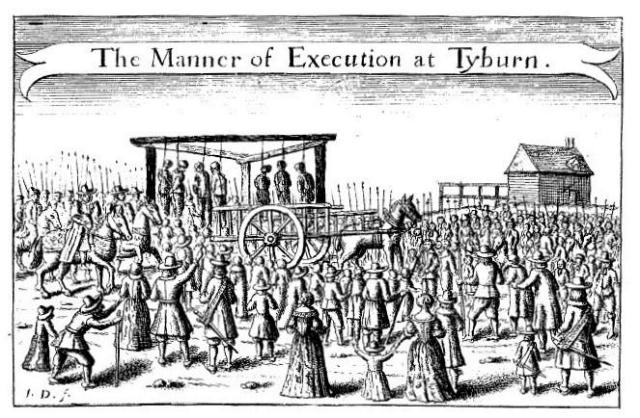
No surprise in a book called The Road to Newgate, there is of course Newgate prison – a location no character wants to go to, but a recurring setting throughout the story. The prison was first built in 12th century. A casualty of the Great Fire of 1666, it was rebuilt in the Italianate form described in the novel by Sir Christopher Wren. In the seventeenth century, Britain was in transition. Many aspects of society were advanced and modern but in terms of crime and punishment, things were still fairly medieval. Heads were still displayed on spikes and traitors were hung, drawn and quartered. The sounds and smells of Newgate are an important aspect in my efforts to create a believable picture of life in London at the time – warts and all.

Tyburn

Wikicommons image, The Manner of Execution at Tyburn

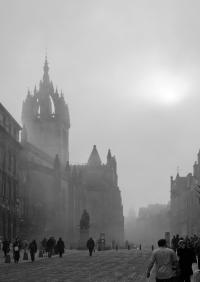
There are only two episodes in The Road to Newgate when Nat leaves London. Near the end of the story, as Nat closes in on the truth about Titus Oates and the murder of Sir Edmund Godfrey, he takes a trip to Ely in Cambridgeshire. I used to live in Suffolk and really enjoyed returning to the area in my book, even if only for a short time. But my real favourite is the time Nat is forced to spend in Edinburgh. He has to leave London in order to avoid arrest and let public disgust with his actions subside – and it could not be at a worse moment for him and Anne. I’m originally from Edinburgh and I loved writing this description:

“It is abominably cold in Edinburgh; colder than I expected. With such nipping winds whistling about their chops and that boggy dampness mouldering in their boots, it’s no wonder the Scots are so miserly. Even the most ebullient character must eventually be brought low by the unkind drizzle, the sleet, and the fog. I’ve been in Edinburgh for months, and every day this mist they call the haar has hung about the place like a gloomy spectre, blotting out any train of thought that might have lifted my spirits out of the mire.”

bandwhite 

Photo from Dave Morris (Flikr)

Rd to Newgate

THE ROAD TO NEWGATE, a story of love, lies and the pursuit of justice in 17th Century London (Crooked Cat, 2018). mybook.to/theroadtonewgate

Kate Braithwaite

Kate Braithwaite was born and grew up in Edinburgh, Scotland. Her first novel, Charlatan, was longlisted for the Mslexia New Novel Award and the Historical Novel Society Award. The Road to Newgate was published by Crooked Cat in 2018. Kate lives in Pennsylvania with her husband and three children.

Facebook – https://www.facebook.com/KateBraithwaiteAuthor/

Posted in Authors | Tagged , , , , , , , , | Comments Off on The Sounds and Smells of Newgate

I’m Sitting Right There Beside You

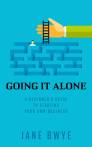
“Business mentor Jane Bwye has written a fantastic new guide for anyone considering starting up their own business.  It reads like Jane is sitting right there beside you, explaining the various points to consider, and giving tips & advice on starting up a new company.

“Of course, not everybody is cut out to run their own business.  But if you don’t think about it seriously, you’ll never know if you can succeed.” – Jane Bwye”

***

What better accolade can I ask for?

Here’s another snippet from the book:

Dreaming... Life is easy when your business is booming. It is during the disheartening down periods – when your customers are few, your debts rising, nothing seems to be going to plan – that you need to dig deep and remember the answers to the question:

Why am I doing this?

The exercise of dreaming is vital, because you need to know the answers to this question beforehand.

It stands to reason that if you don’t know where you’re going – or why – you’ll never get there. I love helping people to dream in a constructive manner. I appreciate that some are more natural dreamers than others, but I’m going to explain how you can dream, anyway.”

***

That’s enough for today. The book will be launched next Wednesday, 15th August 2018.

And I would really appreciate it if you could drop a review on Amazon once you’ve read it: that will only take you 2-3 hours.

coverpic

Here’s the universal Amazon link: https://bookgoodies.com/a/B07DN2RRXD


Picture1

Posted in Going It Alone | Tagged , , , , | Comments Off on I’m Sitting Right There Beside You

Don’t Undersell Yourself!

It was fun visiting Angela Wren at home today, when we talked about the business of writing… my main concern: DONT UNDERSELL YOURSELF!!
http://jamesetmoi.blogspot.com/…/please-welcome-friend-and-…

Posted in Business Planning | Tagged , | Comments Off on Don’t Undersell Yourself!

The Limitless Potential of Poetry

Today, I am privileged to introduce David Ellis, award winning poet,  whose thoughtful piece on settings without restriction has transported me into faraway places. I just love your mantra, David: I must remember it next time I venture out in a boat – perhaps it will work better than the wristbands I’ve used in the past.

PS – I’ve just had a look inside your collection – it’s poetry I can understand and relate to: I’ve bought a copy!

***

Poetry is such an extraordinary medium to experiment with, stuffed full to the brim of limitless potential, taking us all on exhilarating journeys to faraway places from the comfort of our own homes.

Just like Flash Fiction and Short Stories, you can literally write self-contained stories about anything and everything that takes your fancy, provided of course that you have something relevant to say in the underlying theme or message regarding what you are writing about.

My poems are usually inspired by a specific prompt or a theme in the first instance, since with an infinite amount of topics to choose from, you have to find somewhere to hang your hat and call it home. There may be a recurring poetic line that pops up in my head, which will form the basis of the prompt or theme I ultimately end up using. Perhaps the ending will come first in the poem and I will then work the whole thing backwards retracing my steps remembering the path that was once taken, just like someone would do waking from a lucid dream.

Once I have the foundation of an idea strongly formed in my head, I will then explore where the poem naturally should be set. It is rare for me to start at a specific area or location immediately, as I prefer to set up the emotional core of a piece of writing and then have the flexibility to transport it to where it can live and breathe, without any restrictions as to location or locale. I want my poems to be very relatable to you, regardless of where they (or you for that matter!) find themselves after reading them.

While the majority of my poetry is contemporary in nature, set in the modern day exploring emotional, philosophical and inspirational themes, I’ve dabbled writing poetry based on the dwellings of Ancient Greece, The Pyramids of Egypt, Norse/Viking Mythology, Nursery Rhymes worlds, Sci-Fi Future worlds and Fantasy/Horror landscapes that explore my dreams (and nightmares). I tend to take a story based approach to my poems, where conflicts do arise and have to be resolved. It is through this process that people will find solace, peace or experience catharsis through easily relatable experiences.

Leonard Cohen Quote (5)
If you write from the heart, you will connect intensely with a poem that can be set at any time period or place in the world. We will then be whisked right there without hesitation, clearly invoking the memory that the writer is trying to communicate to us.

When it comes to choosing the setting for poems, you are only limited to where you want to go with your own imagination. Write what you know but try setting your pieces in different time periods or surroundings that are completely unique to you.

Chances are I think you will find the results extremely satisfying and inspiring too.

David Ellis Profile Pic (7)
David Ellis is an award winning poet and author of poetry, fiction and music lyrics.
His debut poetry collection ‘Life, Sex & Death’ won an International Award in the Readers’ Favorite Book Awards 2016 for Inspirational Poetry Books.
He lives in Tunbridge Wells, Kent in the UK.
David is extremely fond of cats and dogs but not snakes.
Indiana Jones is his spirit animal.
He conducts Author Interviews, Musician Interviews (Singer/Songwriter), Photography Interviews, Comic Book Writer Interviews and Screenwriting/Scriptwriter Interviews over at his website.

Amazon Author Page: https://www.amazon.co.uk/David-Ellis/e/B01BJTNGWY/

His Social Media links can be found below.

Website:- www.toofulltowrite.com
Facebook:- https://www.facebook.com/TooFullToWrite
Goodreads:- http://www.goodreads.com/TooFullToWrite
LinkedIn:- https://uk.linkedin.com/in/davidellisauthorpoetwriter
Twitter:- https://twitter.com/TooFullToWrite

Posted in Authors | Tagged , , , , | 2 Comments

In The Footsteps of Romans, Popes and Painters

A big welcome Rosemary Goodacre, who takes us to Provence, the setting for her new book. It seems we have similar interests, Rosemary, as I too love travel (though I’ve only been to one place in Europe so far – Vienna!). I also play bridge, enjoy classical music, and walking.  Over to you…

Have you ever enjoyed the fantasy of overstaying a holiday and refusing to go home? Our holiday in Provence, based in Arles, gave me a location for my novella, A Fortnight is not Enough. I must thank Jane for the exciting opportunity of a place on her blog to describe how the setting influenced its creation.

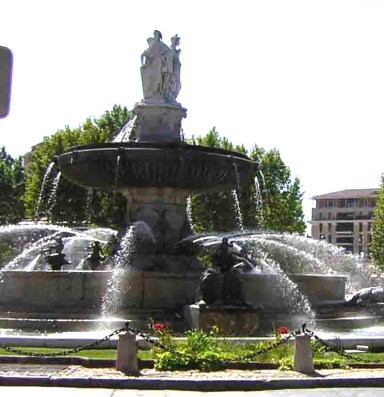
Provence-fountainProvence has been celebrated for centuries. The Romans built arenas and amphitheatres there, and medieval popes lived in a palace at Avignon. Impressionist painters, notably Van Gogh and Cézanne, loved the area and featured it in their paintings. The summer climate is reliably hot, lending itself to indolent days and leisurely evenings when sitting outside is still comfortable.

Rosemary goodacre

So into this area comes eighteen year old Imogen, an enthusiastic artist on holiday. When she meets attractive young art student Jules how can she bear to go home? I’ve brought the love of art into the story, along with the sunshine, which may even be a little too hot at midday. The town where Imogen stays is a fictional one but it has an art gallery and a Roman arena, and lies on a river, though I haven’t specifically called it the Rhône. Imogen also enjoys typically southern French food and drink. Her schoolgirl French is good enough for her to make herself understood.

To stay longer in the area, Imogen, rather like a backpacker, needs work and somewhere cheap to stay. Can she find her feet in the unfamiliar culture? She becomes a waitress, while occasionally helping Jules with his work of picture restoration. Her French improves rapidly and she also helps a local girl to improve her English.

When writing the novella the setting was vital. Then I brought in Imogen’s back story, and introduced Jules’ friends and family. Imogen is seeing the culture from the viewpoint of a newcomer, beguiled by what she finds.

What can possibly go wrong for her? I explored how the idyllic scene might change as autumn sets in. It rains, sometimes for whole weeks, though I didn’t invoke the Mistral, a bitter wind which blows down the valley. As the tourist season ends there’s less business in the hotels and restaurants, and Imogen finds herself short of work. Jules encourages her to try to sell her paintings, with only limited success.

Do the young couple love each other enough to face the challenges of staying together? An unsuspected threat to the art gallery is foreshadowed early in the story. Soon Imogen and Jules are helping to fight for the survival of the gallery. Their own future together is linked with the prospects of the town itself.

I’d recommend using an attractive holiday destination as a setting for a novel. You may need to refer to guide books or the Internet to check facts and spelling, including all those tricky accents. The setting should help drive the mood of the main character and the events which befall him or her. I’m looking forward to writing other stories based on inspiration from holidays. What better excuse for an exotic trip!

A Fortnight Is Not Enough is published by Books to Go Now, and can be found on this Amazon universal link: https://bookgoodies.com/a/B079M7BXPC

R Goodacre


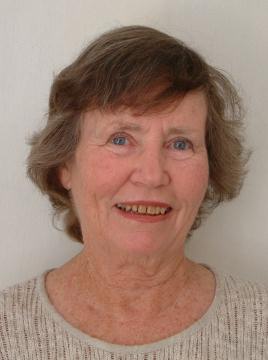
Rosemary Goodacre has always enjoyed writing, and has had short stories published and a science fiction story in the anthology Telescoping Time. She has always loved languages and travel, mainly in Europe. Her father’s family came from continental Europe and were intriguingly multicultural.
In her spare time Rosemary enjoys country walking, bridge and classical music. She lives in Kent, England.


Posted in Authors | Tagged , , , | 1 Comment

The World Goes Silent

The last days of my Kenya holiday… a very special gathering of half the family at Maanzoni. It is now my favourite part of the country.

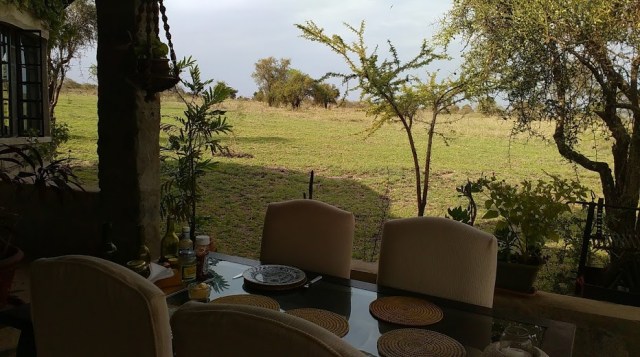
Leaving the bustle and chaos of Nairobi city centre on a Friday afternoon, we head south and arrive at the turnoff, via the new by-pass, five minutes short of an hour later. We become different people as we unhook our seat belts and take the rockiest of roads.

My daughter personally greets “her” zebras and gazelles as they whisk their tails and watch us creep by. So peaceful and quiet. Everywhere green shoots are showing after the recent rains. No long grass, and no giraffe in view. That’s the trouble when it rains: the animals disperse, not so dependent on the dams and rivers.

Maanzoni1

Over a delicious home-cooked lasagne, we exchange news, consuming several glasses of cider and red wine. Feet resting on the veranda wall, we watch a herd of zebra pass through. Frogs are orchestrating loudly in the background. Hadada ibis raucously announce their presence. A single resident heron, a pair of yellow billed ducks, and several Egyptian geese enjoy the waters.

As soon as I remove my hearing aids before going to bed, the world goes silent. No need to light the odourous mosquito repellent, I realise – the insects don’t disturb my sleep one bit. I never hear a single whine, although there’s a bit of blood on my pillow in the morning. I must have inadvertently squashed one after it had bitten me, but I know they’re not malarial in this place.

Before breakfast, I wander round the half-full dam. Although it is cloudy, my face burns as a result of not wearing a hat. Everything is so green, short short grass, but the black cotton soil is spongey with all the rain.

We lay Roy to rest beside a bush, and wind down slowly.

***

DAD

You have been well rested for now eight months

Listening to the goings on and the goings out,

To the silence and the din.

We now think it’s time you spread yourself thin – take a look around, and settle down.

Although Maanzoni you did not know, you know it now I hope,

And fit right in.

May you rest well beside this bush, forever embraced by Kenya –

Your life for so long.

The animals will enjoy your space,

The rain will fall with fury and grace,

The dam will empty and fill again,

The wind will whisper and howl,

Let this now be your special place, having won a dam fine race.

***

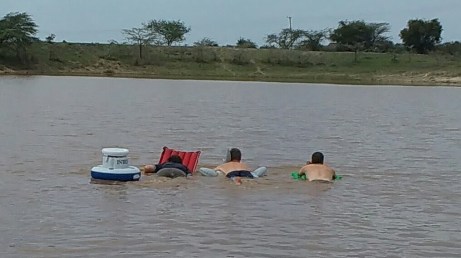
Some decide to cool off in the dam, buoyed with an inflatable dragon, a crocodile and a floating bar.
IMAG0679_2We play darts and a card game, then enjoy an enormous speciality home-made pizza. I zizz a bit on the seat which hides the generator; the bed in my room is really too high for me to comfortably heave myself upon.

We pack up and as we drive the corrugated track toward the main Nairobi-Mombasa road, we spot the elusive giraffe browsing disdainfully near the gate.

Picture1


Posted in Kenya | Tagged , , , , , , , , , , , , | 2 Comments