Welcome, Jane

Thank you Tim, for inviting me to your place yet again. This is becoming a habit!

T E Taylor's avatarTim's Blog

Today I am joined by fellow Crooked Cat author Jane Bwye.  Welcome back Jane! It’s been a few months since your last visit. Tell us what you have been up to since then.

Dear Tim – there’s nothing like a friend who makes you sit up and think once in a while. I can’t remember when I last visited, nor can I remember what I’ve been up to apart from my usual weekly activities. That’s scary. Is dementia creeping in – or is it just old age? I’ve been lucky with my health up to now.

cover1 (419x640)

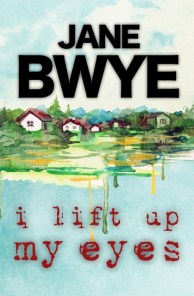
You ask about my second book, I LIFT UP MY EYES. This little novella was written on the rebound after BREATH OF AFRICA. The story had been simmering in the back of my mind for about twenty-five years. After a tragic accident which left her husband physically and mentally shattered, a friend…

View original post 496 more words

Posted in Breath of Africa, I Lift Up My Eyes | Tagged , , , , | Comments Off on Welcome, Jane

Making Readers Tingle with Fear

Welcome to Adrian Martin, new Crooked Cat author, who has an intriguing tale to tell. His debut novel is already burning a hole in my kindle, and has now been promoted to the top of the list. We have a few things in common, for I, too, was introduced to technology on a  word processor, and then I did a distance education degree at a late age. Over to you, Adrian – it is good getting to know you!

Hi, Jane. Thank you very much for having me guest on your blog. My debut novel, The Helland Reckoning has just been released by Crooked Cat and is set in the heart of the picturesque Cornish countryside. It is about an abducted child, a frantic mother and a stranger with hidden secrets of his own. Although it is now the complete product it took me several years to make it an enjoyable read, through a stop start process. I have written since I was in my early twenties, but it was poetry and not stories. I used it as a form of escapism while serving overseas in the army in Kosovo. I have recently read them, and if the truth be told they made me cringe, however, I was not to know that these were the foundation for a newfound love of writing.

In about 2000 I was given an old word processor by a friend, who had upgraded to a computer (yep I remember the world before technology seized control). At the time I was reading a lot of Dean Koontz, an author many of us have been inspired by, and naively thought I could do just as good a job! After all, writing a book is easy, right? I couldn’t have been further from the truth and was quick to learn this. At this point, I had no plot, no idea and no knowledge of the writing process, but nevertheless I began to type. The first thing I needed was a location, and there was a place that for some reason has stuck with me since staying there as a child; it jumped on my nose and slapped me in the eyeballs, Helland. It is a quaint hamlet just outside of Bodmin, but is buried deep into the bleak moorland. With a name like this, and the lasting impression Koontz was leaving on me at this stage of life, the only genre I wanted to write was horror. The idea of making readers tingle with fear excited me.

So, on and off for the next few years I tapped at the keys and eventually bought a laptop, which I could now take away with me while on my new career as a long distance lorry driver. Due to the long working hours it took me a while, but after about six years of stuttering, I finally had a finished manuscript, but now it was written what the hell did I do with it? I know, I will get an agent and make a million quid and retire overnight! How I can hear your tears of laughter from my desk as I write this. Anyway, after a few nice (and not so nice) get stuffed letters and a battered ego I shoved it away and left it to gather dust, hung up my mighty pen and moved on with life. But the next few years took a turn for the worst and nosedived, so much so I had almost become kamikaze during the lowest I had ever been. To get out of these holes and challenge life full on takes bottle and determination, and for someone special to walk into it and make you realise there are things worth living for.

And this is what happened when I met my now wife, she made me understand what was important in life, and that we only get one shot. I had already lost one marriage. It was then the dusty and yellowed manuscript was withdrawn from retirement and passed over to someone that my wife had got chatting to while trying on school shoes for the girls in Clarkes. Freya helped me to get the ball rolling again and work on something I loved, but it was after this I was introduced to someone who was to become my mentor and friend. As fate would have it, she lived in the same village as me so this blossomed away from Facebook and her honesty with what I had written still remains with me. There was a lot of work to do, but with her patience she taught me how to write, how certain devices were used and the do’s and don’ts. At the time it was hard work, rewriting everything that had taken years to achieve, and my confidence ebbed away, until I re-read the finished piece. It was then I submitted to Crooked Cat, who accepted the manuscript and published it in June 2016.

However, in September 2015, before my manuscript was accepted my wife had given me an ultimatum, either continue to be stuck driving trucks forever, or chase my dream of writing. A dream was achieved when I was accepted by Crooked Cat, it was a dream I had harboured for years and it was surreal when it happened, but that is not the end. My wife had spoken to the local college and found out about available courses and I subsequently gave up my career in driving and went back into education full time, where last year I studied an Access course in English, Literature and Creative writing, achieving mainly distinction grades. My journey will not be ending there, in September I begin my BA Hons degree in Creative Writing at Falmouth College of Arts.

My journey so far as a writer has not been easy, and nor has it been quick, but it is most definitely heading in the right direction as I move forward. The Helland Reckoning is my debut novel, but it will not be my last as I am working on other projects concurrently. That said, I now look back on the hard work that has gone into writing it and know I have the ability to put a full length novel together and turn it into something people enjoy reading.

Thank you so much to Jane for hosting me today, it’s has been a terrific experience and thank you to everyone who has bought The Helland Reckoning.
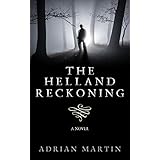
Product Details

Facebook link: https://www.facebook.com/Adymartin177/

Amazon UK: http://www.amazon.co.uk/Helland-Reckoning-Adrian-Martin-ebook/dp/B01FB8NVSI/ref=sr_1_1?ie=UTF8&qid=1467027689&sr=8-1&keywords=The+Helland+Reckoning

Amazon.com: https://www.amazon.com/Helland-Reckoning-Adrian-Martin-ebook/dp/B01FB8NVSI/ref=sr_1_1?ie=UTF8&qid=1467027743&sr=8-1&keywords=the+helland+reckoning

Twitter: @adymartin63

 Blurb

What should have been a fresh start for Katie Tremain and her twin twelve year old daughters, (Sarah and Tegan) in the heart of the Cornish countryside, quickly turns to tragedy when, Sarah goes missing in the bleak and snowy surroundings of Bodmin Moor. There are no footprints surrounding the house from where she has gone missing, and no evidence of the girl.

Before the police arrive, delayed by the unpredicted snowfall, a stranger arrives claiming he wants to help find Sarah. Katie has never seen this man before, yet there seems something familiar about him, and Tegan appears to have a connection with him. He has one stipulation – No police. Why, what are his true motives?

A missing girl, a broken mother, a lonely sister and a stranger. Together they look for the missing girl, and Katie is shocked when the stranger’s true identity is revealed, and sickened when she finds out who has her daughter.

This supernatural horror takes a mother to face her worst nightmare.

 Author Biography

Adrian lives just outside of Newquay, Cornwall with his wife, Lisa, and four children. He began writing while serving in the British Army, starting with poetry written on blueys (blue sheets of paper that fold into envelopes) as he was on a peacekeeping mission in Kosovo. After leaving the army, he tried being a security guard, but found walking around the supermarket for fourteen hours a day somewhat monotonous, so decided to give long distance lorry driving a go. It was whilst doing this he began to pen “The Helland Reckoning”. The novel was inspired by the small hamlet of Helland, where Adrian stayed with a friend as a child. It had remained in his thoughts for many years, so it became the natural setting for the book. After five years of tramping around the U.K and Europe, he decided it was time to be home more, so began driving fuel tankers around Devon and Cornwall. After breaking his ankle playing football, Adrian was made redundant so set to work rewriting the manuscript. However, Adrian’s last job, working for a portaloo company (which was actually a lot of fun) made him want to chase his dream as a writer, so in September 2015 he returned to full time education studying English, literature and creative writing, achieving mainly distinction grades along the way. He begins a creative writing degree, at Falmouth University, Cornwall in September 2016. His hobbies include spending time with his family, writing, football, skiing, walking and Facebook! Feel free to hunt him down and chat.


Posted in Authors | Tagged , , , , , , , | 1 Comment

Great Summer Sale of Crooked Cat Books

2016Summer Sale

Have a browse here on AMAZON.  And check out my books below:

Breath of Africa

Will she ever belong to the country she loves? You can find out in this award-nominated book now on special offer!

cover1 (419x640)

Why does she need to go for a walk? For the first time since publication, you can buy this novella for 99p. Health warning…… it is a book which makes you think.


Posted in Authors, Breath of Africa, I Lift Up My Eyes | Tagged , , | Comments Off on Great Summer Sale of Crooked Cat Books

History Repeating Itself?

A warm welcome again to my fellow Crooked Cat, Tim Taylor, who has the vision and insight to link the past with the present. Why do we never learn!

(And I highly recommend both of his books: compelling and entertaining reads for lovers of historical novels: you can read my review HERE).

tim

Hello, Jane.  Many thanks for hosting me!

I’m here to celebrate the first anniversary of the publication of my second novel, Revolution Day (in honour of which it is on special offer at 99p/99c for a short period!). I must admit to being worried about all the turmoil and uncertainty following the Brexit referendum, but one small crumb of comfort amid the gloom is that my novel is suddenly feeling rather topical again!

It was intended to be topical in a different way when I first wrote it. The idea first came to me after the Arab Spring in 2011, when a string of dictators who had once seemed impregnable, such as Mubarak in Egypt and Gaddafy in Libya, fell one after the other in the space of a few months. What interested me was not the specific causes of those events (the novel was never meant to be topical in that way) but the broader issues they raised about the corrupting effects of power and its ultimate fragility. So I set my novel not in the Middle East but in Latin America (with its long association with dictatorship), though my fictional ageing dictator, Carlos Almanzor, is prey to self-importance, delusion and paranoia in much the same way to his Arab counterparts. His estranged and imprisoned wife, Juanita, writes a memoir of their marriage and his regime, in which she chronicles his descent from idealism into autocracy and repression.

I was surprised how quickly the Arab Spring faded from the forefront of public consciousness, no doubt because of the painful years of civil war and religious extremism that followed it, and still haunt us. Now, though, the novel has acquired a rather different resonance with much more recent political events in the UK. The central thread of the plot revolves around the third major character, Manuel Jimenez, a long-standing comrade and trusted ally of Carlos. Manuel, however, has long been frustrated with his subordinate position and wants to replace Carlos as President. He makes his move against Carlos not by force but through intrigue, playing on fears of foreign interference and using misinformation to turn public opinion against the President. Is this ringing any bells?

I’ll end with a short extract, continuing with this theme. Manuel chooses the end of a particularly boring meeting of the Revolutionary Council to drop a bombshell ….

The meeting had dragged on for two hours, and the air was now unpleasantly thick with cigar smoke. Felipe could think of nothing in his copious notes, written over a dozen pages in exquisitely neat, rounded letters, that would have merited more than a few scribbles in the margin of a written brief, let alone a full meeting of the Council. The attention of Angel in particular had begun to wander some time ago, and he had started to concentrate more on the brandy than upon the Agenda, in a manner somewhat reminiscent of Pablo. The President himself from time to time appeared to be on the verge of falling asleep. Carranza and Farias, who had both contributed their fair share of banality to the proceedings, had said what they had to say, and were now silent, contributing nods to the discussion when they felt it appropriate, but little else. Only Manuel, with surprising stamina, was continuing to talk at any length, though it was difficult to discern anything of great import in what he said. The eyelids of the President wavered, and then closed altogether for a few seconds. Then his whole body jerked, and the eyes were wide open once again. Suddenly alert, he glared at Manuel, the loose flesh of his face composing itself into a frown.

“What is there in all this that the Council needs to decide upon? I already know that the Americans do not like me. Could you not have got someone to put this in a written brief, if it needed to be said at all? I am going to close this meeting unless you have something more important to say.”

If Manuel was upset by this dismissive treatment, his face did not show it. Patiently, he took a deep breath and began again.

“I am sorry if what I have been saying is, in itself, less than enthralling. But it was necessary background to put in context what I am about to say.”

“And what, pray, is that?”

“To put it simply, we have some evidence to suggest that the Americans are backing a plot to destabilise this government.” As Manuel looked around the table, eyes that previously had been staring into the middle distance were now focused sharply upon him. A little smile played upon his lips. “There is nothing concrete yet, but encrypted signals traffic to and from the US Embassy has doubled in the last three months, and several of the known pro-democracy activists we have under surveillance have been showing increased mobility, suggesting that they are up to something. As I have said, there is nothing conclusive here. Nevertheless, the signs are suggestive, and consistent with what we have seen in the prelude to other attempts at subversion in the past. The wider picture I have been describing, concerning what is being said about this country – and about you, Carlos – in the United States and elsewhere is also consistent with that hypothesis. So my people are monitoring developments carefully and are under instructions to obtain harder evidence that I can bring to a future meeting. Unless, of course…” He paused, and threw the President a smug little grin “…the matter is not considered of sufficient importance to put before this Council.”

Thanks again for hosting me today, Jane!

5b

Links:

Revolution Day page on my website:  http://www.tetaylor.co.uk/#!revday/cwpf

Revolution Day on Amazon.co.uk 

Facebook author page:  https://www.facebook.com/timtaylornovels

Website:  http://www.tetaylor.co.uk/

Twitter:  https://twitter.com/timetaylor1

Blog: https://timwordsblog.wordpress.com/


Posted in Authors | Tagged , , , , , | 2 Comments

Letters from Elsewhere: Charles Omari Ondiek

Miriam Drori's avatarMiriam Drori, Author

Letters from Elsewhere

Today’s guest speaks to me from Africa and is brought by Jane Bwye.

SPEAKING FOR MYSELF

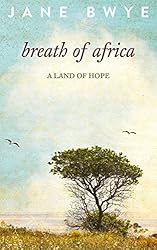
Thank you for having me, Miriam, and letting me come alive from the pages of Breath of Africa.

You ask me to speak for myself? Where shall I start…

My birth name was Charles Omari Ondiek and I was born in a remote village called Amayoni (which means birds) in a beautiful pocket of tropical forest in the western region of Kenya.

But I’ve used different names in the course of my tumultuous life. At Oxford, I was known as Charles (yes, as a student more mature than most, I graduated in Politics, Philosophy and Economics from that venerable university in the early 1960’s).

But when I returned home and started a career in journalism I had to cover my tracks for fear of being discovered by Mwangi, a Mau Mau oath-giver…

View original post 561 more words

Posted in Breath of Africa, Kenya | Tagged , | Comments Off on Letters from Elsewhere: Charles Omari Ondiek

The Merry Matatu Marathon

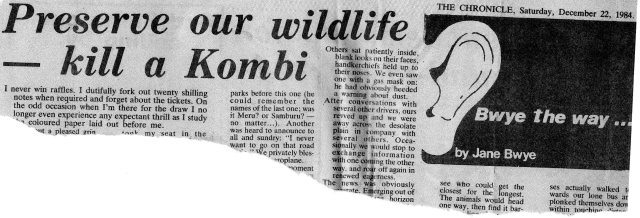
When we rant and rave about “the Authorities”, and bemoan the plight of Africa’s wildlife, we often forget what it used to be like. Here’s a press cutting I’ve dug out from over thirty years ago, from Kenya’s now defunct Langata Chronicle. It was different then – but was it really better?

Kill a Kombi

I never win raffles. I dutifully fork out twenty shilling notes when required and forget about the tickets. On the odd occasion when I’m there for the draw I no longer even experience any expectant thrill as I study the coloured tickets laid out before me.

I merely put a pleased grin on my face while watching others gleefully go up to gather their goodies.

This time, to my utter astonishment, my ticket number matched the first one out of the box. I returned to my seat clutching an envelope. Two flights… twenty-four hours’ full board… two game drives.

We apprehensively eyed the tiny aeroplane through the plate-glass window which was slashed with rain. There was another, slightly bigger aeroplane, a little further away, but I knew ours was that minute piece of fragile machinery. It was.

Our pilot breezed in casually and dumped her bag behind her seat. We entered tentatively and strapped ourselves in. The rain had abated but the runway looked horribly wet. She turned the ignition, the engine groaned, and died.

“Sorry.” She smiled brightly. “We’ll have to take the other one.”

All out again. My nerves could not stand another build-up, and it was with a slightly more fatalistic outlook that I took my seat in the second tiny craft. What a start.

We had last been to Amboseli eighteen years ago. Then there was dense bush with tall fever trees, and a veritable forest the other side of the swamp. Now – desolation. Utter nothingness, except for clouds of dust and endless plains of sand dotted with rotting tree trunks. Tufts of withered bush harboured the occasional skeleton of a zebra or the rotting carcase of a Masai steer.

Now we were tourists, pure and simple – though thankfully with a mini-bus all to ourselves for the duration. We were herded into the lodge and issued with our room keys, then we sought out the lounge for a pre-lunch drink. Strangers wandered in and out; Japanese, American, German, French; nary a familiar Kenyan among us. They had dazed looks on their faces. No wonder. One American gentleman told us that he’d been to three or four game parks before this one (he couldn’t remember the names of the last one; was it Meru – or Samburu? No matter). Another was heard to announce to all and sundry: “I never want to go on that road again.” We privately blessed our aeroplane.

Then came the big moment of the trip: the Merry Matatu Marathon – alias game drive – which was an experience and an education all its own.

At first I was sober enough. We wandered alone beside the swamp and watched some sleepy vultures and surprised the odd elephant; buffalo could be seen wading through the mud, and many multi-coloured water fowl pecked round the edges. Then our driver spied the merry throng. Shimmering in the distance, a circle of white roof-hatched vehicles appeared to float in a mirage of water. We sped up in a bumpy cloud of dust and ground to a halt at the end of the line.

There they were: two cheetah busily devouring a fresh kill, while a third lay replete to one side. The tourists in the nearby bus were whirring away on their sophisticated apparatus through the roof hatch. Others sat patiently inside, blank looks on their faces, handkerchiefs held up to their noses. We even saw one with a gas mask on: he had heeded a warning about dust.

After conversations with several other drivers, ours revved up and we were away across the desolate plain in company with others. Occasionally we would stop to exchange information with one coming the other way, and roar off again in renewed eagerness. The news was accurate. Emerging out the shimmering horizon another group of bright white vehicles meandered haphazardly through a placid herd of elephant cows with tiny calves.

As we were about to overtake one stationary bus, I shouted to our driver to stop. Just in time. A lioness, followed by two half-grown cubs, was ambling forward and crossed only two yards in front of us. It was difficult taking a photograph without a piece of another vehicle to spoil the picture.

Then three rhino walked casually out of the bush, and – oh bliss – I snapped them with an elephant in the background and no other cars. In the same moment we turned to watch the lion cubs cavorting round a tree stump. It was wonderful. But we were not allowed to savour it for long.

There was a competition to see who could get the closest for the longest. The animals would head one way, then find it barred by a line of competing matatus, only to have the same thing happen again and again.

Early the following morning we insisted on going it alone, and actually managed to restrain our driver from edging forward to block off a group of buffalo heading our way. It was all very peaceful and natural – until another busload found us.

We dallied alone after others had given up over a cheetah which was wandering towards a far piece of swamp. We were rewarded ten minutes later when it unaccountably turned and sauntered majestically back towards us, crossing over so very close. But the bush telegraph is amazing, and there were soon several vehicles in the area again.

A bit later a couple of lionesses actually walked towards our lone bus and plonked themselves down within touching distance – as if to say “at your service!” We had them to ourselves for at least two minutes.

All too soon it was time to go back to an enormous breakfast at the lodge, then onto the airstrip to meet our flight back home. The thin strip of tarmac looked incongruous in the desert. We drew up to the lone stone shed which housed the single official’s table. We waited, and waited… and waited. But this was Kenya. Eventually our tiny craft arrived to speed us back to civilisation.

I can now say with full assurance that it is far safer and more pleasant up in the clouds with the heavens around you than down in the confined chaos of Kenya’s roads. I shall never be sure about raffles again, though. You just never know.


Posted in Kenya | Tagged , , , , , , , , , , , , , , , | 1 Comment

Bwye for Now

The title Ailsa Abraham has given for this little piece reminds me of a by-line, “Bwye the way…”  I used to have in the Karengata Chronicle in days gone by – 1984, to be exact. And a thought is forming in my head… I have an ancient press cuttings book. Watch out for my regular Friday blogs, friends! I’m sure the copyright must have expired, and anyway, that paper has disappeared into the mists of time.

African dancerI was in Ailsa Abraham’s virtual presence recently, and she is such fun. I’ve also met her in the flesh, briefly at an authors’ gathering with our publisher, Crooked Cat, in Edinburgh a few years back.

Click on the link below to read my latest news.

http://ailsaabraham.com/2016/06/07/bwye-for-now/


Posted in Authors, Breath of Africa | Tagged , , | 1 Comment

Now He is At Peace


Brian Connell, a man of principle and insight with a deep love of Africa, is missed by many because of his struggles. He tried to overcome them by the cathartic writing of his legacy, the book Msomi and Me.

Written as a series of anecdotes, it resides in the top forty of an amazon best-seller list. I noticed it there a few weeks ago, as my book also hovers around that height, and my heart gives a little flutter whenever I see them on the same page.
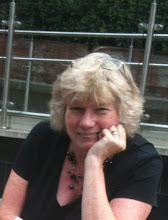
Brian shared a little of his journey on my blog last year: Nokothula – No Place of Peace. In it, you will find a link to Brian’s measured reaction to the furore you may remember about Cecil the lion.

He is one of those people whom the more you know, the more you admire. I say “is” because for me – and I’m sure for many – he lives on in his writings, which portray his love of Africa, its people and its wildlife.

Brian suffered. Africa makes people suffer. No-one will know the full extent of his pain, for he bore it valiantly. Now he rests at peace in the country he loved and championed. We commiserate with his family. And we salute him.

Posted in Authors | Tagged , , , , , | Comments Off on Now He is At Peace

A Place of Peace

It’s always a pleasure hosting one of my favourite authors, Sue Barnard, who has chosen to talk about rather an unusual subject in relation to the setting of her book. Over to you, Sue!

Sue Barnard author pic

Cemeteries may not, at first sight, be the most cheerful places on earth, but they have always held a curious fascination for me.  The German word for cemetery is Friedhof, which translates literally as “place of peace” – a meaning which is very appropriate.  A walk through a cemetery is a wonderful way of escaping, if only for a few minutes, from the hectic clamours of modern life.  Whenever I visit a family grave, I find that even if the cemetery is only a few yards away from a busy road, the silence and the inherent peace of the place are almost tangible.

I find it particularly fascinating to imagine the people who are buried there.  What sort of lives did they lead?  Perhaps some clues can be derived from the diversity of the graves themselves; some (no doubt the graves of the very rich) display ornate or even ostentatious memorials.  Others have little more than a simple vase – presumably all that the family could afford – and some graves are just plain grassy plots with no memorial at all.

But military cemeteries, particularly those which are the final resting places of soldiers who lost their lives in the First World War, are in a league of their own.  It is impossible not to be moved by the sight of the sheer quantity of graves – and, unlike other cemeteries, all the graves are of the same basic design.  I’m sure that this is intended to convey the idea that regardless of age, nationality or rank, all these poor soldiers came to the same premature and unnecessary end.

One of these cemeteries forms the setting for one of the key scenes in my second novel, Nice Girls Don’t.  The main action of the story takes place in 1982, and the two main protagonists, Emily Fisher and Carl Stone, are trying to unravel a mystery surrounding Carl’s late grandfather.  Their quest leads them to the battlefields of the Western Front, and eventually to a British military cemetery in north-eastern France.

NGD poster

Poster designed by Gary Walker


Although the cemetery is not named in the book, it is a real place: Terlincthun Cemetery, in Wimille, on the northern outskirts of Boulogne-sur-Mer.  I first visited Terlincthun a few years ago, whilst I was researching my own family history and searching for the grave of my great-uncle, Driver John Matthews of the Army Service Corps.  I remembered being told, as a child, that Uncle Jack (as he was always known) was buried “somewhere in France”.  Apparently he had survived the war, but by a cruel twist of fate he had died late in the evening of the day it ended – one of the thousands of victims of the 1918 influenza pandemic.

I was able to trace Uncle Jack’s grave by searching the records on the excellent website of

Uncle Jack's Grave

Uncle Jack’s Grave

the Commonwealth War Graves Commission.  Whilst wandering amongst the headstones, I was staggered by the dates and ages shown on the inscriptions.  Many of those who are buried here were, like Uncle Jack, not killed in action, but died – presumably of disease or wounds – during the months which followed the signing of the Armistice.   And all of them died tragically young – Uncle Jack himself (whose death is recorded on his headstone as 12 November 1918) was only 25.


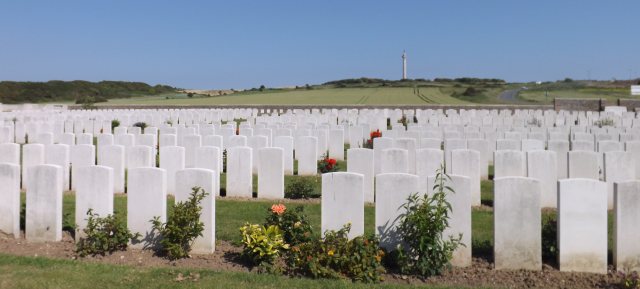
Sombre feelings aside, my abiding impression of Terlincthun Cemetery is its stunning location: a peaceful hillside within sight of the coast, and presided over by an imposing statue of the Emperor Napoleon.  It is quite small by comparison with other military cemeteries in the area, but is smart, clean and beautifully cared-for.  Despite the tragic history surrounding it, Terlincthun remains a beautiful and peaceful place.

I can’t reveal here what Emily and Carl find when they visit Terlincthun (that would give too much away), but it would be hard to find a better setting for the scene in which they finally find the answer to their quest.

Terlincthun Cemetery

Terlincthun Cemetery

Posted in Authors | Tagged , , , , , , | 3 Comments

Dying to Eat at the Pub

It’s a great privilege hosting Beatrice Fishback today, who gives us a delightful glimpse of England through the eyes of an American, and at the same time treats us to a preview of her next novel. Over to you Bea!

Dying to Eat at the Pub is a cozy mystery set in a moderate-sized village called East Lark in England. Americans, Jim and Dotty Weathervane, have decided to call this place home after Jim’s retirement from the U.S. forces.

Ah, England. Most people will attest to having a picture in their mind about what an English village looks like—the romantic backdrop of Royalty and a gentler way of living.

cottage

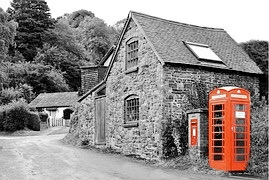
Some think of thatched cottages set amid gorgeous flowerbeds as pictured in magazines such as Victoria or House Beautiful.

  purpleflowersphone box

Expected are the iconic red pillar mailboxes and phone booths, as well as flowering wisteria that resemble violet-colored waterfalls that drape archways leading into pristine gardens.

The imaginary setting of East Lark offers a few thatched cottages and one rather unsightly modern-day telephone booth. It strays a little from the typical village most tourists would expect, and thereby could perhaps disappoint somewhat.

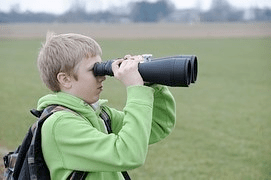
This village, mixed with American and British residents, is situated alongside a U.S. military installation that boasts a variety of aircraft. The hobby of “bird” watching various planes taking off and landing has been a long-standing tradition in this part of the country. Thousands flock along fence lines and watch with anticipation as these planes leave for various parts of the world.

planes boy

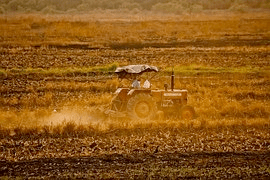
There are a few other interesting tidbits in this village known only to local residents. A banger-racing course lies just down the road, and the loud buzz of racing vehicles can drown out farm vehicles on their way to and from fields filled with local crops—potatoes, swede or wheat.

spraying tractor

Of course, no village is complete without a pub or two. East Lark offers two such establishments: one a family-type bar and restaurant with food and entertainment, the other geared to the younger generation who lean toward karaoke and a challenging game of darts.

street

The locals, and those who live in East Lark like Jim and Dotty Weathervane, have a plethora of options for an evening of entertainment.

However, as Miss Marple and other cozy mystery sleuths know, an English village is also the perfect place for gossip, mayhem, and perhaps even a murder. East Lark is no exception and the nosey Dotty Weathervane is certain to keep abreast of all the goings-on within her community.

moon

East Lark isn’t actually the name of a real village—at least not one that I know of—but it has the right combination of people to cause friction and family feuds, and will delight cozy readers with mystery and suspense.

rope

Dying to Eat at the Pub will be released November 2016 so be on the lookout for Jim and Dotty Weathervane’s activities as they seek to settle in the small village of East Lark and do a little sleuthing along the way.

Beatrice Fishback, originally from New York, lived in the East Anglian area of Great Britain for over twenty years and traveled extensively in the United Kingdom and throughout Europe.

Bea.pngShe and her husband have spoken to U.S. military audiences in the USA, Germany, England, Italy, Turkey, Saudi Arabia, Spain, Korea, and Japan. They have also presented to international audiences in the Czech Republic, Turkey, Kazakhstan, Zimbabwe, Romania, Ukraine, Bulgaria, and Latvia.

Beatrice and Jim currently reside in North Carolina where scones are called biscuits and are topped with gravy, and tea that is served over ice.

She has been published in various compilations, magazines and online websites and is the author of Bethel Manor by Crooked Cat Publishers

Bea’s website: /www.beasattitudes.net


Posted in Authors | Tagged , , , , , | 3 Comments