Horses for Courses: My Descent Into Crime

Join me today as I welcome Roland Clarke in a jolly mood, reminiscing about his life with – and without – horses. I judge dressage regularly at Borde Hill, Roland; never knew you were so closely involved with eventing there. My book also contains the beat of galloping hooves, albeit in an African setting. But your “Spiral of Hooves” is a joy to read for any horse-lover.

Image

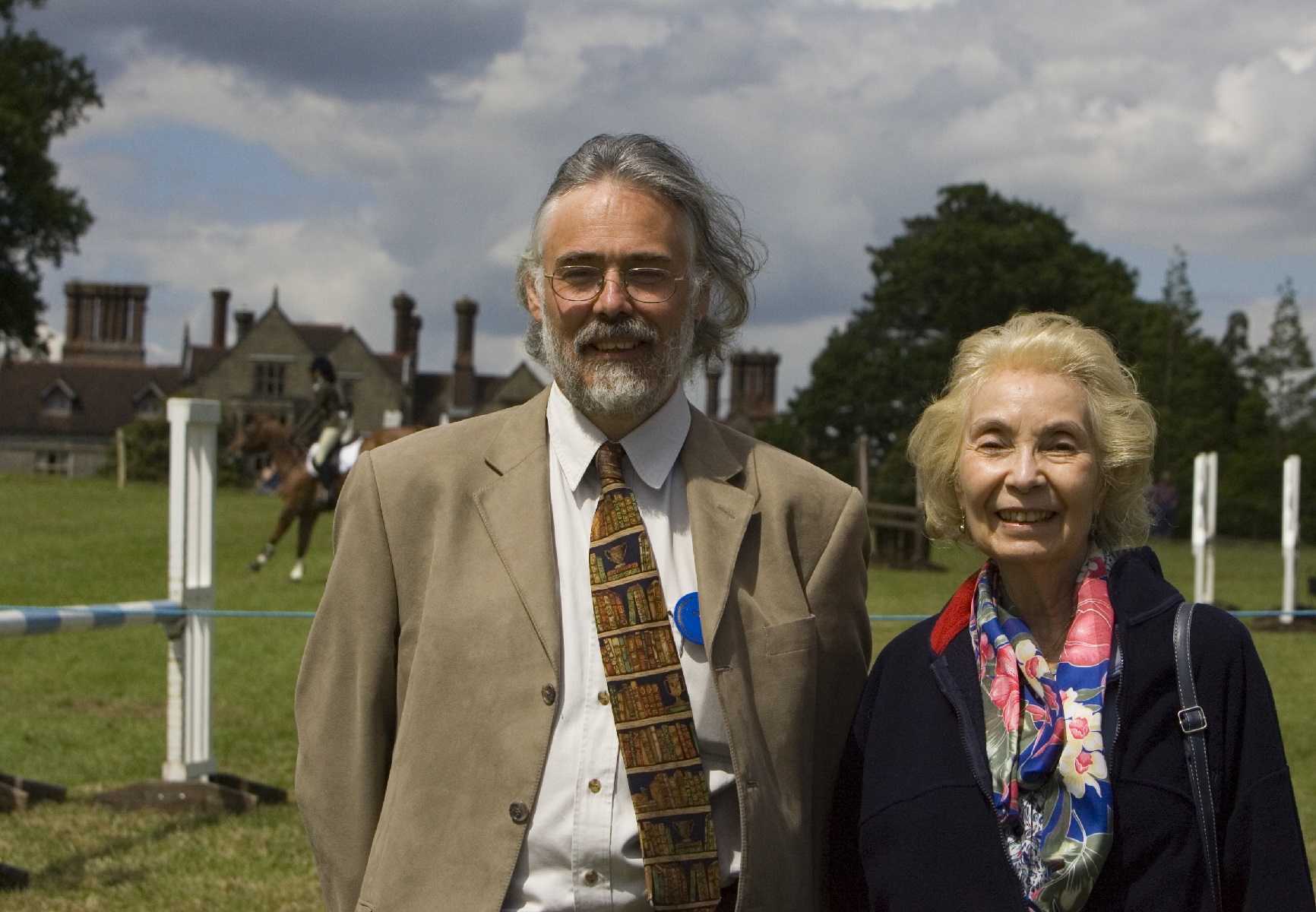
With my mother, Nidia Clarke, at Borde Hill Horse Trials 2005

Over to you, Roland… 

I wonder what my grandfather would think about my life. Would he feel that I had ignored his example? Have I failed to make proper use of my private school education? Would he approve of my involvement in crime? Hard to say, but I’m sure that he would be pleased that I hadn’t totally abandoned horses, but then he had predicted that I wouldn’t.

I never knew my mother’s father as he died before I was born, so it was my paternal grandfather, Colonel Sir Ralph Stephenson Clarke that tried to encourage me when I was young. He is known in some circles having been a Member of Parliament for 20 years, and for his instrumental role in developing and promoting Borde Hill Garden, which his father created.

However, he was also a Master of the Old Surrey & Burstow Foxhounds for many years, so horses were central to his life. So when I was a child, I was encouraged to ride and my first pony was a gray called Long John Silver. I like to think he was Welsh, as I now live in North West Wales, but all I remember is that Long John always got the upper hoof and I spent a good percentage of the ride on the ground. Sometimes it was my lack of balance, but at other points Long John liked to brush along fences and hedges, or turn abruptly.

Long John got what he deemed was best – if I’m being anthropomorphic – an untalented lump off his back. Although to be honest, my grandfather’s groom said I was like ‘a sack of potatoes’ on the poor pony. I gave up riding for more boyish pursuits, like buildings dams in the local stream and blowing up model ships. My sister was the one with the ability to do gymkhanas, go hunting with our grandfather and mother, and to progress onto a horse. Some of the family were disturbed at my decision to give up riding, but my grandfather said, “One day you’ll meet a young lady who is interested in horses and you’ll want to start riding again.”

He didn’t live to see his prediction played out, sadly passing away on 9 May 1970, when I was sixteen. But a year later I became besotted with a girl and in my attempt to please her, I took riding lessons.  I even got a summer job working in the arena party for international course designer Pamela Carruthers at the All England Jumping Course, Hickstead. There was a moment, having progressed from overalls to a suit, when I dreamed of becoming a designer myself. However, I still failed to prove myself to either the young lady or a horse.

Three years later, after an eventful two years at school in Canada, I became a sub-editor at The Field Magazine, which was an opportunity to discover whether I could write… short news items about gallery openings, and edit fishing reports. I did write an article about Hickstead, making use of the contacts that I had made there. However, I was falling asleep in the office, therefore I was pleased when the assistant editor, Derek Bingham, took me with him to Tidworth Three-Day-Event. A cousin was in the British Junior Team Trial so I took photos, which weren’t bad and I sold a few to some of the riders. Photos and more contacts followed, along with a few hectic years taking photographs and selling them out of an old VW micro-bus. The beginning of the descent I suspect – all those cash only deals 😉 – although the horses remained at the end of a telephoto lens.

There were meanderings down other paths, like organic fruit & vegetables, and then another horse entered my life, but no young lady. It was an amazing feeling, getting on a horse… and not falling off. We clicked and were able to do things together, like jump. I wanted to buy him. Although his owners, Ken & Annette were showjumpers, the horse was bred to event. But convincing my family was impossible – “You hate horses”, “A horse is a waste of money”, and anyway “You’re like a sack of potatoes”. So one fortunate horse found a better home and achieved great things, with someone else.

Maybe a career around horses wasn’t to be. As the saying goes, “Horses for courses”.

However, I met a young lady, but not the one with horses, yet – for that scenario to unfold the American west was the place to be, but that’s another tale. Anyway, marriage, politics and film-making kept my boots on the ground and the horses pursuing their own courses. Yet I couldn’t stay away, not when research for a TV documentary provided a chance to interview some riders.  And where there is one interview, another follows… and then a newspaper article, and another few inches in print. From local newspaper reports I progressed to a few national magazines, most notably Eventing, for which I became a regular contributor, although I never abandoned the local papers.

I discovered that at horse trials over the weekend, I could glean enough information to write about twenty reports a week. Interspersed with these were feature articles, varying from profiles of top riders, like eventer & showjumper couple Pippa & William Funnell , to investigative articles on topics like doping in equestrian sports.  Although I worked with professional photographers, I did take some myself when required.

Riders lead hectic lives and have their horse’s welfare in mind, so catching them when they have won can be hard, especially when four sections are receiving their prizes in quick succession. I had to memorise a lot of faces, and blag when I failed to recognise someone. The real art was interviewing riders without the horses stamping their opinion on my toes, although fortunately most prize-givings were horseless. I did get crushed by a small hoof while spending a day with the Kent & Surrey Bloodhounds, but it wasn’t personal – I hope. I did get to ride a horse briefly, when invited to stay with a rider and her partner. Once again, I had the thrill of staying on even going round bends, although I always joked to the friend who bought the mare that I had ruined her. The greatest thrill though was going around two Marathon courses in a four-in-hand team driven by GB squad member Pippa Bassett, hanging on but ecstatic in the suicide seat.

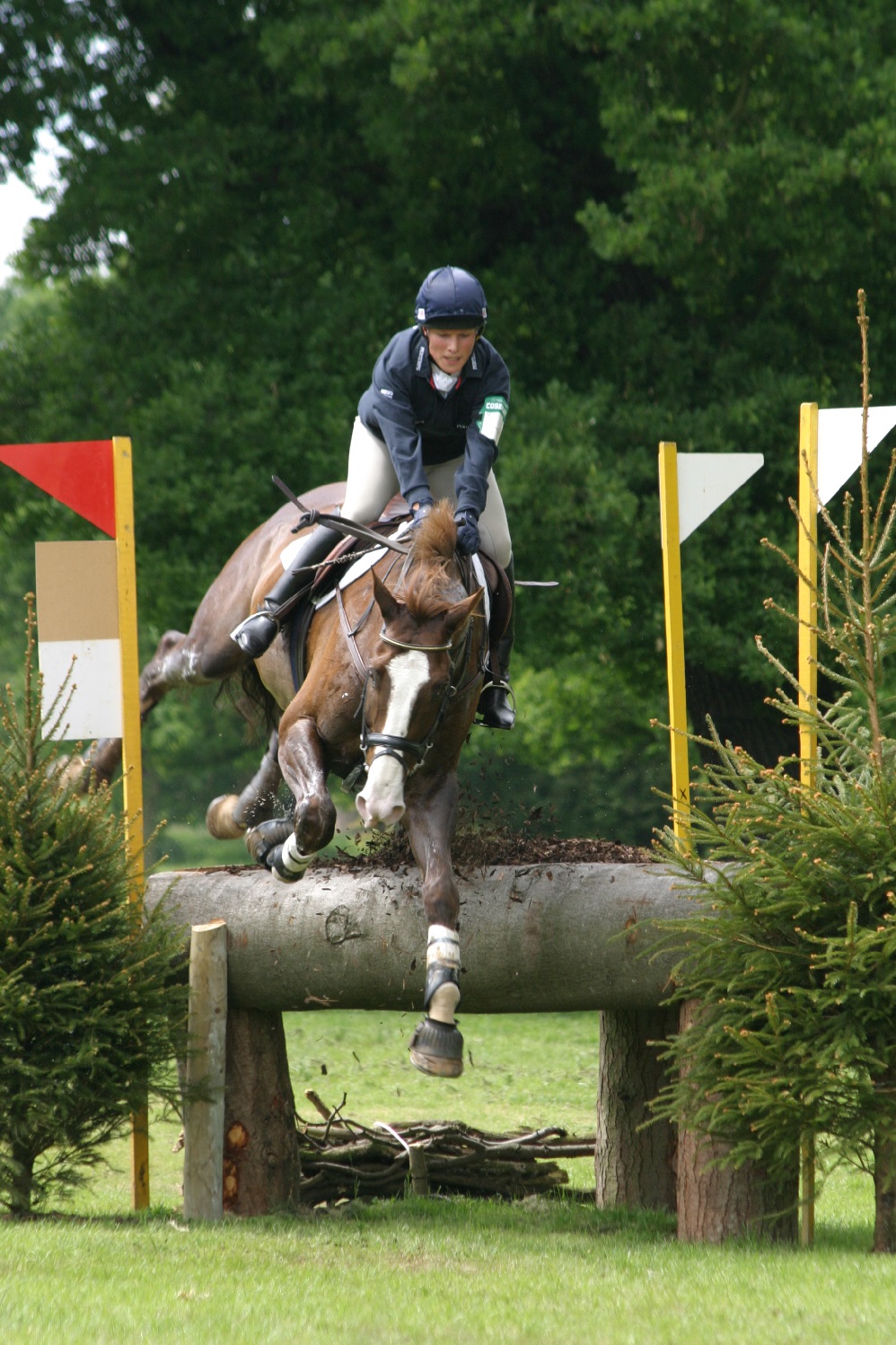
My most amusing memory is of an incident when there was an announcement over the loudspeaker telling the rider that needed to recover his mobile, that the Show Secretary had the long veterinary gloves required. What else gets dropped in the port-a-loos? On a more serious note, there was the day at Windsor three-day when all the paparazzi crowded around the water jump waiting for Zara Phillips, hoping she would fall. They were gutted when she jumped clear then fell a few fences later. My photographer colleagues laughed at them, knowing who was taking photos at that fence. I even sold the pictures to the Daily Mail, reassured that Zara and the horse were okay.

Image

My photo of Zara Phillips, sold to The Daily Mail.

Horses, or at least equestrian sports had become my career – this horse had found his course. I was not only writing, but had helped launch the South East Eventers League and was trying to revive Borde Hill Horse Trials. But my health began to deteriorate and I was diagnosed with multiple sclerosis in 2000. I had to gradually cut back on my commitments, especially when I lacked the energy to attend events and worse, failed to recognise riders. I had to reduce the number of shows I covered, then the articles and finally organising the one thing that my grandfather would have approved of – a horse trials at the family home, Borde Hill.

From there I began a Spiral descent into crime, which at least has kept me off the streets. I’m not sure that crime pays, even when mixed with horses, but I’m having a go. What else should a retired journalist do but write about some imagined skulduggery against an eventing world that might resemble the one that sustained me for a few years.

Image

However, the sequel to “Spiral of Hooves” is set in the American west – “Tortuous Terrain” has mysteries and deceptions set against endurance riding and barrel racing. And it’s all down to that lady that loves horses, and me – Juanita Clarke, my second wife and soul-mate. We finally met despite the distance between us. Originally from Idaho, Juanita grew up with horses and even introduced me to western riding. Riding western was my last fantastic experience on a horse, before I had to accept that a wheelchair was my current mode of transport.

But maybe our new life in Wales promises more than hoses watering a wonderful array of roses… perhaps there will be horses, pulling a four wheel chariot – with scythes. Watch out neighbours.


LINKS

More on Roland Clarke: www.rolandclarke.com

Family legacy: Borde Hill celebrates 150th anniversary of the Garden’s founder: http://www.hha.org.uk/DB/news/borde-hill-celebrates-150th-anniversary-of-the-gar.html

Confessions of another Driving trials virgin: http://www.stonebridgedrivingclub.com/2009/10/in-the-hands-of-pippa-bassett-confessions-of-a-driving-trials-virgin/

Skulduggery exists beyond Roland Clarke’s imagination: http://www.independent.co.uk/arts-entertainment/skulduggery-at-the-stables-1118389.html  +  http://www.telegraph.co.uk/sport/olympics/equestrianism/6604438/World-of-equestrianism-dismayed-after-FEI-take-bute-off-banned-list.html
Posted in Authors | Tagged , , , , , , , | 5 Comments

Tagging Historical Fiction Authors

In the latest game of tag for historical fiction authors on the blogosphere, we introduce the main character of our work in progress or soon to be published novel. Just to be different, I’ve decided to talk about the main African character in my recent historical novel.

Thank you to Tim Taylor, author of the wonderfully atmospheric Zeus of Ithome, for tagging me.

What is the name of your character? Is he/she fictional or a historic person?

Charles Omari Ondiek is a fictional person.

When and where is the story set?

The story starts in the 1950s during the height of the Mau Mau uprising in Kenya, through Independence, and ends with the attempted coup in 1982. The reader is also taken with Charles to London and Oxford; and with another principle character, Caroline, across the Kenya-Tanzania border on safari into the Ngorongoro crater.

What should we know about him?

Charles is a member of the agricultural Kisii tribe which occupied the fertile land along the Kenyan shores of Lake Victoria. He’s had a missionary education and is an intelligent, ambitious man, who gains entrance to Oxford University. Before going up, he has a temporary job as driver for a white settler farmer whose hobby is to train racehorses.

What is the main conflict? What messes up his life?

Before going to University, Charles falls in love with the boss’s daughter Teresa, who is Caroline’s best friend; but their secret is discovered by the Mau Mau oath administrator on the farm, who hounds them through the years with a powerful curse. Although he is a committed Christian and doesn’t believe in such things, Charles can’t help wondering.

What is the personal goal of the character?

Charles’s first objective is to get into Oxford University and he returns to take up a career in journalism, which he hopes will lead him to fame and fortune in his newly-emergent country. His ambitions focus on the ancestral secrets of his tribe in a desert location.

Is there a working title for this novel, and can we read more about it?

You can read the first few pages of BREATH OF AFRICA – which has been described as “a hymn of joy to Africa” – on Amazon; and get an idea of the rationale behind the makings of the book on my BLOG (There’s Always Hope). My BOOK TRAILER will give you a glimpse of the stunning scenery described in its pages.

When can we expect the book to be published?

The book was published by Crooked Cat in March 2013, and nominated for The Guardian First Book Award in July 2013. A second edition was published in April 2014.


Thank you for visiting – I now tag my good friend DR MARK PATTON, fellow Crooked Cat author, archaeologist, Dean at the University of Westminster and writer of warm-hearted historical fiction set in Roman Britain.

Posted in Authors | Tagged , , , , , , | 2 Comments

Clipping rabbits, Caves, and Jumping Ship

October 2001.

New Zealand is full of surprises. I go on a long coach trip from Rotorua to Aukland through yet more farms. We are held up by a farmer and his three working dogs herding two dozen Freisland bulls down the tarmac road. His mate is ahead in a pickup, warning on-coming traffic.

We stop briefly to watch a woman deftly using sheep clippers on an Angora rabbit, stretched taut like a naked carcass. We are invited to stroke its velvety body, but warned to keep clear of its head and teeth.

Then the Waitomo Caves: stalactites and stalagmites in a series of murky caverns. Wet steps and relentless drips into still waters. An eerie drift in utter darkness in a boat down the underground river, passing under a milky-way of glow-worms and their pin-pricking lights along the cave ceiling.

And Aukland, at the Quality Hotel beside a rose park, watching news break of the US/British attack on terrorism in Afganistan.

A twelve-hour journey north from Aukland to the Bay of Islands signals the start of a seven-day coach tour.  We pass through more green fields, dotted with sheep and dairy cows. Our driver, as indeed all the kiwi drivers I come across, is well-versed in local matters, and lucidly shares his knowledge. We stop to view a couple of Kauri (giant pine) trees and spend an interesting hour in a Kauri museum. Beautiful rich brown Kauri furniture, kauri gum trinkets – some complete with insects enclosed within the amber -and carvings. A detailed re-enactment of the whole production cycle is produced in a vivid, life-like manner.

Our hotel overlooking the beautiful Bay of Islands surpasses all expectations. The New Zealand birds also cooperate well despite intermittent rain throughout the day.  I spot eight new ones in the brief space of an hour between the hotel and the Treaty House, where Britain and the Maoris made their initial agreement about 150 years ago.

Image


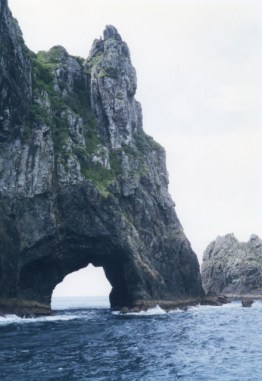
The following day we have a great trip in a catamaran from Waitangi, via Paihia and Russell, around and about several small islands, to Cape Brett and the Hole in the Rock. NZ boasts a muddling mixture of English and Maori names for its places. Dolphins play alongside for a while, and we spy a couple of seals on a rocky islet. Then we cross the swell left over from yesterday’s weather to the end of Cape Brett. Try as he might to make much of the great size of our vessel and the tiny arch of rock over the heaving waves, our crossing is a piece of cake for our captain.

Image

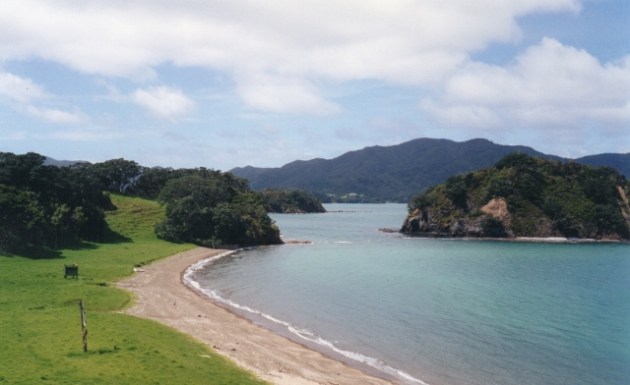
We turn back in brilliant sunshine, passing pieces of interest, and beach on Urupukapuka Island. I buy a bowl of delicious vegetable soup and rather a hard bread roll for my lunch from a busy café on the shore, then, leaving the catamaran to return to base with the crowd, I jump ship and hike out along the trails in this lovely, peaceful place. Little shady coves, inlets, steeply grassed hills. Headland and inland “pa” (ancient Maori hiding places where watchmen would lurk, heavily camouflaged under over-hanging trees). A few sheep, one or two boats idling by, a yacht anchored off a secluded beach with a bikini-clad maiden basking on the deck. More tourist vessels plying the deep blue waters to and fro far beneath. I  pass only two other people during my three-hour hike, and add several more birds to my list, including two pairs of Paradise Shelduck, one with five fluffy ducklings in tow.

I catch the last boat back to Paihia at 4.30 p.m., then walk the three km along the beach and across the bridge from Waitangi to the hotel. I sleep well that night.

Posted in Travels | Tagged , , , , , , , | 3 Comments

Thank you to Richard Hardie for coming by with your astonishing expertise. What? Never been to Africa? You sure have missed out on life. But I’m very grateful for the tips and glimpses of the real you, revealed in our  talk, and I’m off to take a look at the authors den this instant.

Image

Love your website, Richard  – did you build it yourself? And your blog. I can see why you have so much fun. Do you always write books on teenage detectives?

I would love to say I built www.rhardie.com, however the design and all the coding was done by a lovely lady called Tracey using WIX. She also designed the covers for my first two books in the Temporal Detective Agency series and hopefully will design the rest. My blog is a direct link from the website and she also advised on that, although the format is pretty standard. I try to blog every Friday, and usually at 6.30pm, either with an interesting interview, or with a topic that interests me.

As to always writing for teenage kids… I suppose I do. However I was always told that an author should find their “authorial voice” and I have to admit mine is very much of that age group, and so is my sense of humour, which is just as well. The detective side of things came about because when I was planning Book 1 in the series I thought it would be interesting if Nelson’s statue disappeared, the Koh-i-noor and the Mona Lisa were stolen and numerous works of art were discovered hidden away. The solving of those puzzles became a detective story, and the rest is History, or in the case of the Temporal Detective Agency…. became time travel!

I see you were a scout leader for 15 years. To what extent did your experiences then equip you for writing for Young Adults?

My next door neighbour and three mutual friends always went out for a drink after they finished at Scouts, when I used to join them. At that time I wasn’t a leader and until we met up at the pub I used to play snooker with another friend. One night I suggested he join us for a drink and the next thing I knew he had become a Scout Leader and I’d lost my snooker partner. There was nothing else for it but to also join the Scout Association. The six of us remained Scout Leaders  in the same Troop for the next ten years.

Once a year we held parties for all the other leaders (around 120 people) and I wrote short sketches which the 6 of us would act in. We were terrified but it was great fun.

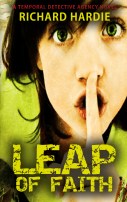
I then started writing and producing the Scout Gang Shows from 2000 to 2012. The second one had the core of the first Temporal Detective Agency book and after many years of writing, rewriting and editing it became Leap of Faith.

Kids and Young Adults have a very sophisticated sense of humour and the biggest mistake any author can make is to patronise them. They are a very discerning audience!

Terry Pratchett helped me write one of the scenes for the stage show and in fact acted the scene out for us to film and show each night at the show on screen. Terry even features in my next book in the series, Trouble with Swords. Though to find out in what way he features, you’ll have to buy the book!

Tell us about your new book “Trouble With Swords.” Do you intend to publish all the other Temporal Detective Agency books as e-books as well as paperbacks?

The second book in the Temporal Detective Agency series has the girls and Marlene travelling much further afield, from Camelot and the 21st century, to Shakespeare’s London, Ancient Rome and Cleopatra’s Egypt. It’s a lot of fun.

Crooked Cat will be releasing the book as both an eBook and simultaneously as a paperback in August. Both formats are incredibly important, but for me to establish a reader base among young adults the paperback is key. People don’t go onto Amazon to browse, they go there to buy a specific book. That means they either know the book, or the author they want to buy before they go on the site, or they’re fans of a specific series. Kids and Young Adults go into bookshops to look for new ideas on what to read so the paperback is an absolute must to enable an author to get established.

A couple of weeks ago in an interview Stephen King said that he believed that the eBook is plateauing and that physical books of all types are making a resurgence. As he so rightly said, there is no greater pleasure that opening a physical book and smelling the paper and print!

Where do you get your plot / story ideas from (apart from your dog)?

The idea for the Temporal Detective Agency initially came about from a Gang Show I wrote, but it needed significant plot and flow changes before it became a readable and saleable book. The idea for Merlin as a woman was purely coincidental. When we auditioned and cast the role for the stage, a Brownie leader was head and shoulders above everyone else, so she got the part and I had to do some rewriting!

I now find that the characters in the Agency series are so well rounded that if I dream up a “what if” scenario, I know how the characters will react and how the story will pan out for the most part.

What is your dog’s name?

Image

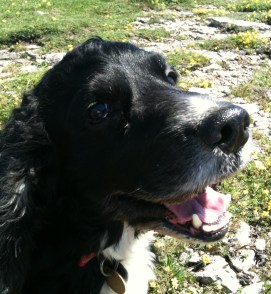
My dog, Benji, is a black cocker spaniel with a white shirt front. He’s a beautiful chap with a wonderful temperament and he goes everywhere with me…. Or would do if he could. We used to go to the Gower Peninsular in South Wales for a week twice a year (the family stayed at home). I lived there for many years and of course Leap of Faith is largely based there. It’s the most desolate and beautiful part of the UK and Benji and I used to walk for miles. Unfortunately Benji is 14 now and spends much of his time sleeping, so our Gower days are over.

I understand you find work less fun than writing books for children, but in order that we may have a more complete picture of you – might you tell us what you’ve been doing in “real life”?

For 35 years I worked in the IT industry, both in sales and sales management, latterly selling multi-million pound software to insurance companies initially in the UK, then across the AsiaPac region and then in Europe as well. In my last company I was sales director.

Early on in my career I also sold insurance and German hand carved solid oak kitchens to very rich farmers.

Right now I write, promote books and blog, though I also do occasional work to fill in the gaps!

And what would you like to do / be / have if there were no barriers?

If there were no barriers? I suppose this has to be a wishlist, and that could only be if money was absolutely no object.

I love travelling, and although I’ve been to 47 countries on both business and pleasure there are still two continents I’ve never visited…. Africa and Antartica. I’d love to go to both.

Image

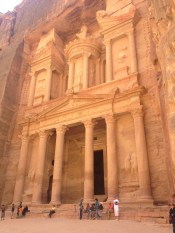
I’d also love to see the Great Wall of China, the Terracotta Warriors, The Valley of the Kings and Karnak, St Petersberg, Washington DC, the Northern Lights and the Earth from the Moon!

I think I’d like to be a best-selling author, but I’m not sure I’d want the pressure of having to produce two books a year without fail.

Image

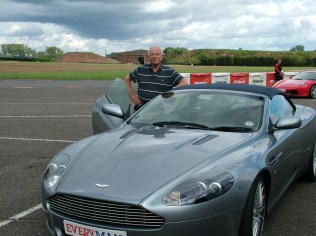
I’d like to have an Aston Martin DB9. My Facebook profile photo has me standing by one, but unfortunately it was rented for the day.

You attended the Peoples Book Prize ceremonies recently, because your book Leap Of Faith was a finalist. Might you share with us your experience of that evening?

Image

200 books were nominated and Leap of Faith made it to the final 12 in the Children’s category, which was in itself thrilling. The award ceremony dinner was a black tie event in an old Guild Hall in London and was sumptuous. The food was excellent and the whole ambience was an experience to savour.

You go to a lot of trouble to help fellow authors in the tricky task of marketing, and I’m a grateful recipient. Have you any other gems to share with first time authors – maybe on the subject of e-book marketing?

Having been a salesman for many years and having dealt with the CEO’s of some of our largest companies, talking to people and drawing up marketing strategies has never been a problem for me. I thoroughly enjoy approaching and talking to independent bookshop owners, either about stocking my books, or about arranging a signing day. Signing days themselves can be even greater fun if you start by knowing that sitting there with nobody in the shop can be a lonely job!

Marketing eBooks is a different kettle of fish. As I said earlier, people don’t go to Amazon to browse, they know what they’re going to buy beforehand. There are sites that DO enable and encourage readers to browse and then provide a link to Amazon, or your own website. I find the best of these is Authorsden.com. It allows the author to post details about their biography and about each of their books. It provides the reader with rankings, in total and by genre, not of Amazon sales, but of the interest expressed by other readers. It’s very well presented and also gives the author excellent statistics about how many people viewed each of their pages and then further statistics on who and how many people actually followed the links to Amazon, your publisher, or your own website.

As far as ordinary marketing is concerned, it’s important that any author keeps a high profile. That means shop signings, newspaper articles and features, library presence, talks, school visits (in my case), reviews (not just on Amazon) and some social media presence. Authors can’t be reclusive. It’s like selling soap powder…. The advertisers have to keep telling us that Fairy is the top brand, or within a very short period of time it won’t be!

And finally – honestly – how many hours a day on average do you spend socially networking?

Generally my day starts with checking and replying to emails, then going onto Facebook to deal with direct messages and the odd conversation. Twitter I do very little with now. I have to admit that I do keep Facebook on most of the time, whether I’m actively on it or not, but I try to limit myself to an hour a day at the most.

Life is too short to dwell on Facebook!


Link to Amazon:   http://www.amazon.co.uk/Leap-Faith-Richard-Hardie/dp/1909841269/ref=tmm_pap_title_0


Posted on by jbwye | Comments Off on Plots, Ideas and a Lot of Fun

The Peace of Solitude in New Zealand – And a Lame Horse?

Round-the-world Walkabout ctd.

I leave the coach at Rotorua, and am met by a friend of a friend, who has lent me her car for a week. I have not driven for two months, and the automatic gear is strange at first, but at least I’m driving on the left hand side of the road here, and the next few days are a treat as I enjoy my independence.

NZ Taupo

One afternoon I hike a couple of trails along the river from the Huka Falls, near Taupo. Very few people are on the trail, but several birds betray their presence, and I enjoy the privilege of being able to stop and stare and identify without the pressure of belonging to a group. Birdsong is melodious and frequent. It is a pretty environment, colourful trees and shrubs border the emerald green river which creates creamy rapids for white-water rafters. It is springtime. A thin sun appears, but it is mostly overcast and only a few drops of rain fall in the late afternoon.

On the second trail I am completely alone, except for a jet-boat screaming far below me, and a helicopter whirring above. Until now, I have not been able to feel the peace of isolation. I am four hours on the trail and do not notice the time go by. My limbs start complaining towards the end, but I take no notice.

I book a ride to the Craters of the Moon. The weather is damp. My scruffy long-haired horse with dried mud clinging to his coat is an obstinate standard-bred, and I think he is lame in all four legs until I am told he is a pacer.  I certainly would not choose to ride another like him, and muscles other than those in my legs suffer as a consequence.

But the two hours to the Craters of the Moon geysers and the hills beyond are wonderfully pleasant and peaceful, even though the cloud obliterates most of the view. Tall pine forest shelters us from the rain, and my hitherto untried rain jacket and trousers do their job beautifully.  Twice we pass by a delicate grey Arabian-type pony ridden in a twisted rope halter by a woman with an elfin figure. They seem surreal as they emerge from the mist.

We visit The Caboose Lodge. I imagined it nestling in a forest of pines by a lake; in fact, it is on a corner of a busy street by Lake Taupo. Its light brown log walls and yellow, orange and brown decor comes from South Africa, complete with furnishings. You step through the front door right into Africa. The theme is a train, rooms are cabins and wildlife pictures and motifs adorn the walls and floors. The locals took some time to appreciate the novelty, apparently, but the restaurant and conference facilities are popular.

NZdeerfarm (640x391)

I take a different route back to Rotorua – the farms are bigger and I nearly swerve off the road when I spot a herd of deer grazing peacefully in a paddock. Deer farming is quite popular here. I also pass a couple of llamas.

NZTaupo (640x397)

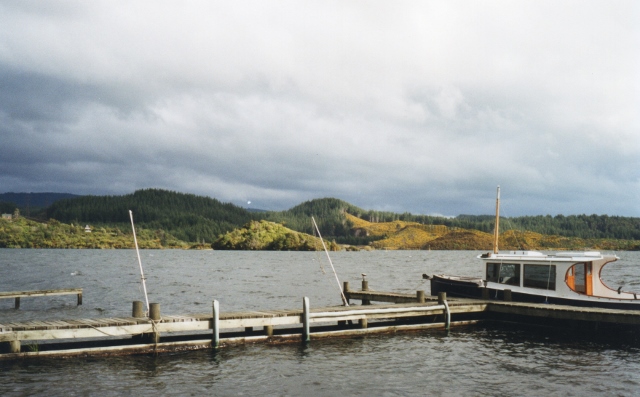
Before turning off to Lake Rotoiti, I detour down a narrow winding road to Lake Okataina and arrive at a deserted paradise, presided over by a sleepy lodge. A miniature crescent island … waters ruffled by white horses as squalls pass through; a sandy shore and a couple of jetties slapped by gentle waves. One or two buoys mark a little course. Distant shores are covered with unspoilt forest and dense undergrowth. Sometimes a patch of sunlight shows through the passing clouds.

NZ2 Taupo (640x397)

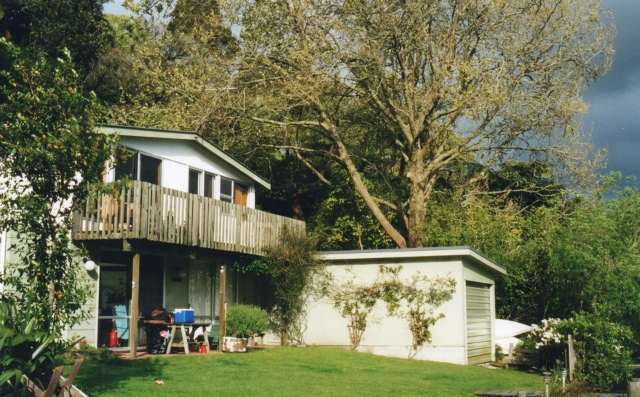
That night, I stay all by myself in a sweet little shalet by Lake Rotoiti – an idyllic setting.

Posted in Travels | Tagged , , , , , , , , | Comments Off on The Peace of Solitude in New Zealand – And a Lame Horse?

Writers Beware! And a Bit of Cloak and Dagger

Image

I am honoured to welcome Lena Pate today – she describes herself in her blog as a transplanted Yankee living in Texas because winter depresses her. But there is nothing depressing about Lena, who despite falling into a trap all writers would wish to avoid, has come out smiling more doggedly than ever.

Lena M. Pate large

If the ability to write was suddenly taken from me, I would be crushed.  As far as my memory goes back, I remember reading and writing.  Not a line or two or one book once in a while.  My favorite time of day was library time.  I couldn’t get enough and would always check out the maximum allowed.  Writing was an escape for me as much as reading.  Whatever adventure I went on that day, whatever treasure I dug up, whatever bug or animal I befriended, became a story.

Then I grew up and life interfered.   Between babies, a farm and full-time jobs there wasn’t time for the luxury of reading let alone writing.  I remember making up stories for my kids when they were tiny or reading stories to them just to be able to read.

When empty nest syndrome hit, I sat down with my husband and explained that I wanted to write.  I told him of all the stories clamoring around in my head.  Being an avid reader himself, he gave me the support I needed to be able to have the time to write.  Poetry, short stories and eventually manuscripts took life on my computer.  Characters developed, taking on an existence of their own.  I started attending writing conferences and building my blog and joining writing sites.  I found my niche around friends that understood the voices insistent to declare their individuality.  They understood keeping a pad and pencil close by, everywhere I went and even beside me when I slept.

Even though I have another career, I wanted to take my place in the world of authors.  I was published in magazines, and in an anthology, but never picked up as an individual.  It didn’t stop me from writing.  In fact I was encouraged to write more. Then one day it happened.  A publishing house wanted my book.  I signed a contract for three years and suddenly there I was on Amazon!  I was ecstatic and stepped immediately in marketing mode, as well as, beginning to write the second book.  The company said all the right things, including that my book was scheduled to go to print.  I couldn’t wait to share my good fortune with the world.  So I wrote about it everywhere.  I announced it on my blog, Twitter, author pages, Facebook, and on my writing sites.  I called family and friends to tell them the great news.   I couldn’t be happier.

But weeks went to months and no books.  I’d write them and was told that they were working on the marketing angles.  Then they were changing company names. Then they disappeared. Poof, like a fog after sunrise they evaporated. No printed books, no royalties and no copyright to start over with in my name.  A hard lesson learned.  In my happiness of being discovered, I didn’t investigate as well as I should have.  I should have never signed for three years and certainly should not have given away my copyrights.  Now I will have to shelve my second and third books for two more years until I get my rights back on book one of the series.

It was disappointing but not discouraging.  I’m still writing, two short stories of mine are going to be published in more anthologies, and I am reworking a book I wrote a few years ago. I still tweet, and keep up my marketing even though I won’t ever see a dime.  I am building my writers platform.

But most important, I write because I can’t not write.  Even if tomorrow, the internet vanished into cyberspace and no one could read my words, I would still write.  That is what it means to be a writer.

Lena – my heart goes out to you, but all is not lost…..  surely because those publishers have broken their side of the contract, you are no longer obligated to them? 

Lena is also a poet –

Cloak and Dagger
 
Skulking in, it caught me unaware
In the dead of night, where dreams slither
With stealth it creeps like smoky vapor
My spirit cries out in apprehension.
It wore a cloak and dagger,
Which dripped words undeclared
Empty parchment waiting
To be soaked with poignant imagery.
The cloak, but a shroud to hide behind
The dagger, a trusty friend
An extension of unconscious contemplation
Oozing thoughts, torn from heart to pen.
I am but a victim of resourceful temperament
Lost souls with untold stories clamoring for release
Mysteries yet unraveled, murders to be solved
Lingering shadows, bound by cloak and dagger.
Posted in Authors | Tagged , , | 5 Comments

Dressage and Clouds of Sulphur

I’m in New Zealand, on a fifty-acre farm with dairy cows and horses. The wooden farmhouse is very close to the main road and it shudders every time a car or bus flashes past. What a lovely green, green country this is, after the States! I am going to “work” for my keep here, as Judy has six enthusiastic riders lined up for me to judge tomorrow.

NZ1 Thames Valley (640x400)

We pay some old Kenya friends a visit in their new property just outside Aukland. Life is a struggle for them, as it is for all that leave Africa and have to work physically with their bare hands, often for the first time. And it is not easy, when you’re approaching retirement age, to start afresh anywhere.

My first day in New Zealand  is at the local Riding Club and Judy has an idea that works a treat.  A group of riders who have never ridden a dressage test before, come in front of me. After each test I discuss the marks with them, trying to give helpful hints and encouragement, and after lunch they re-ride the test. In every case there is improvement and some of them quite remarkably so. The venue is a beautifully scenic twenty-acre smallholding with open-plan home on a hill overlooking the sea.

You do everything yourself in New Zealand. This is hard to imagine when one is so spoilt in Africa where you have people to do the donkey work. As in Canada, there’s no going for hacks in the countryside, as there are too many roads and fences. Exercising takes place in the home yard.

The following day I travel through farming country – fields and fields of lush green grass. Farmhouses are built near the main road so there is little or no privacy. This seems strange when the properties stretch out behind and they could so easily have put their homes back a bit, on a hill or behind some trees. I am told it was because of the original expense of laying electricity and communication lines, and the convenience of having doorstep transportation for milk and dairy products in pioneering days. It is rich countryside and paddocks take only about a month to re-grow after they are grazed.

NZ1 geysers (640x392)

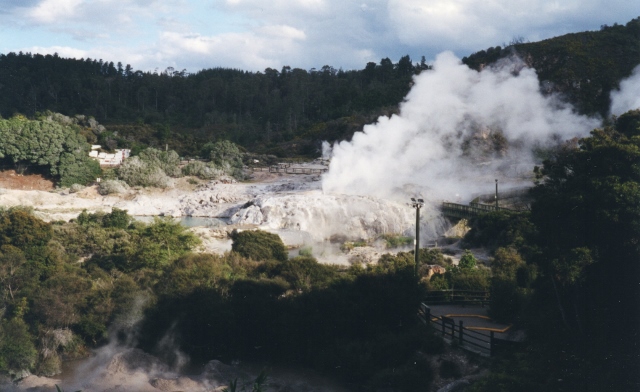
Then I climb by coach into the mountains and the farms thin out as great pines take over, the land becoming more like the highlands of Kenya. This is sheep country and geyserland: billowing clouds of steam rise as we near Rotorua, and the smell of sulphur permeates the air. There is a greater difference here, between town and country.  But habitation still clings to the roadside and you never go far without passing a house or building of some sort.

Posted in Travels | Tagged , , , , , | 1 Comment

Rambling on About Historical Research

My guest today is the mysterious Cathie Dunn, alter ego of my amazing publisher. Although I learned not to classify my book as historical fiction, it is nonetheless African Historical fiction, and I learned the hard way what Cathie tells us now. Wish I had known you when I was struggling with the birth of mine, Cathie – perhaps it wouldn’t have been quite so protracted!

Image of Cathie Dunn

Thanks so much, Jane, for having me here today. I love rambling on about historical research, much more so than chatting about my books. So, here goes…

Researching history doesn’t have to be boring!

The first rule of writing historical fiction is that you – the author – should get your facts right. There are many debates, both online and in magazines, about how much ‘real’ history (which in itself can be debatable) writers should include, and where the fine line actually lies between fiction and fact.

If you want to write believable historical fiction, it requires an idea of the customs and way of life of the period you have chosen. If you confuse your Renaissance with your Dark Ages, you’ve blown it. Most readers will notice, as they often tend to have their favourite eras when choosing a book.

Of course, some genres require more and others fewer historical facts, and I’m sure some writers get away without great detail almost completely, instead focusing on characters and plot. It might make for riveting game of ping-pong of character conflict (particularly in romance), but readers may miss out on impressions of the times. This can leave readers wondering as to why characters reacted the way they did, far removed from modern sensibilities.

In general historical fiction, where the politics of the day might interfere with the main character’s life, it is crucial to consider the known details. Nowadays, it’s fairly easy to read up about kings and queens, political parties and the differences in roles between nobility, gentry and the working classes. There are huge resources available online that even a decade ago seemed unobtainable. And, of course, there are always volumes of history books to browse in libraries. Not just in English.

From my point of view (and some may disagree), you would want your characters to be as close to the real thing as you can make them. Ensure to read up on clothing, setting and day-to-day customs. Explore how they would behave towards each other, or how they would address each other, and their lords or villeins. If a real king or queen features in your novel, ensure they were indeed known to be in that particular place at the time, or at least that there is no record of them being at the other end of the country, signing a major treaty.

If you write historical mystery, contact local libraries for copies of old town maps. Read up about the roles of the sheriff, coroner, etc, and if possible, search for cases. Many original documents such as the Anglo-Saxon Chronicle are available online. Whilst these often have to be taken with a pinch of salt – propaganda is no modern invention! – they provide you with a sound impression of opinions, fines or punishment.

There is another aspect of historical research, which not everyone has access to, but which I found invaluable: taking part in historical re-enactment. You get involved in a way of life so alien from ours, it leads to a more in-depth understanding of the time period.

My holidays often turn into research trips: I love visiting castles, cathedrals and medieval towns. Getting a feel for medieval Normandy was incredibly helpful for plotting Dark Deceit. Standing in front of buildings that belonged to Eleanor of Aquitaine or William the Conqueror is humbling. And incredibly exciting!

Never underestimate your readers. Some readers don’t mind if you get things wrong, but others might throw your book against the wall and leave a poor review online. I have given up on books where the errors were too glaring. It spoils my enjoyment of it. However, many readers simply read for pleasure, and they’d be happy to forgive you a couple of capers… J

Now, take a step into the past and enjoy the adventure!

~~~

Cathie Dunn writes historical romantic adventure. Her favourite eras are the English Civil Wars, known as The Anarchy, of the 1130s-1150s, England under the Plantagenets and medieval and Jacobite Scotland.

Cathie has two novels published, Dark Deceit – available at Amazon and in all good bookstores, and Highland Arms – available at Amazon. She has also self-published Silent Deception, a paranormal romantic novella set in Victorian Cornwall.

Highland ArmsSilent DeceptionDark Deceit

Cathie is currently working on a medieval Scottish romance.


Website:        www.cathiedunn.com

Blog:              http://cathiedunn.blogspot.com

Facebook:     https://www.facebook.com/cathie.dunn1

Twitter:           www.twitter.com/cathiedunn

Author page on Amazon UK:       http://www.amazon.co.uk/Cathie-Dunn/e/B005IHAXH0

Author page Amazon.com:           http://www.amazon.com/Cathie-Dunn/e/B005IHAXH0

Posted in Authors | Tagged , , , , , , , , | 2 Comments

Pearl Harbour – a Significant Experience

This promises to be a significant experience, bearing in mind the timing of our visit. Our leader rises to the occasion and is full of information, anecdotes and good fellowship. Enhanced security is most obvious. We have to leave all bags, camera cases – even bum-bags – behind in the bus, which unlike that on Maui, is  full.

The twenty-minute introduction and film are very well done. The introducer, like our guide, refers to the attack on the World Trade Centre and the correlation between the two is getting easier to understand as the story of Pearl Harbour unfolds.  The film is the original black and white and a bit crackly, but most interesting and moving – I guess the more so because of recent events. Then, they were prepared for sea attack, but were surprised from the air. I have the feeling of history repeating itself.

pearl harbour3

The Memorial lies directly over the sunken battleship.  We are transported there by boat. Some people scatter leis over the waters. Fish swim over and round the rusty bits of iron peeping above the clear waters. Oil still escapes, and grows in colourful patches over the water. So many people (over 1000) remain here under the waters. It is moving knowing I am actually standing here, and they are still beneath me. I wonder if the US will have a memorial for the World Trade Centre. The message, for me, is one of sadness for the world; we will never learn.

pearl harbour1pearl harbour 2

Afterwards, we are taken on a tour of Honolulu, Chinatown, civic buildings and the old palace. Then we drive nearly 2000 feet to the top of a hill to view Honolulu in a wide vista, and I am able to identify several places. Pearl Harbour lies in the centre of the right hand picture. The sea is a deep deep blue, and skycraper hotels dominate the waterfront.

In the evening I experience another facet of this amazing place when I join a group for dinner and dancing on board the Ali K’ai catamaran and watch the sun set over the Pacific. What a joyful, happy crowd we are, our leader aloha-ing with great gusto, and taking us along with him. Our hosts perform some beautiful dances, and get most of us to join in. I cannot do justice to their buffet, however, as I treated myself to late lunch sampling traditional Hawaiian Lau Lau (pork, baked in taru leaves), but I do not like their poi (remember to pronounce every vowel separately: I call it Poo-i).

I get back to my hotel barely in time to change into warmer trousers and take the transfer bus to the airport to catch the plane for Aukland. More security measures, and a very long wait before we finally take off at about 1 a.m., when I have another dinner. Breakfast is seven hours later after a stop in Fiji; we all have to get off the plane, go through physical bag checks, and then get on again. And I’ve now lost a day.

Posted in Travels | Tagged , , , , , , , | Comments Off on Pearl Harbour – a Significant Experience

A True Feeling of Life and Culture In Kenya

Please head over to Jeff Gardiner’s blog today, where I am holding forth on a subject I just love!

http://jeffgardiner.wordpress.com/2014/04/30/life-and-culture-in-kenya-by-jane-bwye-guest-blog/

Posted in Authors | Comments Off on A True Feeling of Life and Culture In Kenya