How Spoilt We Were in Africa

On my return from Toowoomba, I call in for tea with Alastair and Caroline Pickering. Eleven acres of rolling paddocks grazed by ponies for the disabled, and a spacious house overlooking wild forest land, with farms way down the valley. The colonial-style bungalow allows plenty of room for visiting family and friends, but they have no animals. It seems strange. It is so like a Kenya house that I half-expect to see several dogs lounging on the veranda. However, they decided against having animals. It would be too much of a tie when there’s no “Njeroge” to look after them. How spoilt we were in Africa. Instead, colourful parrots flit fearlessly in and out of the veranda, purple swamp hens pick at the lawns, and kookaburras laugh raucously close by. It is great exchanging Kenya news.

It takes me a while to decide how to get from Brisbane to Sydney. I want to see a bit more of the country so eventually opt for a coach ride  However, I might just as well have taken to the skies, as time constraints force me to travel overnight. We pass through the Gold Coast before sunset, but spend hours crawling in the traffic behind tall temporary barriers erected for some sort of festivity. We look out on the myriad of people returning to their hotels, footsore and tired, as they weave between the stagnant traffic.The remainder of the long journey is dreary and sleepless.

Sydney2

Sydney International Equestrian Centre

In Sydney, I meet up with Kathy who arrived on the “milk run” from Perth, so, after a desultory wander through a shopping complex near our hotel, she curls up on her bed and is out for the count. Armed with a rough sketch map of the area, and my binoculars bumping round my neck, I find some nearby wetlands.

Kathy and I spend a day at the Australian National Dressage Championships in their International Equestrian Centre. We watch Prix St. George and Medium tests outside, and sit through the evening display: Intermediate and Grand Prix Freestyle (Kur) to music. What an experience – passage and piaffe, flying single changes and pirouettes. All in their magnificent arched indoor arena, which gives such a feel of light airiness.

The following day another friend from bygone days picks me up from Central Station and drives me round Sydney’s high spots. Roy and I met Doug and his son Greg on our “Flight of the Angels” at Victoria Falls in Zimbabwe sixteen years before.

Sydney3

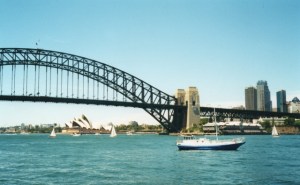
Sydney is a truly beautiful city with its blue river, pleasure boats, ferries, yachts, and of course the Opera House and spectacular harbour bridge. We take advantage of the peaceful aftermath of an annual marathon to drive along the main streets of the city. Tiny glimpses of the river through tree-lined streets; quaint old buildings nestle between towering new ones. We cross the Bridge. The suburban houses on the north side are closer together in narrow streets.The homes in this older part of the city are very much sought after because of its spectacular view of the city, with the Opera House showing beneath the Harbour Bridge. Deep purple Jacaranda flowers and shocking red and orange bougainvillea give a dash of foreground colour to the scene.

We drive northwards to Newport, through villages running into each other. We wind through varied bush and forestland, with glimpses of the sea and surf beaches as we top the gentle rises. It is Sunday, daylight saving, and the people are not quite comfortable with the new timing; few are out and about and the roads are empty.

We go to Avalon and a delve into a tiny bookshop. Shelves are overcrowded, people squat on the floor to browse, reading newspapers and thumbing through magazines; a cramped cafe at the back, where we enjoy a delicious capuccino each; unhurried, casual; a “Thanks for coming in” from the proprietor as we depart, battling our way through the readers among the narrow shelves.

Then a feel with my toes in the smooth brown sands of Bilgola Beach, before going back to their new double-storey house among dozens of others on a crowded hillside. Irene dishes up a delicious chicken ginger dish for supper that night.

Later in the week, Greg and his family invite Colin, Kathy and myself to a barbecue in their small North Bank home and Phil comes round to share his photographs of us all picnicking above the dry white soda flats at Lake Magadi. I have to see these to be reminded of their visit to Kenya thirteen years ago and wonder how many unrecorded incidences have slipped my mind. As I get older, it is quite frightening.

Then it is two days of intense sightseeing with Colin and Kathy.  Manly beach, lunches, shopping and more shopping (mainly Kathy: I am sticking to my resolution to resist – my suitcase is already brimful). The “Tales of Hoffman” at the Opera House is disappointing, although it is wonderful to hear “Barcarole” in its true setting.

When Kathy leaves, Col and I catch the ferry to Darling Harbour. We see the Shackleton film on IMAX (a “first” for Colin), wander round the Maritime Museum, experience the destroyer and submarine first-hand, and then visit the Aquarium. We finish up with a sit and a stroll in the Botanical Gardens before catching the bus to our sedate digs at the women’s halls of residence in Sydney University. Sydney is well organised for tourists and their $13 dollar a day deal for unlimited use of trains, buses and ferries is good value.

We go to the Olympic Village by Rivercat – a sleek vessel that races silently and almost without a wake through the water – and tour the Stadium, which is undergoing noisy alterations. It feels eerie without the masses, and is also very hot.

Then we lounge on grassy banks in Sydney’s botanical gardens, watching for birds and catching up with each other. I value this leisurely period with my twins, one after the other, pleasantly intimate and with no distractions from spouses or children.

Sydney1

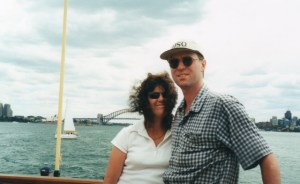
My twins. Sydney 2001.

Posted in Travels | Tagged , , , , , , , , | Comments Off on How Spoilt We Were in Africa

Can Micro Managers Be Leaders?

He signs himself Vossie on his blog, but I’ve always thought of him as AJ.
I’ve never met him, but his fledgling book Fathers of the Sons struck several chords with me when I first read it. It may never see the light of day, for Vossie has now moved on to express himself with delightful photographs and snippets of thoughts.
I will always think of him as a kindred spirit and my very first supporter of BREATH OF AFRICA on its journey through Authonomy.
We touch base now and then.
Continue to enjoy your gentle retirement along the canals of Ireland, Vossie.
Why not follow this great blog and enjoy his regular ramblings, as I do?

aj vosse's avatarOuch!! My back hurts!!

Conversely put,

can leaders stoop to micro managing?

Somehow, I think the answer to both questions is an emphatic NO!

I’m perturbed by the concept that so-called team leaders are lumbered with the title when they are in effect team managers. I have difficulty answering to micro managers. I have difficulty in seeing the logic of placing someone in a position of management when they clearly haven’t grasped the core essentials of leadership.

I’ve occasionally posted about the joys of (bad) management in the workplace. I especially love the creativity of those moving within the lofty realms of the corporate human resources environment. Mostly though, I love the way they twist corporate values to suit the management styles of bullies. Ever changing performance indicators and a sliding approach to team functions lead to confusion and under-performance. That, in turn, leads to more reprisals from managers and so the spiral…

View original post 378 more words

Posted in Authors | Tagged , , | Comments Off on Can Micro Managers Be Leaders?

Half-way Round The World – And Thirteen Years On, I’m still Talking About It

Before reading on about Fraser Island and its dingoes, here’s a link to my interview with Allison Fear on BBC SUSSEX RADIO yesterday. My bit starts at 2.43.42 pm and ends at 2.58 pm, and there’s a nice bit of Adam Faith music in the middle. It is only available until 31st August, so you’ll have to look lively!

And now, back to my Walkabout…

It is October, 2001.  I arrive in Brisbane early in the morning, having put the clock back three hours. Hillel Rifkin is the same as ever, even though we haven’t seen each other for 35 years. His wife Lena is a delight. They live in a tiny one-bedroomed Housing Commission Unit on Woody Point, a northern suburb of Brisbane, and had borrowed a bed for me, lined up against their sitting-room wall.

queensland 1

My five day stay with them is one of the most pleasant of my travels. They are very near the beach and after New Zealand the hot, dry weather is a treat.

They take me to indoor bowls that afternoon – five mats in a village hall, with 40 “oldies” having a great time. Some of them are really good. Hillel and Lena both boast trophies on their mantelpiece. It is very different from outside greens, where I have previously gained my “experience” in our annual varsity matches at Muthaiga Country Club in Nairobi. It takes me a while to adjust and I am tired, but everybody is very patient and friendly.

The following day Hillel and I go for a two-hour walk and talk along Sutton’s beach in the sun, catching up on old times. Afternoon tea is with octogenarian friends in their home nearby – local bowls stalwarts, and pillars of the Presbyterian church. A lovely couple: he proud of his garden and reminiscing about former dancing days; she proud of her cooking, and the current local bowls champion.

On the Saturday I go to “Fraser Island In-a-Day”, eight hours on a double-decker coach and six hours on Fraser Island, home of the dingoes, who had recently attacked two children. We pass long stretches of gums and large farms along the way; horses, some cattle, bare fields. There is an abundance of birds. The wide two-lane highways takes us past a mass of cars and people at a market. I gaze out at “glass mountains” covered with trees.

Australia is another big, big country, more casual and less spotless than the United States. The coach driver is not as interesting or talkative as those in New Zealand.

We arrive at Rainbow beach after a roadside lunch near a pond where I add seven birds to my list and then we decamp into two 4WD buses and catch the ferry to Fraser Island.

Queensland 2

The buses race each other across the beach for an hour along the firm sand at the edge of the foaming breakers as the tide comes in.

We go inland to walk in the rain forest at Central Station. A crystal clear stream tinkles below the path, and I spy an eel wriggling upstream. We drive along deeply rutted tracks to an inland lake; pure soft water on silicon sands. I wander away from the others to savour the stillness.

Back down to the beach, the tide is out and many tracks cut deep furrows in the soft brown sands as the Aussies drive crazily up and down, spinning their wheels and revving their engines. I tremble at the hazard to beach walkers, crabs, shells and snails.

After supper, the journey back to Brisbane is long and tedious – sleeping uncomfortably on the airline seats.

Posted in Travels | Tagged , , , , | 2 Comments

Going On Air

BBC radio interview

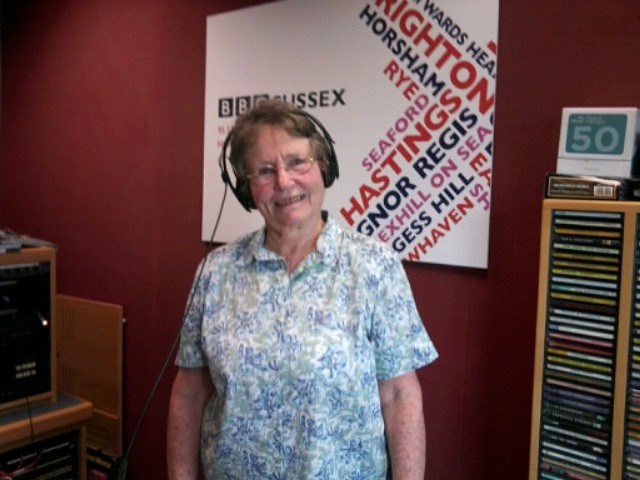
Had a BBC Radio Sussex & Surrey interview in Brighton yesterday. It’s going on air today, Thursday 24th at 2.40pm and will be available on BBC i-player for seven days thereafter.

When I arrived, the fire alarm went off, so I met Alison my interviewer as we were escaping onto the street (lovely and sunny). It was only a practice, but served to clear away the nerves nicely.

The interview went in unplanned and unexpected ways.There was much about Kenya, and family, and my reactions on moving to the UK. I leave it to you all to decide whether it went well or not – it was certainly a pleasant experience, though my head must be a different shape from anyone else’s, because the headset kept on slipping.

Posted in Breath of Africa | Tagged , , , , | 1 Comment

The Aurorawatcher

I’m Lela Markham, an Alaskan writer. I’m a Christian who lives in Alaska and Jane and I know each other from the Authonomy writer’s site, where my book “The Willow Branch” is available for reading. And you may notice that I brand myself as the Aurorawatcher.

Pictures of the aurora australis

Click here to go to Wikipedia

The aurora borealis lights up the nights here in Alaska during the winter, but I have a less travelogue reason for using it.

As a reporter decades ago, I interviewed Dr. Syun-ichi Akasofu for a story on the Alaska Geophysical Institute which is THE research facility on the aurora. It was a pleasant interview touching on topics that were outside of my fields of knowledge, but Professor Akasofu explained them so well that I managed to write an intelligent article. Toward the end of the interview we were talking about the aurora, his special field of research, and I mentioned having heard it.

The phenomenon of hearing the aurora is well-known among Alaskan residents who frequent remote parts of the state, but it is an infrequent occurrence. Dr. Akasofu corrected me, saying the ionosphere cannot transmit sound into the biosphere. I was pretty sure I’d heard it on a least three separate occasions. He suggested, kindly (for he is a very kind gentleman) it was a group hallucination or perhaps it was static from a car radio. I could offer no scientific arguments to bolster my experiences, but I did note that on the second time, I was alone and my dog was actually the one who heard the static-like sound first. Do dogs hallucinate?  I didn’t want to burn a source and Dr. Akasofu is such a nice man that we agreed to disagree.

Fast forward maybe 10 years and I meet Dr. Akasofu at some sort of public gathering. After a moment of conversation, he asked (you will have to imagine his Japanese accent) “You are the aurora watcher?” He had been at a remote site monitoring the aurora and had heard the same sort of static sound. Nobody else was around and the equipment wasn’t running at the time, but he heard it. He apologized to me for his “arrogance” in dismissing my experience. I didn’t think he was arrogant, but asked him if he had proven it scientifically. He said he hoped to “someday”, but scientific evidence or not, he was now convinced the aurora makes a sound that is, under the right circumstances, audible in the biosphere.

Christian faith is a lot like that. I’m convinced by evidence that I have experienced of a reality most people have not experienced. Some take that as a lack of evidence and call me crazy, but I know what I experienced and I am confident that if people would just lay aside their presuppositions, they too might see the evidence and come to know Christ.


Posted in Authors | Tagged , , , , , | 3 Comments

An Off the Page Event

USQ

USQ News, Toowoomba – November 2001

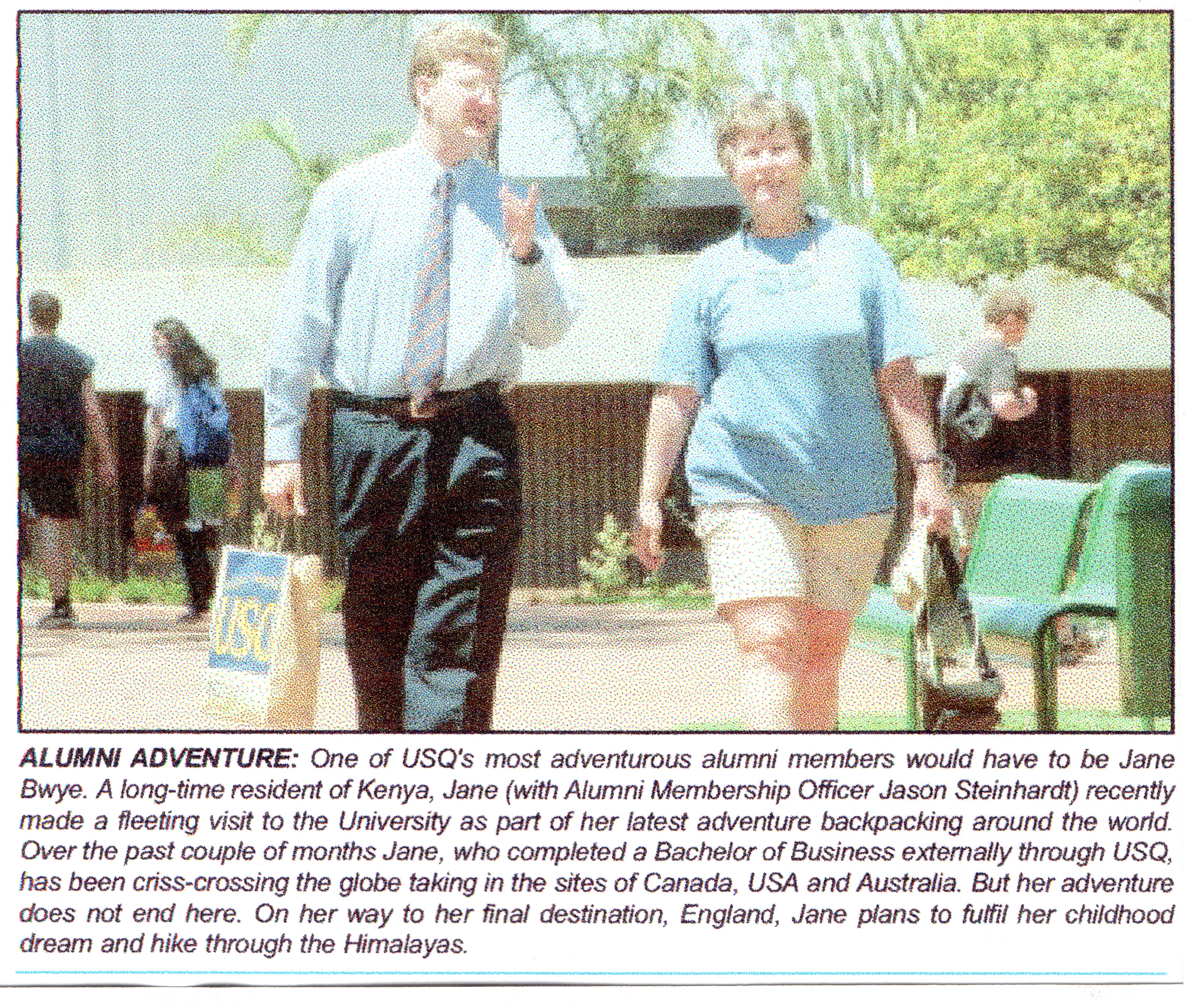
This Saturday (19th July) is the day of the University of Southern Queensland’s first ever Bookcase – an off the page event showcasing the power of the written word. And a copy of my book has winged its way there in time to be given out in a draw.

The event happens to coincide with my 2001 Round-The-World Walkabout Diary stop-off in Australia, so I’m treating you to some thoughts which crossed my mind nearly thirteen years ago, when I visited “my” University for the first time.

On the drive from Brisbane to Toowoomba on the Darling Downs, nine helicopters clatter overhead. Bearing swinging burdens of spilling water, they pass us as we ascend the final hill and when we leave the city three hours later, nine more return in swift succession, their loads lightened. Evidence of a bushfire hangs in a pall over the area. The rains have failed, but on roadside stalls plenty of fruit and succulent vegetables are on sale. The land is spacious – like Kenya farming country.

USQ Japanese garden

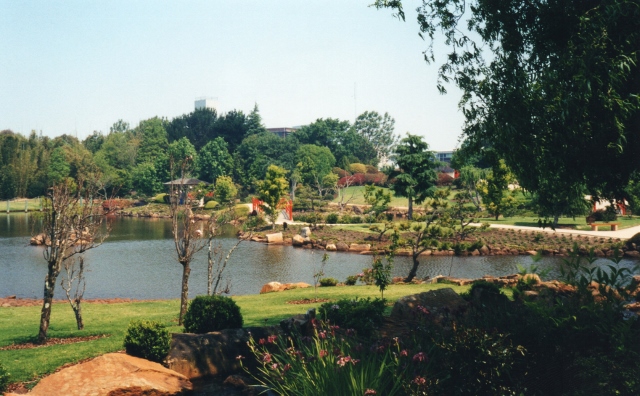
Toowoomba city is well spaced, laid back and sleepy. The University campus has a  pleasant air about it, quietly industrious and multi-cultural; the surroundings are lovely, especially the Japanese garden. It is a compact campus with good facilities.

They lay out the red carpet for me, and I am quite unprepared. A journalist and photographer hover for an interview, and here am I dressed in casual shorts, my sunglasses slung round my neck – I should have known better, perhaps.

An award winning dual University in 1999, their external students, of which I was one in the early ’90’s, far outnumbered the residents and came from 55 different countries round the world.

Posted in Travels | Tagged , , , , , | Comments Off on An Off the Page Event

The Rain It Reigneth Every Day

Wellington  is a hilly city huddled against the wind and the rain. The weather has finally caught up with us. We drive up Mt. Victoria in time to catch the view before the clouds roll in. The hillsides are so steep, some houses have cables running up to their front doors from the narrow winding road beneath.
We drive past the Parliament building and the “Beehive“, but there is no time to visit the museum, as we have to catch the Interislander Ferry. Three hours of plush time-passing follows on this enormous vessel. People taking refreshments, propping up the bar, playing one-armed bandits, watching CNN, or just sleeping in airline chairs. The crossing is a “good one,” a chance acquaintance tells me; the sea is fairly calm, unlike the previous week when the crossing was cancelled due to bad weather. But I cannot see a thing the whole way, for relentless rain and infuriating low cloud. Oh well – at least the Picton and Nelson farmers are happy, as their rainfall is low this year.
I leave the tour at Picton and catch the Knightline bus to Nelson, a serviceable 9-seater reminiscent of the matatu in Kenya. It stops raining as we wind along narrow flat valley floors threaded with streams, between steeply rising pine-covered folding mountains. We pass through vineyards, numerous deer farms, more sheep, and some cattle. I cannot see the tops of most of the surrounding hills as they are steep and covered with cloud. Just before diving into Nelson by the sea, the road takes us winding upwards over passes covered with pines. And then it rains again.
I spend the night in a Youth Hostel, writing my diary in the hushed lounge while next door some Korean youngsters watch TV.
The drive to Greymouth is scenic: larger fields, more forests, valleys between folded mountains. Grapes, apples, kiwi fruit. We go through Wakefield in the blink of an eye. A sleepy village in a little valley within easy reach of civilisation, but an ideal place for hibernating retirement. We pass by many rivers, great and small. Some of them are a translucent brown colour, from running over fallen leaves further up the steep slopes. Then we drive over dramatic passes, the road twisting up and down as the landscape changes and we approach the west coast.

NZpancakerocks (640x392)

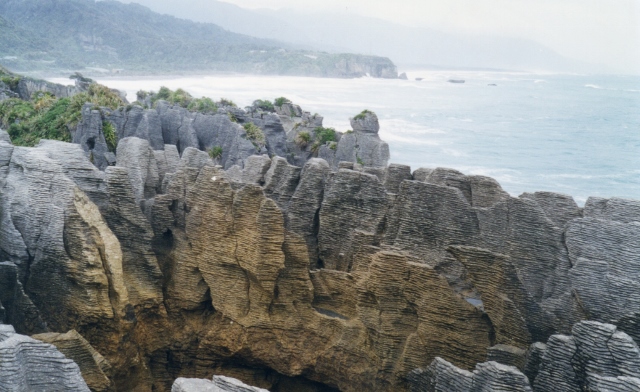
We stop for lunch at the Pancake Rocks and wander along a well designed walkway which meanders at the sea’s edge. The tide is in, making several blow-holes act in spectacular fashion. We drive past a coal mine and some abandoned gold mines. Then the weather closes in again.
The transalpine train from Greymouth re-traces some of the bus route before branching inland. It rains and rains, so we miss the rising mountain views as we pass in and out of tunnels up to the top of Arthur’s Pass. A few of us brave the weather in the open carriage for a while, gazing at the rain-lashed river bed and faintly snow-topped mountains peeping through the clouds.
The further down we race towards the east coast, the brighter it becomes and we are at last able to gape back at the wild splendour of the scenery which gradually give way to vast fields of sheep, then deer, the occasional horse, and the Canterbury Plains into Christchurch as the sun begins to set.

NZChristchurch (640x390)

I’m taking a break now – no more blogging for a couple of weeks. See you in Queensland, where my University is holding its very first Bookfest, and Breath of Africa is one of the door prizes!


Posted in Travels | Tagged | 2 Comments

The Center of Her Thoughts

Last week I visited story-teller Lela Markham in her home in Alaska, and today she’s returning the favour. We’ll be exchanging more visits in the future, but first, I have some questions to ask her.
Image

Lela Markham on Moose Creek, off the Steese Highway, in Alaska. The pipe behind her is part of the Davidson Ditch, an aquaduct system built to provide water to the gold dredges near Fairbanks Alaska.

Lela – thank you so much for having me last week, and letting me ramble on. Now it’s my turn! I only know you through your writings. Would you care to provide a more complete picture of yourself – your home, family, what you do for a living?

Lela Markham is the pen name of an Alaskan writer and blogger, born and raised in and around Fairbanks, but her family has lived in various parts of Alaska since the 1930s and witnessed the hard times before Statehood, the Good Friday Earthquake, the Fairbanks Flood of 1964, the construction of the Trans Alaska Pipeline and the multiple serial killers of the area.

She and her husband, an electrician, live in Fairbanks and are building a cabin in sight of the Davidson Ditch to get away from what her husband calls the hustle and bustle of modern life. They have two children – their daughter Ivyl is a traveling bluegrass musician and artist and their son Kyle is a high school student who loves robotics and swimming.

Lela started out to be a journalist, but the need to pay bills intervened, so she fell into office work. She’s currently for the State of Alaska. As an ardent Alaska citizen she passionately desires her home state to deliver on the opportunities offered by its vast resources and the independent spirit of its people.

Raised by voracious readers where winters encourage indoor activities, she always told stories. She wrote her first short story when she was 12 and has had a book of one sort or another in the works ever since.

Lela – you discuss a great variety of topics on your blog, Christianity / atheism / global warming / politics, and everything in between; and you say exactly what you think. What is the topic occupying your mind at this moment?

My Christian faith is the center of my thoughts right now. It always is there behind every post I write, even if it’s on global warming or political philosophy, but right now I feel moved to write about faith itself. Next week the topic could change, but the gospel is always behind what I write.

l’ve just read one of your recent blogs on the subject – you write with such clarity and sensitivity!

Something you have said in the past makes me think you enjoy the wilderness and travelling. Care to describe a place you’ve visited, and what it meant to you? (And please send me a picture or two?)

We do enjoy traveling, but Alaska is a long way from almost everywhere else, so there’s no greater or more convenient adventure than the Alaskan wilderness that is just outside of Fairbanks.  We have all kinds of favorite places. There’s a small shelf – just big enough for a tent and a small camp above a boulder on the Copper River just outside of Chitina where we use landing nets on 8-foot-long aluminum poles to catch Copper River red salmon.
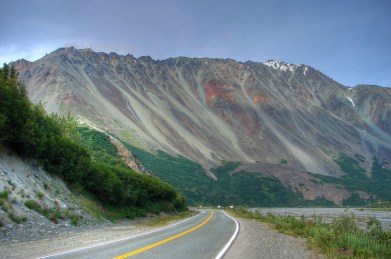
ImageThere’s Rainbow Ridge in Isabel Pass along the Richardson Highway where we climb up scree slopes into the clouds. There’s Angel Rocks tors off Chena Hot Springs Road just outside of Fairbanks.
Image

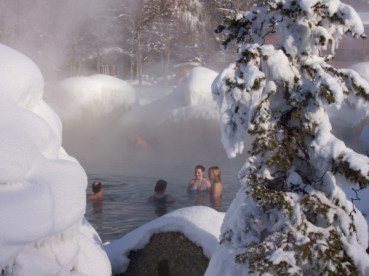
There’s Chena Hot Springs Resort nearby where we can soak in the hot springs pools after hiking or outside at 40 below zero.

Right now, our most frequented  favorite is Moose Creek off the Steese Highway, where we staked 18 acres for a remote cabin site. It’s not as pretty or dramatic as some of the other places we hike, but it’s ours with acres of blueberries, an active creek at the bottom of the property, a ephemeral stream that runs from the top property line to the creek Adjacent to the property is the Davidson Ditch, a system of aquaduct and piping that supplied the Fox gold fields with water for the dredges from the 1920s to 1967. We intend to build a cabin. A forest fire passed through about eight years ago, so there’s a jumble of trees fallen on the ground in a giant pickup sticks arrangement and a bunch of trees just standing dead, so I call it the Charcoal Forest. Fire is a natural process in Alaska’s boreal forest, so trees are coming back and the ephemeral saved a stand of trees near the top of the property. September is absolutely gorgeous when the cranberries leaves are turning scarlet.

We both joined the Authonomy peer-review website in 2011, and you have been such a good supporter of my book, Breath of Africa. How has the site affected the progress of your books – which I strongly relate to – and what keeps you going back to Authonomy?

I joined Authonomy because I wanted feedback from someone who didn’t love me – my alpha readers were all family and friends. It was a good choice. I ended up breaking up a book that was much too large into a series and introducing the back story to increase the action while not changing the main story of the redemption of two people through the faith of individuals.

My heart warms whenever I see that wonderful avatar of yours. I’ve been mad about horses all my life, but I also love dogs. Have you always had dogs, and what roles have animals played in your life?

Alaskans are dog-mad! I’ve heard there are more dogs in Alaska than there are people, but that’s an unconfirmed statistic. There are lots of dog mushers who have huge teams, but that’s a lot of work and you can’t have neighbors because the howling will drive them to murder. I’m personally a cat person, but cats are absolutely useless in the wilderness. Dogs can pull a travois, carry backpacks, smell a bear long before they get to you, and lend their body heat to warm up the tent at night.

Our family dog when I was a child was a cocker-Samoyed mix whose job it was to lead us out of the woods after my mother would get us lost berry picking. Mom grew up on the plains of North Dakota where you can literally see three-days walk in all directions, so she had absolutely no sense of direction when she was in trees … but she insisted upon going into the woods and taking us with her. We’d say “find the car” and the dog would head for the highway. Good times!

Our black Labrador, Cana, was our first baby. My husband and I hand raised her from a month-old orphan. She grew to be 90 pounds. She hunted, fished and hiked with us and once kept my husband from being sucked downstream when he fell in the Copper River. Most people do not come out of the Copper River once they fall in. She was very smart and sensitive to our moods because we were the only “pack” she knew.

Our Labsky (lab-husky mix) is an alpha who thinks she should be in charge of our pack. A frustrating dog! Black Dog once refused to take a Parks Service marked trail across a glacier. A moulin (a glacier melt tube) had formed under the trail, but was still covered with a layer of ice. We might have fallen to our deaths if she hadn’t refused the path across the death trap. On the other hand, she cannot leave porcupines alone, so she’s made us experts at pulling quills. We vacillate between proclaiming her a hero and wanting to leave her on an ice floe.
ImageThe yellow Labrador (Sunrise, my avatar) is a very happy mush-head. She’s always up for an adventure. She’ll ford any river, climb any mountain, and absolutely proves that dogs are descended from wolves who were domesticated by the belly rub.

We’ve also had five cats with five different personalities.

Naturally, these animals have influenced my writing and resulted in the inclusion of sentient animals in the Daermad Cycle.

 What are your plans for the future of your books?

I am on my final edit of The Willow Branch, which is the first book in the Daermad Cycle, a Christian fantasy series about a land called Rune, populated by Celtic humans and Runic elves who hold ancient animosity against one another, but who are threatened by a much greater enemy, which will require them to work together. The first book is done (except I can’t leave it alone) and the other books are partially complete. I’m starting to submit to agents and publishers and learning how much fun that isn’t. I’m intending to self-publish this winter. If I go that route, I expect for the second book in the series (Forest of Darkness) to come out in 2016.

 What books have most influenced your life, or your writing?

The Bible has definitely most influenced my life and, to a large degree, my writing. Not only do you find the words of life within its covers, there are so many stories that depict human nature at its most raw that it’s a marvelous resource.

I grew up in a family of readers in a state where the winters encourage you to read, so I’ve read a lot of books. The poetry of Robert Service and Jack London’s stories were family favorites when I was little. Lewis and Tolkien were influences. Katharine Kerr’s Deverry series, Stephen Lawhead’s Arthurian cycle, Rosemary Sutcliff and Morgan Llewellyn were all strong influences for the Daermad Cycle, but I also love mysteries, thrillers and action adventurers.

Music plays a huge unheard role in my writing.  Clannad/Enya, Gaelic Storm, Flogging Molly, and the Chieftains help me write Celtic fantasy, for example.

I find that television and movies also provide a great source of scenery for my books. I love to take a scene from a movie and describe its atmosphere reimagined in my world. Scenes

What would your perfect day be like?

Wow … a perfect day? I can think of a lot of “perfect” days. To choose one ….

I used to think there was nothing more perfect than a morning cup of coffee on a beach in Maui watching the sun rise. (I’ve been there too, Lela – it’s an awesome place!)

Pretty much, though, I would consider it a perfect day to wake up to nature just outside the windows, able to walk out onto the porch without seeing a neighbor, maybe take some photos of wildlife, take some notes about my surroundings and listen to birds talking to one another. The people around me would have a sense of humor and be comfortable with seeing what’s on the other side of the nearest hill and not be concerned with their smart phones or the time on the clock. We’d eat meals when we were hungry and be satisfied with water from the stream. We’d curl up by the woodstove in the evening with good books or writing and sleep that night on a feature bed covered with a patchwork quilt.

Some elements would change if I were in Maui or Europe or Africa, but the basic lines of rustic comfort and no pressure of time or modern technology would be part of it.
ImageThe Willow Branch – Book 1 of the Daermad Cycle (sample chapters)

A healer must mend a fractured kingdom and bring two enemy races together before a greater enemy destroys them both.

Fate took Prince Maryn by surprise, leaving Celdrya to tear itself apart. A century later an army amasses against the warring remains of the kingdom as prophesy sends a half-elven healer on a journey to find the nameless True King. Padraig lacks the power to put the True King on the throne, yet compelled by forces greater than himself, Padraig contends with dark mages, Celtic goddesses, human factions and the ancient animosities of two peoples while seeking a myth. With all that distraction, a man might meet the True King and not recognize him.
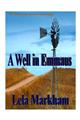
 

Image

A Well in Emmaus – Book 1 of the End of the World as We Know It series, is a work in progress. What happens when the world as we knew it spins out of control? The people of Emmaus, Kansas will find out. When a small town in the American Midwest faces deprivation following a terrorist attack on national infrastructure, the people must decide what is truly important to them. Does liberty mean so much when food is a precious commodity? Are our neighbors really beloved when our children are dying? We learn who we really are in times of crisis!


Posted in Authors | Tagged , , , , | 2 Comments

Farming and Industry in Kiwi Land

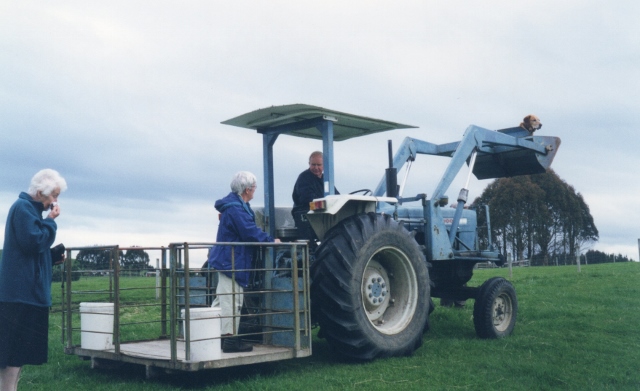
I’m back in Aukland, where Merriel meets me and takes me to their 15 acre holding at Onewhero. A roomy old house, just right for the two of them. I last saw Merriel and Peter nearly forty years ago in Kenya, and we have much to catch up with. Every morning they tend to their six pint-sized Dexter cattle – cows, calves and a growling grovelling bull, clearly very frustrated. They also have sheep, chickens, and a thriving vegetable garden. It is a great life for an active retired couple. They overlook acres and acres of farmland, and the  following morning on the way to catch up with my coach Merriel detours through a rugged, wilder New Zealand, which is more like my original idea of the country. I meet up with my coach at a place called Bombay, and return to Rotorua. At Maunganui we pause, and walk a little way up the “mountain” overlooking a beautiful beach, breakers, and blue, blue sea. We prepare for a Maori hangi and feast. Different from Hawaii, but very effective in its own way. They also perform a dramatic “Haka” for us. Although I had ordered, and paid for, shared accommodation, this is the first time in my travels I actually have to share a room. Jean from Leeds is most congenial; she also enjoys hiking, and has a husband behind at home. There follows another crowded day. I wish there were more time to savour all these treats. A most interesting forty minutes at the Maori Arts Centre. The Maoris are very proud of their culture, nor are they ashamed to absorb European customs and way of life. Their meeting house is very warm in colour – browns, deep yellows, oranges. We visit an Anglican Chuirch, designed in the same way – and there on the right facing the lake, etched into a plain window is the Christ, walking towards me “on the water”. We wander round the mud pools, see the geysers spouting upwards from close to, and sit on the hot slabs – not for long. One gets used to the sulphur smell after a while. A short ride in the coach to Rainbow farm and another guided tour, this time by a “Kiwi” round the trout pools and aviary. They aren’t allowed to buy or sell trout here and the penalties are heavy. Instead, they buy licences to fish only for their family (but, to get around this, you can catch your own, then take it to a restaurant for cooking!). Then a farm show, conducted with brash kiwi humour, but we are a good crowd and rise to the slapstick occasion.  How they keep it up for four shows every day beats me.Image Four of us are taken to the far side of the lake to stay on a deer farm. Our host had been a dairy farmer, but decided that was too much like hard work, so switched to deer, (see my previous blog) which is just as profitable but half the work. An open plan, glass-fronted dwelling on a hill high over the lake. A beautiful view in the sunshine, and colourful garden. We are taken to see the deer, riding behind a tractor on a risen platform, with their sober labrador comfortably crouched high up front on the giant shovel. This is a stud farm, so there is no harvesting for venison and suede leather. But their antlers are cropped annually and auctioned to the Koreans for aphrodisiac purposes.  That evening we are served delicious home-caught and smoked trout. A delightful “country-stay.” ImageYet another longish drive to Wanganui on the west coast, via Taupo. We pay a quick call at the Wairakei steam field thermal plant, then go up Mt. Ruapehu, North Island’s highest snow-covered peak.  We drive almost up to the snow-line and see the start of the Tangariro crossing trail. The country is much wilder on this side – farms are larger, sheep singly grazing the hillocky landscape; the occasional horse and beef cattle; red pines the preferred plantations.  Wanganui is an uninteresting town on the river of that name – or perhaps I’m just getting a little tired of all these towns. Eugene, our driver, is a wealth of information, and clearly loves his country and his job. A former forester, he is determined we’ll go away with at least some knowledge of the country’s timber industry. It’s time to prepare for a dash to the South Island…

Posted in Travels | Tagged , , , , , , | Comments Off on Farming and Industry in Kiwi Land

Interview with Jane Bwye

There’s always Hope in Africa!
I’m the first author to be invited on this Alaskan’s blog – thank you Lela for your hospitality today.

aurorawatcherak's avataraurorawatcherak

Image of J. L. BwyeJane Bwye and I met through Authonomy, a Harper-Collins site for writers to critique each other’s work and practice book marketing. We were part of a Christian writers’ critique group which provided the commonality for our very different books. When Jane’s book Breathe of Africa was picked up by Black Cat Publishing, she left Authonomy, but we reconnected here on WordPress and on Facebook. I have always appreciated her patience and sense of humor, so when she reached out to me, I naturally responded.
I hope this will be the first interview with a writer on Aurorawatcherak. Jane will be following up with an article, with perhaps more to follow.
Jane has been a businesswoman and intermittent freelance journalist all her life. She lived in Kenya for over half a century, where she went to school, and brought up her large family.
She wrote regular feature articles for the Daily…

View original post 1,330 more words

Posted in Authors | 1 Comment