Alchemy

My goodness me – the price of conversion of methane into cheap fossil fuels – is … the abolition of the established religions. What will Ailsa Abraham think of next! I just can’t wait to get my hands on her new book, to see how she works that out. The launch is on 31st January, and if you want to experience an expert virtual event with wisecracks and whistles, jingles and competitions, I strongly recommend you come and JOIN us!

Meanwhile Ailsa gives us a little behind-the-scenes taster of the rationale behind “Alchemy.”

Ailsaonbike 

 “Start your novel with a bang! Hook the reader from the very first sentence.” That was the advice I followed when writing Shaman’s Drum, so it dived straight into the action, referring to past history along the way but concentrating on the adventure at hand. This was all well and good but readers were dissatisfied and wanted to know the background to it all, so I can honestly say that this book was written in response to public demand.

Alchemy – the search for the secret of turning base metal into gold. The title refers to a scientific discovery which allows the commercial conversion of methane to a cheap alternative to fossil fuels. The price of implementing this world-changing system, which works on waste products, is the abolition of the established religions. This move is designed to end war and terrorism. This explains the situation at the beginning of Shaman’s Drum where “The Changes” have been in place for some time.

Prequels can be harder than sequels in that loose ends don’t just have to be tied up, they have to be linked back. New characters who didn’t appear in the other book must be introduced and their subsequent disappearance explained. My hardest job, however, being a total science thickie was the chemistry. For that I had recourse to my husband a nuclear, electronic and electrical engineer. Fortunately he knew all about alternative fuels.

Far from writing it as a prequel being a disadvantage, it gave me the chance to make Alchemy a much more rounded and complete novel, introducing sub plots, parallel stories and interesting new history. Everyone wanted to know about Iamo and Riga’s early lives, how they had grown up and how they had come to fall in love in the first place, seeing as they were imprisoned for that crime at the start of Shaman’s Drum.

Three separate couples appear in this novel, one stable and happy, one tentative and seemingly impossible and the two main characters from Shaman’s Drum who do not fall in love until the end of Alchemy. I had to dredge my memory for my own training in Wicca and first steps in shamanism to write about the young people’s education, given that the Black Shamans are a military enclosed society and consequently more strict.

Dealing with demons had figured largely in Shaman’s Drum so the story centres around their return, with the absence of organised religion to oppose them. It raises interesting philosophical questions on the purpose and nature of religions in general.

It isn’t often that an author can say that they are 100% happy with their work but, having spent nearly a year on Alchemy, I am. The cover artwork, designed by Laurence Patterson of Crooked Cat is particularly stunning. I cannot wait for the release in paperback and e-book on 31st January.

Crooked Cat.tiff

Posted in Authors | Tagged , , , , | 6 Comments

Everything is Upside Down in Canada

ROUND THE WORLD WALKABOUT

Part 2. Guelph and Toronto

August 2001

Everything is upside down in Canada – traffic on the wrong side of the road, taps opening up and down, and  lights switching on downwards instead of up.  The air is slightly opaque, heavy with atmosphere, and a hazy sun penetrates through. And the mosquitoes sure can bite hard, as soon as dusk descends.

I go for a two-hour hike with a Guelph walking group. Everywhere is parched – unusually so, they say.  No car washing is allowed or watering of lawns and driveways.  We walk along the banks of the Speed River, passing quaint board houses with brown lawns open to the roads. The newer ones are made of wooden framework with brick veneer. The streets are clean and well kept, spacious and wide, reminiscent of Australia and Zimbabwe.  In my mind’s eye, I see Kenya’s craggy potholes and steep cutting road edges, decorated with warning pieces of plastic bag and debris, and cannot help comparing.  But the gardens are scraggy, unkempt and dull.

A few days into my visit, my hosts treat me to Canada’s wonder of the world. 

2CANNiagara Falls

We are Maid in the Mist trippers

“Tacky” is what Grant calls Niagara Falls with its flashy signs and noise. The falls are dwarfed by the commercialism around them. Beautifully manicured lawns and gardens with paved walkways are smothered with people, many wearing bright blue plastic rain-covers handed out to “Maid in the Mist” trippers. I spy tiny boats thickly lined with blue- and yellow-clad midgets plying the foamy waters between the two falls far below – but you have to be quick to grab a gap in the the surge of bodies leaning over the rails.

We experience the misty fall-out from Horseshoe Falls, marvelling at being so close to the thunderous spectacle. We are well herded: no long queues. Just a surge on board and then off again, guided efficiently, but in bored fashion by youths on holiday jobs.

A sedate drive in the dusk beside the river, through a quiet parkway lined with luxurious mansions of varied architecture, leads us to the rich area. Niagara-on-the-Lake hosts an excellent production of Shaw’s “The Millionairess.” Laura and I covertly rush to the washroom to change into presentable dresses for the occasion. We needn’t have, as there are as many gradations of dress code as there are people, but we feel better. 

2CANToronto

Toronto from the Pod. An indoor city

There are queues with a vengeance for the CN Tower in Toronto; one hour, then forty minutes, then several thirty minute sessions as Laura and I spell each other, progressing slowly up via steps and lifts. But the day is bright, and from the windy Pod, we see Toronto with its islanded waterfront stretch out in a semi-circular concrete carpet far below. This is an indoor city. The streets are empty of people, but there are thousands of parked cars. Enormous arterial highways, up to sixteen lanes wide, hum with lines of slowly progressing vehicles, a good half of them behemoths pounding the tarmac and vibrating the air.

Kevin is a masterful chauffeur and most companionable guide round two museums.  He makes no secret of the fact that he revels in the opportunity of getting out, rather than sticking at home spending his vacation mending jumps, cutting grass, and tinkering with machinery. I feel guilty for depriving Laura and Grant of their home help. We lunch in a top-floor restaurant. My eyes light up when I see the menu. Avocados … but in this concrete jungle? Where do they pick them from?

“Are they fresh?” I ask, my mind’s eye picturing green mush pressed into a tiny can, wondering if it will turn black after opening.

Nevertheless I try the succulent smoked trout with avocado; it is quite delicious. But I have offended the management.

We take a quick stroll through Yorkdale Shopping Centre, where I dance a rapid two-step with a well-dressed individual, intent on getting near me. I notice his pal keeping cave by the wall. He’s met his match this time, though: my targeted backpack remains intact.  Then I discover the front zip of my bum-bag is open. But nothing is missing; I must be more careful in future.

On the way to Collingwood we pass through rolling farmland: crops of corn and beans, a few cattle, some sheep, the odd horse grazing in a paddock; farmhouses atop hills, and vast forests.  Roads carve straight lines of latitude across the countryside, but we have to “tack” like sailing boats to get to our target in the north. We watch local Olympian Jay Hayes come third in a Grand Prix show-jumping event.  Kids drive buggies along watered sandy paths; spacious, busy exercise arenas; acres of stalls for the horses, all temporary, smart and safe; nothing at all like the makeshift country-style horse shows in Kenya. But I see some riders infinitely worse than those at home.

That evening, I settle down to watch Jennifer Capriati and Serena Williams in the final of the Canadian Open Tennis on TV.

2CANStJacobs

St. Jacobs, in Mennonite country

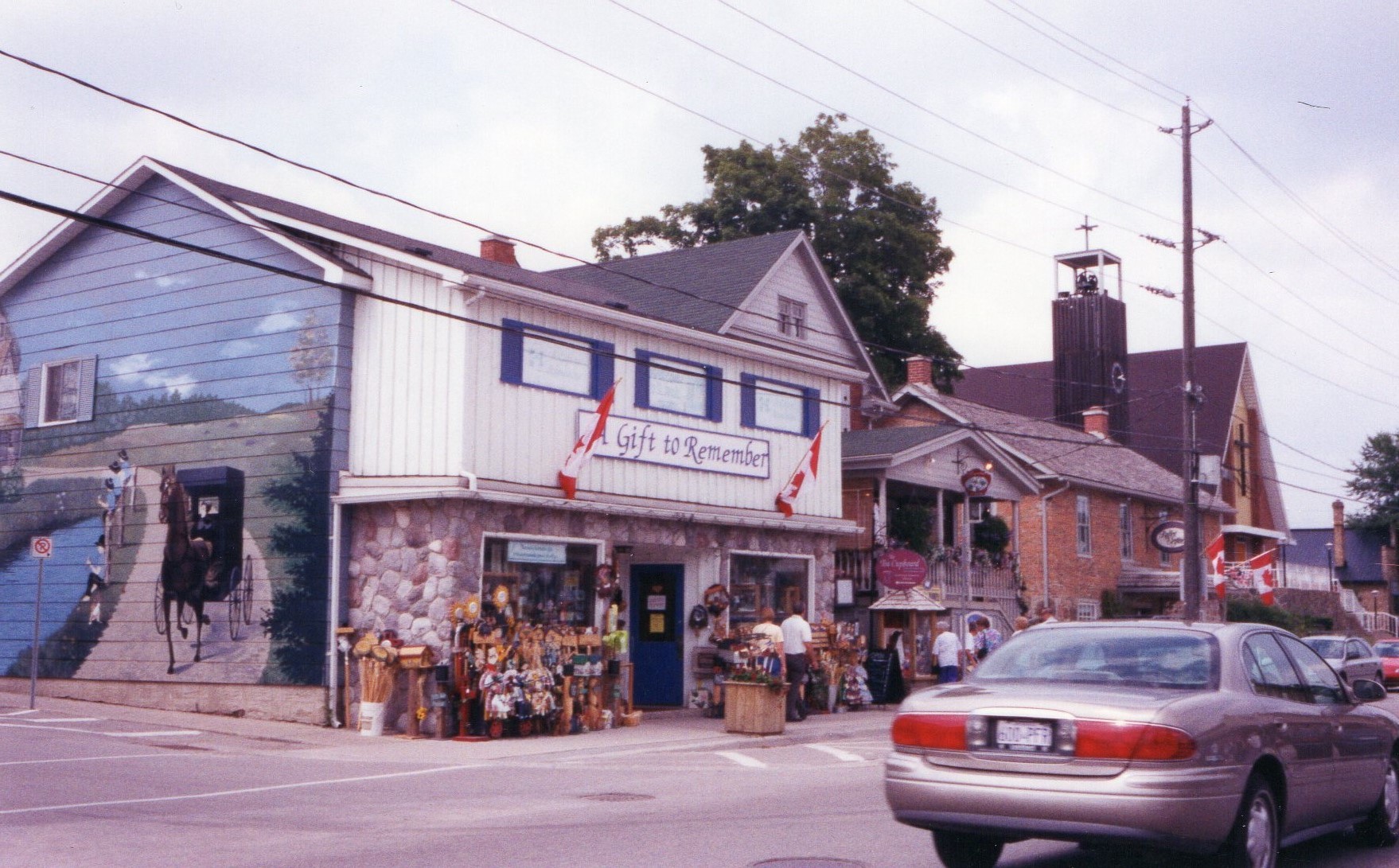
In Mennonite country a pacer rolls with camel-like gait, pulling a buggy through the only covered bridge left in Canada. We pass another horse and buggy on the main road – trotting conventionally this time – driven by round-faced ladies clothed in long black skirts and stiff black bonnets. St. Jacobs is a quaint tourist town with shops spiralling upward inside a disused silo. The Mennonites are renowned for their exquisite patchwork, and I cannot resist a token, which conveniently drains my purse of all but a handful of Canadian pence.

It is time to board the plane to Washington.

Posted in Travels | Tagged , , , , , , , | 4 Comments

It Could Be You…!

CMaginn lotto picture

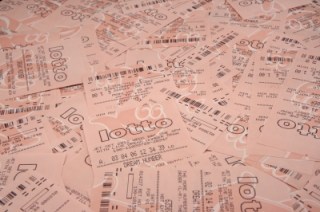
What would I do if I won £33,000,000? I must start thinking….

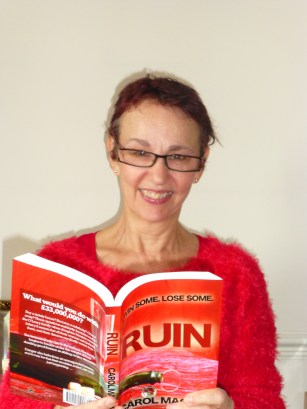
I am delighted to introduce my next guest – Carol Maginn – a comparatively new member of the prolific Crooked Cat authors, whose comic novel, Ruin was launched last month. She says winning the lottery isn’t so much a happy ending as a complicated new beginning, as she shares her thoughts on the rationale behind the book.

You can see my review of this most entertaining book HERE.

C Maginn

I should probably start by setting out my stall – I don’t do the Lottery. But this doesn’t stop me have very clear ideas about what I’d do with the money if I won. And I know other people who do too. A friend who suffers from insomnia often whiles away the night hours founding charities and buying small Caribbean islands. A colleague of mine admitted that, on his long, rainy railway journey to work, he sometimes finds himself commuting between his imaginary apartment in Prague and his imaginary villa in Cannes.

But the reality…..Well, it seems to me to be a place where joy and disaster come close to meeting. ‘Life-changing’ is a loaded phrase.  The point about a sudden deluge of money is that everything is changed, instantly and irrevocably.  It isn’t so much a happy ending as a complicated new beginning in which all the fundamentals have been altered.  Shock, slow realisation and, finally, adjustment are the stages I’ve heard Lottery winners describe. There are those who start by  declaring that the win will make no difference to them. This seems, somehow, to arouse ire. ‘Give it to me, then!’ was one newspaper columnist’s response. A number keep their win very quiet, in order to hold on to their old life.

I don’t want to overstate this. Obviously, for many people, a Lottery win has to be a recipe for a different and much more enjoyable life. A permanent suntan and no financial worries ever….what’s not to like?  Sympathy for the wealthy (like sympathy for the Royals) could well be just a mechanism the rest of us employ to make ourselves feel better about our relative lack of wealth.

And yet….the saddest  Lottery story I came across was that of a young man who was part of a winning syndicate at the age of 17. He was a shy youth, and used his money to buy a house into which he retreated. His father was his only companion, and they would play billiards. After his father died, the young man committed suicide. I also read about a Lottery winner who invested heavily in a hotel and restaurant business, and continued to invest as the business sank, and was ruined. His wife said she wouldn’t ever be able to forgive him. Back in the 1960’s, the original big spender, Pools winner Viv Nicholson, not only lost her husband in a drunken car accident, but ended up back as a market trader, her fortune gone. Lottery winners have managed to become bankrupt, or divorced, or both. The Statute of Limitations was construed so that one Lottery winner, who won while serving a conviction for rape, could be sued in the civil court by his victim, despite the length of time which had passed since the crime, now that he had the means to pay damages. An unpredictable, and satisfying, turn of events.

At the other end of the spectrum is the American, Tom Crist, who made headlines at the end of last year when he announced that he was giving his forty million dollar Lottery win to charity, because, simply,  he ‘already had enough money.’

All of this, it seemed to me, made a good basis for fiction. The reality of sudden great wealth wreaks the kind of havoc on my fictional family that I think it would wreak on most people.  They all live to tell the tale—this is a comic rather than a tragic novel—and  survive the onslaught of random good fortune.

But that isn’t always how it works out……and so I’m hoping— for your sake, you understand— that this week it isn’t you….

Crooked Cat.tiff

Posted in Authors | Tagged , | 1 Comment

Round The World Walkabout

Friday Diary Excerpts.

 It was a misty dream of younger years which got me going. Way back on the dusty paths of Nakuru School, Kenya, I meandered down the broad grass avenue to the playing fields, in company with little people like me in red, blue, and yellow shirts. Menengai, the world’s third largest crater, loomed purple and forest-topped behind me. Lake Nakuru hid below the grassy plain in front. The flamingos had gone, and whitish swirls of soda spiralled upwards against a backdrop of purple thunderclouds.

I found a dandelion, and, blowing away the seeds, made a wish: I want to go round the world when I grow up.

Tigoni House

Our home in Tigoni, fifteen miles north of Nairobi

Fifty years on, I dreaded saying goodbye to my home, my country. How could I leave? How was I going to be able to leave? Where was that stiff upper lip – my sense of adventure – my ability to take what comes? All I could think of was the dread of an English winter; the drudge of having to endure the cramped confinement of the tiny two bedroom flat awaiting us in Eastbourne, and the need to look for work in what was virtually a foreign country.

Then I remembered the dream. I’ll go round the world! What a tonic it was to start planning and organising; to look forward. Don’t look back, I told myself.

August, 2001 Eastbourne

There are only nine days to go. Most of the shopping is done, although there’ll always be those last-minute bits and pieces. Like for Nepal, obedient to the blurb, I bought myself a knee-length shower-resistant wrap-around skirt especially for trekking “modestly.” But now I’ve read a travel book on Nepal, which says calf-length skirts are the most appropriate, especially for discrete moments in fields – aren’t men lucky. I wear my wrap-around for practice on a local walk, which ends with a tour of Polegate Windmill. This entails climbing up and down three flights of very steep open steps to view the various levels. I’m glad I’d donned a pair of cycling pants underneath.

For the moment I am shying away from forking out £30 for a “trekking pole” (I cannot dismiss from my mind the image of myself using a rough stick for the same purpose when climbing Mt.Kenya in the past).

These boots are made for walking … great boots, Courtenay buffalo hide made in Zimbabwe, which cost me the ridiculous equivalent of £8 sterling.

CIMG1107 (640x359)

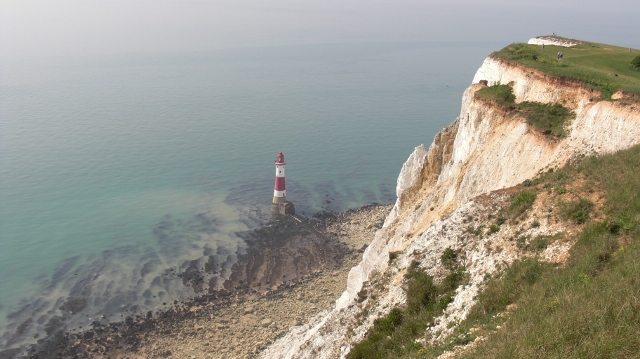
Now for some serious training. Bravely, I march the ten-mile “Seven Sisters” cliffs in six hours, led by a 6’8” guide, whose one step is equivalent to my three. Another six hour hike follows, with the Beachy Head Ramblers across the rolling downs between the Cuckmere and the Ouse rivers (we do stop for an hour for lunch). They mean business, these crazy ramblers, and my short legs find it hard to work so quickly. But I persevere, complete with weighty backpack for practice, and only make them ten minutes behind schedule. I hike between Lewis and Uckfield in company with forty-five enthusiasts, intent on MENDING THE GAP in the rail link between the two towns. We experience some good old English mud on that walk, and I suspect the authorities have no intention of bridging that gap.

img006

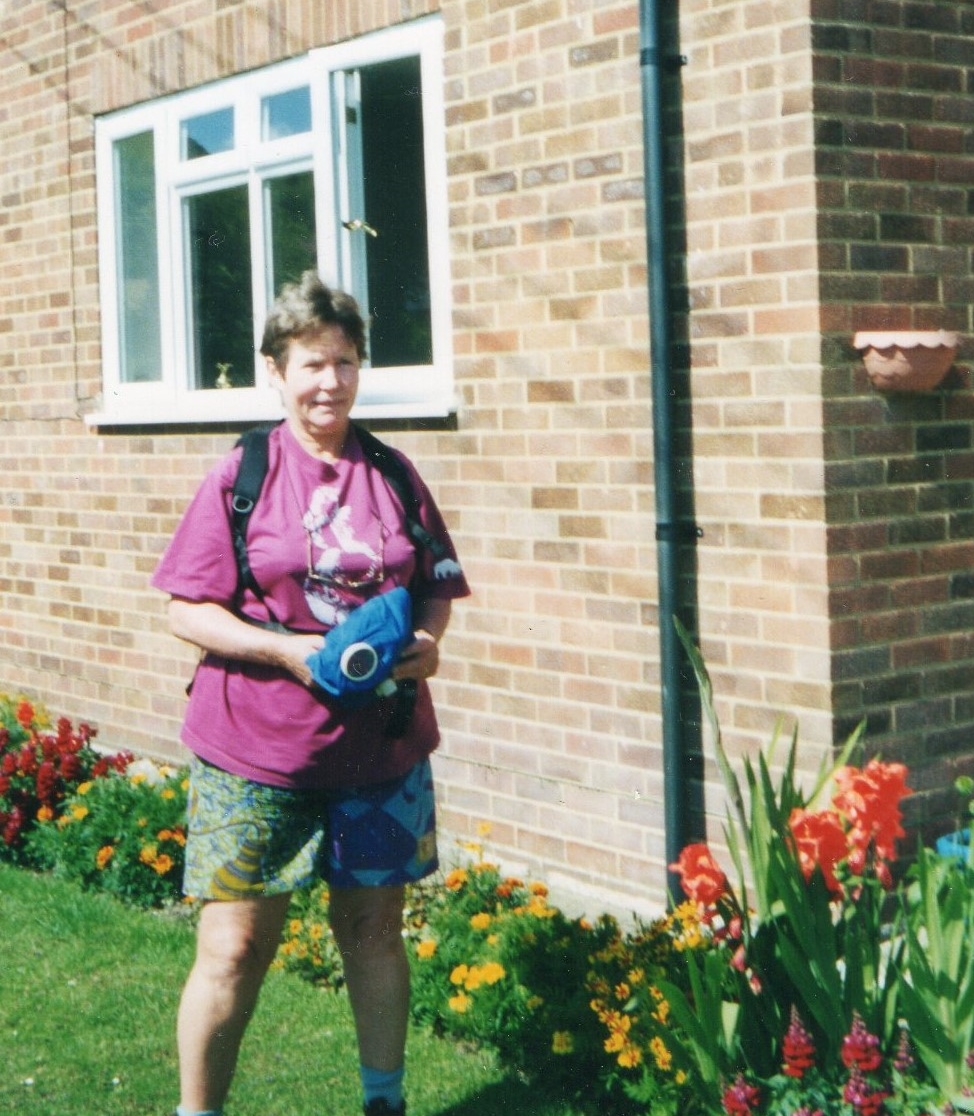
Ready to go. Outside our flat near Eastbourne

Next stop Toronto.

Posted in Travels | Tagged , , , , , , , , , | 5 Comments

Friendship Cemetery – Comforting and Beautiful

Adele Elliott is the author of an enchanting tale, Friendship Cemetery. She and her husband have weathered a monumental upheaval in her life, thanks to hurricane Katrina, and they are learning to accept life in Mississippi. She also says she hates writing; why don’t I believe her – but I know what she means. And no, Adele, I have no desire to make you sound smarter – I like you just the way you are! And I just love your new home.

Friendship Cemetery - Front Cover212x339

Adele – you assure prospective readers that although your book Friendship Cemetery is comforting and beautiful, more funny than scary, yet the dramatic cover is enough to excite the most ghoulish of imaginations! Would you care to comment?

 I love the cover. However, I did not design it.

That is one of the advantages of having a real publisher, as opposed to self-publishing. The decisions were made by people who were much more knowledgeable than I am.

I hope readers are not disappointed that it is not scarier.

I was quite surprised to see my name above the title. I thought that arrangement was only for well-known writers.

What made you start writing short stories, and are they also about the paranormal?

I started college in my 40s, and was an art major. At that time I had a very close friendship with a young man who started school at about age 17. He wanted to take a fiction writing class, but was frightened to do it alone. So, we signed up together.

After that first class, I took some more advanced class. While in school, I won several awards for my stories, and was invited to be a fiction editor of the school’s literary journal.

My stories are not all about the paranormal. They are more about quirky characters.

Since “Friendship Cemetery” I have written two stories that were fantasy\paranormal. Both were published in 2013.

I may be pushing myself into a niche. That is not exactly where I want to be.

How long did you take to write Friendship Cemetery, and have you learned anything in the process which you would avoid in future.

I wrote “F C” in about seven months. The story had been floating around in my mind for several years, but was never on paper.

It started with a conversation between the two girls, Emma and Pea. I had no idea how it would become a novel. As I began writing it evolved. Many events in the story just popped up during the writing process. Even I did not know they were coming.

I think one thing that I learned is to keep going. There are times when I thought this would never turn into a real novel.

I am very good at starting a writing project, but stopping before it is finished. Perseverance may be the most important trait for a writer (or anyone) to develop.

How much of your book is autobiographical?

 Almost none of it is autobiographical. Emma Grace’s mother is a composite of two people, one is my mother.

I have gone ghost hunting in Friendship Cemetery, which is a real place. All the other scenes in the book are real, as well. The hair salon, restaurants, the Palmer Home are real. However, the characters (with only one exception) and situations are completely fiction. I know no dwarfs or healer-women.

Many people around here are confused by this. Emma is a young girl questioning religion. Some locals have been offended by the comments about Baptists, and Christianity. They cannot separate me from the characters.

Tell us about your journey to publication, and how did you find Crooked Cat?

 I finished “F C” in December of 2012. Then, I did nothing for a couple of months before re-reading it.

When I began sending it out, in February of 2013 I gave myself a goal. That was, if I did not get a real publisher by my birthday in September, then I would investigate self-publishing.

I sent the manuscript to some publishers listed in “The Writers Market”, and received a few rejections. A couple asked to read more. I think, all together, there were ten or so rejections. I wasn’t too disappointed, because I thought the odds of getting a real publisher were about as good as winning the lottery.

I stumbled onto Crooked Cat by accident on Facebook.

Crooked Cat.tiffI was so stunned to receive an acceptance and a contract from Laurence at CC that I called my husband into the room to make sure I was reading it right.

That was in May, only a month or so after submitting it. CC released it in September of 2013.

Would you like to tell us about your internet radio show, and have there been any interesting / amusing occurrences with the authors you have interviewed?

 I have two shows. One, “Ask The Psychic” is interactive. People send questions via email, and I answer them on air. Since I am talking directly to them, they may send in a clarification. One time, I was reading for a man who was about to enter into a very sexy romance. I said, “I wonder if he is old enough to hear this?” He wrote back to say that he was in his 30s. So, I did not edit my reading.

I have regular listeners. They sometimes give me an update on the questions that I answered.

The writers on “Dialogue” are mostly Southern. There are several universities near us. Many of my guests are professors. This part of the country, and particularly the state of Mississippi has produced some great writers.  (Tennessee Williams, Faulkner, Eudora Welty, a very long list)

I think I am a kind interviewer. I read the work beforehand. Sometimes, I HATE the book. Although, there may be too much violence, or sex for my tastes, I can usually find something nice to say.

I also co-host with my husband on his morning show, “The Morning Rush”. We talk about current events and kooky news.

You suffered the evil wind, Katrina. That must have been a shattering experience. Have you anything positive to share as a result of your dislocation?

 My husband and I lost our home, our business, and most of my sanity in that storm. We landed in Columbus, Mississippi quite by accident.

Chris, my husband, is legally blind. Therefore, I am the only driver in the family. I had a major operation three days before the hurricane hit, and was not supposed to be out of bed. We finally decided, at the last minute, that we had to evacuate.

We were traveling with three “children” (one dog and two cats). Although we had a room reserved several states away, we were just too exhausted to make it. We heard on the radio that there was a shelter here that was accepting people with their pets. After about 18 hours of driving, we decided to sleep in Columbus for only one night, a place we had never before heard of. We are still here.

80% of the homes in New Orleans were destroyed. Those that were left were terribly expensive. We had few choices, so we remained in Mississippi.

In New Orleans, I considered myself sort of a-political. Here, I am the poster-girl for liberals. Although, this is not the “positive” answer that you asked for, I have learned that people are not the same everywhere. Once, I thought that everyone was somewhat similar. Now, I realize that is not true.

New Orleans has a live-and-let-live attitude. Columbus is very judgmental. It is bible-belt Christian. Any other religion is looked down upon. We have to be so careful about what we say. My husband says he knows what it is like to be gay. We are “in the closet” (so to speak) about our political and philosophical beliefs.

A few months after we arrived, the editor of the local paper offered me a weekly column. Because of this, many people know my name and have seen my photograph. I receive some nice letters. However, the mean ones are chilling. I expect to have a cross burned on my lawn any day now.

Do you have a wish list – what would you love to do / be / have if there were no barriers?

I would love to travel. I want to see Europe, especially Italy, where the Renaissance began. My roots on my father’s side stem from England and Scotland. My mother’s family came from France. It would be so much fun to visit those places.

At this point, I am extremely crippled with arthritis. I can only walk a few steps. So, travel is out of the question.

I am quite envious of countries that provide health care, and embarrassed that my country is run by leaders who have no interest in the well-being of their citizens.

Like most women, I would like to be fashion-model thin.

Care to tell us something about your background, and your life apart from writing and broadcasting?

 I have a degree in fine art, and consider myself a painter first. My mother always said that I am a better writer than painter. I have no idea as to whether or not she is correct.

I love painting, and hate writing. I wish I knew why I write. It is so very painful.

My husband and I are active in animal rights, anti dog fighting, that sort of thing. We are collectors of art, mostly outsider art.

We belong to a ghost hunting group.

I also volunteer for “First Book”, an organization that provides new books for underprivileged children.

You have a purple house, so that must be your favourite colour. What is your favourite pastime? – And your favourite food?

 Our house is primarily purple. It is actually several values of purple, green and gold, ten all together. These are the colors of Mardi Gras. It is an homage to our first home.

We have a wrap-around porch, and love to drink wine with our friends, watching the world go by.

Elliott House #1

We miss New Orleans everyday. We try to cook the food from home; red beans and rice, gumbo, etc. We spend a lot of time talking about restaurants in New Orleans, and the wonderful meals we had there. One of the things we miss most is REAL French bread.


Adele’s website is adeleelliott.com, where you can find a link to her TV interview.

And you can see my review of Adele’s book HERE.
Posted in Authors | Tagged , , , , , | Comments Off on Friendship Cemetery – Comforting and Beautiful

The Business of Blogging

One of my many brand new experiences last year was the business of blogging, which has led me  to visit some fascinating virtual homes.

At first as a new guest, I was apprehensive, not knowing quite what to expect or how to behave. But the learning process has been most enjoyable, and I found myself revealing perhaps more than intended when answering questions.

Image

Quiet Cathie Dunn broke the ice for me, and I was honoured to feature on her blog in March. With her other hat on, she’s my brilliant publisher, and how she manages to do everything she does continues to amaze me. I wonder how she’s going to find the time to write her next book. I wrote a piece for her called DISCOVER AFRICA. Thank you for your gentle introduction to the blogging world, Cathie.

Digital CameraMy fellow kitten, the bubbly and unpredictable Ailsa Abraham, has hosted me twice in the past year, (yes, Ailsa, I’ve unearthed that ping you sent me on the Very British Blog Tour way back in March!). She conjured up delicious questions for me to answer, and I especially enjoyed virtually visiting her Bingerbread Cottage in France last November with INTO AFRICA. Looking forward to hosting you again here later this month Ailsa, celebrating the birth of your new business.

PictureAlso in March, my great friend from Authonomy days, Irish lass Kristin Gleeson hosted me on her blog, where I answered several CHALLENGING QUESTIONS.  It was Kristin who suggested I submit Breath of Africa to Crooked Cat, and the rest is history! She has now embarked on a partnership offering Literary Consultancy Services  and they have recently held their first competition, where I was proud to reach the semi-finals with my new as yet unpublished novella. (Sorry, I’ve been watching too much tennis recently).

Distinguished professional writer, columnist, literary judge Lorraine Mace honoured me with an invitation to her place at The Writers ABC checklist in May. I was all in a tither to be surrounded by so many famous people, and not sure which of Lorraine’s two faces to address (her alter ego is Frances di Plino, under which name she qualifies as my sibling kitten). But she was keen to  GET TO KNOW JANE BWYE and it wasn’t nearly as bad as I feared.

DSC00632A jump to August, and to Missouri in the United States, where another friend from my Authonomy days kindly asked me over for a chat. Sometimes I wish my visits were not mere virtual ones… Susan Finlay is a prodigious writer, and generous with her time and support of fellow authors. I was honoured to be her sixty-sixth interviewee on her blog  MEET THE AUTHOR

Crooked CatThen, just before I headed off for my first book signing event in September, Charlotte Comley offered me  a chance for a GUEST BLOG round the corner in Portsmouth, which was kind of her. She got me talking about my new project, a novella completely different from Breath of Africa. I met up with the Crooked Cats again at her place, which was a nice surprise.

And finally, I thoroughly enjoyed talking about VOLCANOS AND LAKES with fellow kitten Michaela Sacchi OBrien a little bit further down the road in Southampton. We met last June at a get together in Edinburgh and I look forward to getting to Michaela better on future occasions. This is my review of her book, Playing on Cotton Clouds.

Flamingo cormorants

Thank you, one and all for your virtual hospitality. I wasn’t very good at first with keeping records, and if I’ve left anyone out, please let me know.

My blog is open to visitors every Tuesday. If you wish to be my guest again – or for the first time – please leave a comment / make contact, and I will come back to you.

A HAPPY NEW YEAR!

Posted in Authors | Tagged , , , , , , , , , | 5 Comments

Of Words, Pictures and Poetic Licence

Or How a Beginner Tackled the Task of Producing a Book Trailer.

It was a sort of spur of the moment effort, which ended up taking a whole day.

Elephant

The opening scene still graces my desktop – elephants catching a patch of evening sunlight along a river in the Shaba Game Reserve (of Born Free fame). We jetted there on an amazing luxury safari with family in 2007, and enjoyed an exclusive silver-service camp communing with nature. I know elephants don’t feature in BREATH OF AFRICA, but this is my favourite picture.


DSC02041

Charles, dreaming of Oxford – I thought this close-up of a cheetah in the Mara with a far-off look in its eye, captured what the young man might have been feeling as he fledged his wings.

Ngorongoro crater (2)

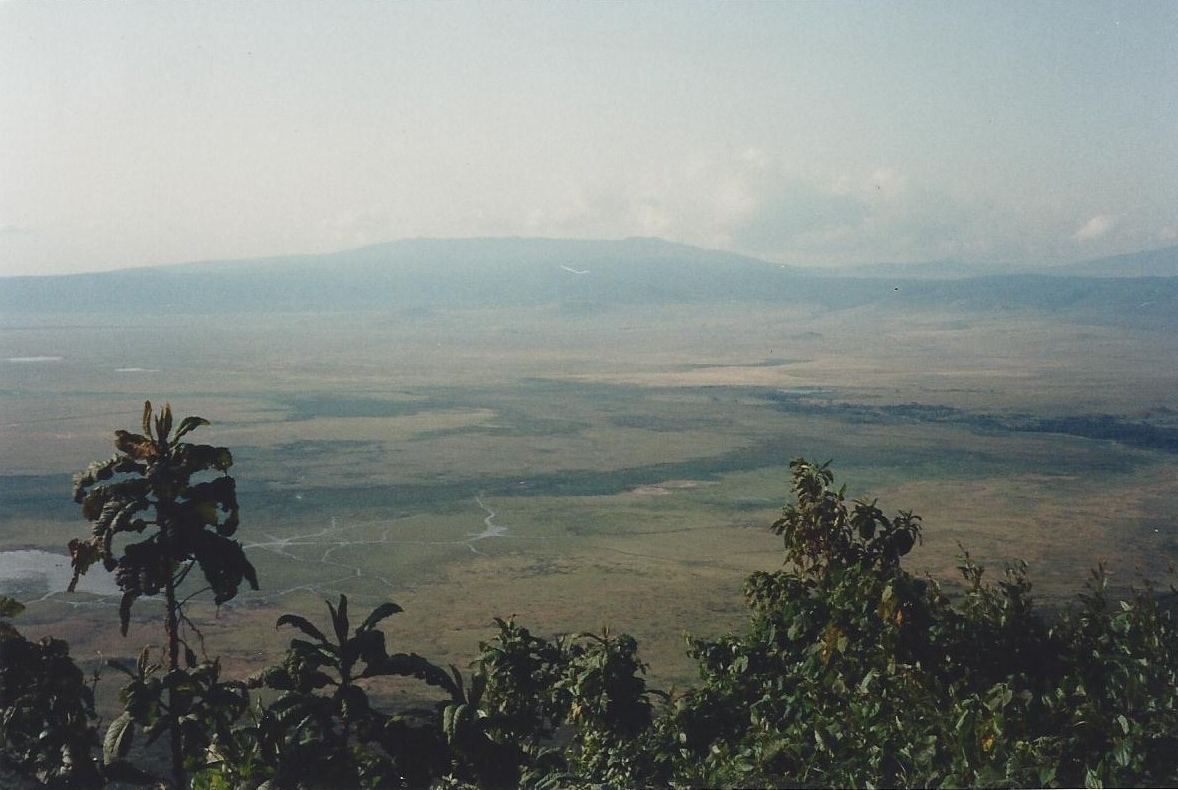
Dreamy Ngorongoro crater in Tanzania was photographed in 1965 or thereabouts with my first camera, a Brownie (I think). It’s not a very good picture, but to me it exudes romance, and the title of my book comes from Caroline’s reaction when she first sees this vista.

Flamingo cormorants

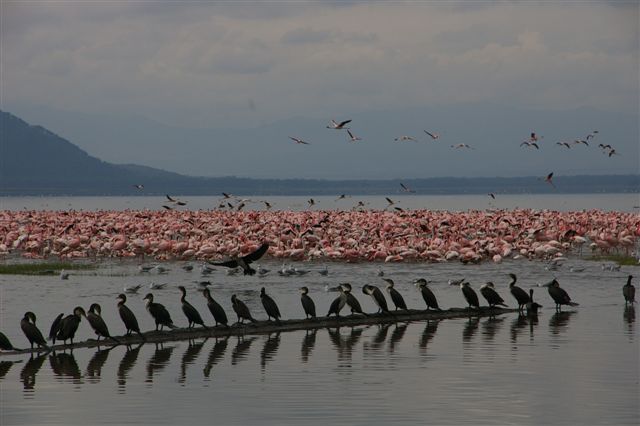
Then a fanfare of beauty – flamingos and cormorants on Lake Nakuru, with Lion Hill in the background. Thankyou Colin (my son) for this dramatic photo. I have experienced this amazing lake in all its forms over the years: sheets of still water slowly diminishing, clouds of billowing, spiralling soda dust, a blazing mass of pink flamingos. As you get nearer, there is a distinct stench of burnt feathers and bird excreta in the gluey mud. And even a smooth hard surface for termagent teenagers to tear along in their parents’ 4WD’s before they are old enough to get a driving licence. And all the while, the skies above are ever changing, ever dramatic. So – it’s Lake Magadi  in the book, but you can get my drift.

Roadside repairs

Back to earth, and the busyness of humdrum life. A “jua kali” tyre-mending business captured by my camera in a dusty wayside village somewhere in the highlands. It might just as easily have been on the notorious River Road, Nairobi, where Charles’s cousin started his garage. The words mean “hot sun” by the way: referring to entrepreneurs who don’t have a roof over their heads. There’s plenty of hot sun in Africa. I won’t apologise for the plethora of photographs you have to wade through at this stage. It was necessary to fit in with the music, and you’ll never see anything like these scenes, unless you go to Africa.


DSC02075

And the lion, sitting… waiting… watching… may not at first glance be considered a suitable illustration, with the word “terror” inscribed over its bum. But if you think of the poor gazelle, frozen with fright, which might be cowering in that bush, you may get a feel for the psychological hold of witchcraft running as a thread through the book.


Kibera

Mwangi, the villain of the story, is introduced in the trailer via a derelict building site looking over what used to be Nairobi Dam, where colourful boats used to sail on a Sunday. Now, the water is covered with weed (that’s the green bit in the middle ground) and nobody would want to sail in it anyway, as the effluent from the Kibera slums beyond drains into it. The tinny clash of cymbals goes well with those corrugated iron roofs, I thought. You can imagine the contrast of this eyesore against the modern skyline of Nairobi city on its doorstep. One thing which never failed to astonish me was the stream of pedestrians which flowed from these slums on workday mornings, immaculately dressed in spotless bright clothes, to disperse into gleaming offices.

Petrified forest (2)

And finally, the petrified forest on the eastern side of Lake Turkana, not far from Richard Leakey’s camp of a million stars at Koobi Fora. Two thirds of Kenya is desert. This northern part is far more dramatic than the flat terrain near Lake Magadi in the south, where I visited a tiny archaeological dig in a sand river in 1987. It was here that a seed for the plot of my book was planted, when I wrote an article for Safari Magazine, ending with the observation:

“The local Maasai are worried that discoveries in the basin might interfere with their present way of life by introducing controls and reserved areas, but such fears are unfounded. The research is quiet, and patient, the climate almost unbearably hot – and Dr- has already packed up camp and departed, to return again next year…”

And here’s the Trailer:

facebook1

Posted in Breath of Africa | Tagged , , , , , , , , | 3 Comments

Killing Him Softly With My Words

I just love this little piece from Frances de Plino on the eve of the release of her latest D.I. Paulo Storey novel, Call It Pretending. You can order it now. Welcome once again, Frances – and sit back and enjoy, everyone.

Have you ever wondered how crime writers come up with their plots and methods for murder? In my case, I usually let my overactive imagination dwell on ways of killing people and then incorporate the method into a plot.  That wouldn’t be so bad if I kept the gruesome details to myself until they appeared in a future novel, but I tend to share my ideas with my sorely tried, dearly beloved husband, often at totally inappropriate moments.

Take the scenario for the latest in my D.I. Paolo Storey crime series, Call It Pretending. I was sitting next to him in a hospital waiting room when I asked: “Do you think it’s possible to inject someone with embalming fluid?”

We’ve been married for so long now, you’d think he would no longer feel threatened when I ask such questions, but I swear he’s developing a nervous tic in one eye. Unable or unwilling to answer, he tried to change the subject to less lethal matters, like his upcoming appointment with the doctor, but my mind was now firmly fixed on how to get the fluid into a living person.

We went in to see Derek’s specialist and I was dying (no pun intended) to ask about the technical issues attached to my ghoulish plan, such as how easy was it to obtain formaldehyde and so on. We live in Spain and, unfortunately for me, but lucky for the doctor, my Spanish is nowhere near up to the task.

Not one to let things lie, by the time Derek and I arrived home, I’d perfected my murderous plan – all I needed now was to find out what happened to the body as the fluid went in and how long it would take someone to die. You might think that such information would be difficult to come by, or that the only way to find out would be to commit the dreadful deed, but you’d be wrong.

I belong to the wonderful Crime Writers Association. A few months back they sent the members a link to a website where various professionals in the world of crime (the good guys, not the bad ones) answer questions from people like me who want to get their facts straight.

I sent off my query: Is it possible to kill someone with embalming fluid?

Later that day I received an email from a doctor: Embalmers use the femoral artery in the groin. That would not be feasible in someone still alive. Simply sticking it into a muscle wouldn’t work. Rats! Back to the murder board.

I needed to knock off several victims and wanted a fool proof way of going about it. As Derek had been prescribed a blood thinner at the hospital, my mind switched to that. “I’ve got it,” I said to the love of my life. “I can probably kill people with warfarin.”

His face took on a haunted look, but he really needs to be less sensitive. It’s not as if I’m going to practise on him.

Email to Dr Death: I’m sorry to trouble you again, but would it be possible to kill someone with warfarin? If yes, how much would be needed and how would it have to be administered?

His reply: Getting it would be difficult. Administering it orally would be challenging because it has to be swallowed. Just as I was about to give up and resort to the tried and true methods of stabbing or strangling my victims, another email pinged into the inbox. Dr Death had given my query some thought and came back with exactly what I needed. The easiest injectable drug for a murderer would be Insulin. As a natural substance it is also difficult to spot – unless the forensic pathologist is specifically looking for it in overdose. You can buy it on the internet.

After a bit of research I discovered my murderer could stock up on the medication and syringes without any difficulty at all. Problem solved – I was overjoyed. So much so that I rushed through to find Derek and tell him all about my new friend and his advice. Funnily enough, the more I told Derek about how easy it was to get away with murder, the more concerned he looked. Surely he couldn’t think I’ve got murderous intentions towards him?

I told him he had no need to worry. “If I ever set out to kill you there’s no way I’d tell you in advance about the method I intend to use.” For some reason that didn’t put his mind at rest. The poor man now seems to have a twitch to go with the nervous tic!

****

* A shorter version of this post first appeared in Writing Magazine, earlier this year.

Lorraine Mace, Frances di Plino

Frances di Plino is the pen name for Lorraine Mace, humour columnist for Writing Magazine and a short story competition judge for Writers’ Forum. A former tutor for the Writers Bureau, she is the author of the Writers Bureau course, Marketing Your Book. She is also co-author, with Maureen Vincent-Northam, of The Writer’s ABC Checklist (Accent Press). Her debut children’s novel is due for release in April 2014. Writing as Frances di Plino, she is the author of the D.I. Paolo Storey crime series: Bad Moon Rising, Someday Never Comes and Call It Pretending.

Amazon Author Page:

www.lorrainemace.com

http://francesdiplinoreviews.blogspot.com

Posted in Authors | Tagged , , , , , | Comments Off on Killing Him Softly With My Words

All The World’s A Stage

I am honoured to welcome one of my favourite Crooked Cat authors to my blog today. Catriona King is a versatile lady, who must be a master at multitasking – juggling a full time job with writing a string of detective novels, and running a theatre company.  Today, she has chosen to share her thoughts about the parallels between books and the theatre.

There are people far better qualified than me to draft a ‘how to write a novel’ guide. My approach to writing involves sitting down with a completely blank sheet of paper, some characters in my head and a childish excitement, as I wonder what trouble I can get them into in the next instalment of my Craig Thriller Series. If I wrote a ‘how to’ guide it wouldn’t occupy much space.

So instead I thought that I would chat about the theatre, my second love after writing novels. After all, if you think about it, plays really aren’t very different to books. Both have an opening scene where we are introduced to the plot. In some cases it’s explicit, as in Shakespeare’s plays which often start with a  prologue setting the scene, similar to the blurb on a book cover or in some cases the foreword that precedes chapter one.

Then we meet the characters, not all at once (the stage would be very crowded!) but gradually throughout the play or the book, as events require them to appear. On the stage we actually see them portrayed by actors, the character’s appearance changing according to who is cast. In a book the reader creates their image and the reader’s imagination about what they look like can run wild, carried along by hints in the text. They may be described as tall or slim or pale, with dark hair that reaches to their shoulders or blonde cropped close to the head, but even that amount of detail in a novel allows for many different looks.

As the plot moves on emotions are expressed by the characters’ words and actions. Sometimes clues are added to define them further, using sparse adverbs in a book or facial expressions on a stage. Some playwrights like Harold Pinter are famed for their pauses, and others like Owen McCafferty for their use of accent and dialect, their stage delivery portrayed in a novel through conversational structure and local words.

Other writers choose subject matter or approaches that make a topic all their own, like Arthur Miller’s Salem Witch Trials in ‘The Crucible’ or Agatha Christie’s cosy crime, the mention of the topic or approach sufficient to herald the writer’s identity.

If books have chapters, plays have scenes, delivering natural breaks that allow the reader or viewer time to gather their thoughts. But a book can be set aside mid-chapter and continued, whereas a play must be watched in one brief period of time. But the joy of re-reading or watching again remains the same.

And then what of the denouement? That time in the text when the plot strands draw together and the audience anticipates the close. Its use is similar whether in a play or a book, the skill of the writer in hiding the inevitability of the finale, making the audience wonder how they hadn’t known it all along.

At last there comes the finale when the action crescendos, bringing things to satisfying end in the final chapter or act. The last pages turns, the curtains close and the actors and characters fade away to live on only in our minds. How long they live depends on whether their creator has made their characters feel real. Life is a stage.

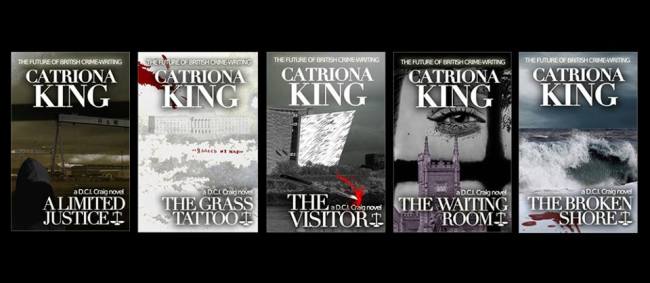
And here are Catriona’s books. I’ve thoroughly enjoyed four of them, and cant wait to read The Broken Shore, due to be published on 13th December.

Image

Posted in Authors | Tagged , , , , , | Comments Off on All The World’s A Stage

Where Do Your Characters Come From?

Nik Morton provides us with an interesting insight into the workings of his mind on my blog today. He will always be one of my favourite authors, not least because he said my book reminded him of the work of Nobel Laureate, the late Doris Lessing! (You can read Nik’s review of Breath of Africa here.) And you can read my review of his riveting novel  Blood of the Dragon Trees, here.

And now Nik is launching the second of his books published by Crooked Cat,  a collection of stories called Spanish Eye.

The very best of luck with these stories, Nik – and I am intrigued by your mature reflections on how characters are developed.

****

Sometimes, I’m asked ‘Where do your characters come from?’ Each author will doubtless have a different response to that question, but here’s mine.

Inevitably, some aspects of a character will reflect the author’s traits or beliefs, his or her values, even. But, in fiction, it’s going to be rare for a character to be wholly autobiographical. People in history serve as templates, certainly; sometimes these can be an amalgam – for example, Hornblower was not simply Admiral Cochrane, but also a number of other seafarers of the period. Fleming modelled Bond on several men he knew while working in intelligence. We’re influenced by other books we’ve read, too – even if only to avoid what has been done before!

Often, the character springs from an idea – a situation, which may be a news event, or something that happened in history.

And the character – as well as the storyline – will sometimes determine whether it will be a first person or a third person narrative.

For my Sister Rose character, I’d wanted to find a type of sleuth that hadn’t been encountered yet, and thought of a nun (since our daughter was at a convent school). Not so easy, since there are dozens of clerical detectives scattered through crime fiction. But nobody had hit upon a nun being an ex-cop. It’s not uncommon for mature women from all professions to join an Order. Then I had quite a bit of research to do! But the character is unique, especially as revealed in the first person. (Pain Wears No Mask is out of print, and has been retitled Bread of Tears for eventual republication!)

For my westerns, the origin of character stems from a number of sources.

My first western hinged on a few sentences I’d thought up and which hung around the back of my mind for a number of years: ‘He was dressed entirely in black. Black because he was in mourning. Mourning the men he had killed.’ I gave him a name, James Thorpe, and then had to decide upon his motivation; why did he kill?

Science fiction author Daniel F Galouye wrote Dark Universe (1961) which is set in lightless caves so all the characterisation has to be created without visual clues, so it’s highly likely that this idea evolved into my western Blind Justice at Wedlock, where I set myself a challenge of writing about a hero who was blinded at the beginning of the book. How would he cope, how would he trace his abducted wife?

‘When Clint Brennan came to, he felt Mutt’s tongue licking his temple and cheek. Maybe the dog had brought him back to consciousness. He opened his eyes and realized that the world had changed. It was forbidding and dark. In more ways than one, light had gone out of his life. He raised his left arm and stroked the animal’s matted hair where the bullet had entered Mutt’s flank; it had bled some, but the fur was now just slightly tacky. He heard the dog’s steady panting and smelled his breath, but he couldn’t see him. The brutal truth was that he couldn’t see anything. He was blind.’

Psychic spy Tana Standish began as a character in a short story, The Ouija Message, which grew out of a ‘genuine’ ouija session where I proposed that the gibberish was actually code – being sent by the captive Tana… That story grew in the writing and took shape over several years to eventually become the first in a series (The Prague Manuscript, The Tehran Transmission – presently out of print).

Leon Cazador came to me one week when I, among others in our writers’ circle weekly theme test, was writing a short story containing the last line: ‘the door closed behind him and he was left alone in the dark.’ My story became ‘Shattered Dream’, in ‘his own words’.  For perfectly valid point-of-view reasons, only part of the line has survived for the reprinted version in Spanish Eye. This was my first Cazador story and the character and his voice seemed to say something to me – so much so that I wrote a Cazador story each month for the local magazine – see the publishing history at the end of Spanish Eye – for a straight nine months; other tales followed as magazines folded and new ones appeared. (At the time, I was also writing a regular column, book and film reviews).

Having written over 20 books, there are quite a few other main characters, whether that’s the man with a hook, the man who straps on his guns again when he’s 62, or the female chemist Cat Vibrisae on her mission to destroy Cerberus Corp; simply too many to mention here.

Yes, the characters are as important as the plot – without the plot, there’s no story; but without an engaging main character, there’s no reader involvement. Where they come from is indeed happenstance, serendipity or an over-active subconscious!

Through the eyes of Leon Cazador, half-English, half-Spanish private investigator, we experience the human condition in many guises. This collection covers twenty two cases, some insightful, some humorous, and some tragic. The tales evoke tears and laughter, pleasure at the downfall of criminals, and anger at arrogant evil-doers. Overall, Cazador’s tales confirm universal values.

Sometimes, Cazador operates in disguise under several aliases, among them Carlos Ortiz Santos, a modern day Simon Templar; he is wholly against the ungodly and tries to hold back the encroaching night of unreason.

Cazador translated into English means hunter.

He combats drug-traffickers, grave robbers, al-Qaeda infiltrators, misguided terrorists and conmen. Dodgy Spanish developers and shady expat English face his wrath. Traders in human beings, stolen vehicles and endangered species meet their match. Kidnappers, crooked mayors and conniving Lotharios come within his orbit of ire.

“Prickly Pair” amusingly depicts a married couple who appear to serve others while merely serving themselves. “Night Fishing” is a sympathetic examination of a fisherman who risks all by bending the rules to give his blind wife Lucia a special gift. “Off Plan” and “Lonely Hearts” are about folks guilty only of trust. “Grave Concerns” poignantly presents a terrible moral dilemma for a father and his daughter. “Gone Missing” is an intriguing day-in-the-life tale, while “Inn Time” is a heartfelt plea for peace…

****

Posted in Authors | Tagged , , | 2 Comments