Want to see What’s Underneath the Cover?

Jeff Gardiner spent his early years in Nigeria, and like so many of Crooked Cat’s versatile authors, has written a second book. I cannot do better than leave it to him to illustrate his background story, where his missionary parents learned so much from the culture and philosophy of the people they went out to help. This striking cover just makes you want to see what’s underneath…

Image

‘Igboland’ is a tale of passion and conflict set in Nigeria during the Biafran War in the late 1960s. The novel is inspired by the diaries and photos of my parents, Janet and Gerald Gardiner. They lived in Nigeria as missionaries from 1964-1970, and I was born out there in Jos.

Lydia and Clem in the novel are definitely NOT my parents, although some of the events in ‘Igboland’ are related to anecdotes my parents told me. My Mum also kept a journal, which was incredibly useful for contextual detail such as prices, food and weather. Mum did start a small dispensary to help locals with minor medical issues, and my Dad was stopped by soldiers suspected of being a mercenary.

My brother and I used to love looking at the slides of Nigeria and my parents would tell us the stories again and again. Amazingly, they are still in touch with Nigerian and British folk alike from their time out there. My parents still support the Omafu family who built and still run a mother and baby clinic, to help their local community.

Image

My parents were actually in Idoma, which is just north of Igboland. Here is a picture of Oji villagers on a bridge. See if you can spot my Mum.


Mum ran a small dispensary, using mostly her instincts and very limited supplies. They Imageoften went to places where people had never seen a white person before. Where they lived was remote and right out in the bush.

Image

This grass-roofed hut is the church in Angwar. You get a sense here of the remoteness of village life, with the dusty ground and hills in the background.

Below is an Idoma school, which you can imagine had very limited resources. At least they had shelter from the burning sun.

Image

Janet and Gerald had to cope with a very different lifestyle in West Africa. Each day threw up new challenges: fevers; tribal conflicts; transport and communication problems; the difficulty of procuring clean water and edible food; plus the worrying onset of civil war. Below is a picture of a bush fire near their manse. My Dad is on the left holding my brother Trev.

Image

‘Igboland’ was a pleasure to research and write. I learnt a great deal about the country that I consider my ‘spiritual home’. The Igbo tribe have an inspiring culture and philosophy, from which we in the west could learn a great deal. Igbo traditions and the brutality of civil war provide the backdrop for ‘Igboland’. It is a work of fiction, about imaginary characters; but the whole thing is rooted in a place and historical context that are very real.

Read ‘Igboland’ to find out what happens to Lydia and Clem when they leave their comfortable English homes to live in a place so challenging and different from anything they have ever experienced before.

For more details and photos, please visit Jeff Gardiner’s BLOG:

To purchase ‘Igboland’ visit Jeff’s WEBSITE:

Or buy the book on AMAZON UK:

Image

The author, Jeff Gardiner, aged 1, taken in Nigeria.

Image

Posted in Authors | Tagged , , , | 2 Comments

A vast and Varied Place

ROUND THE WORLD WALKABOUT

Diary Excerpts.

Part 6. Zion

9th September, 2001

It was a longish drive out of Vegas, crossing into Utah where we put our watches back an hour. Utah is Mormon territory, where they still practice polygamy to the consternation of the rest of the US.  We snack-lunched in a well-planned, sedate town. The streets were empty, probably because of the intense heat.

Zion Entrance

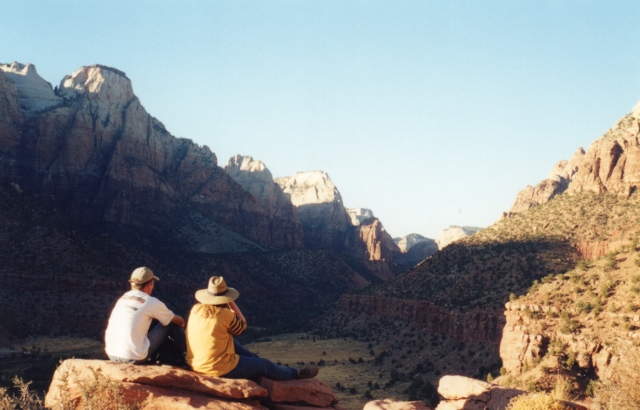
Zion Entrance, from The Watchman Trail

That evening we camped outside the gates of Zion National Park, another amazing oasis.  We walked the Watchman trail and overlooked the park entrance, examining extraordinarily shaped mountains like the West Temple and the Towers of the Virgin.  Just before dark, two golden eagles soared against the rocks towering over our camp.

Zion weeping rocks (469x640)

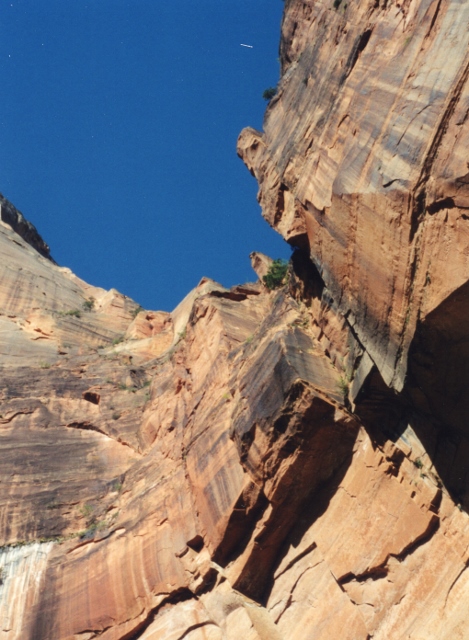
Looking up at the Weeping Rocks

We took the park shuttle bus to the Lodge. The US discourages private cars in their parks, and most places have efficient free shuttles, which more than compensate for the inconvenience.  We walked for two hours along a lovely gentle trail through green pinyon trees and bush to the Emerald pools, high up beneath the weeping rocks.  I spent our lunch break away from it all on a log beside a trickling river, hearing but only glimpsing a large kingfisher which flashed past me.

Zion wading up the Virgin River (467x640)

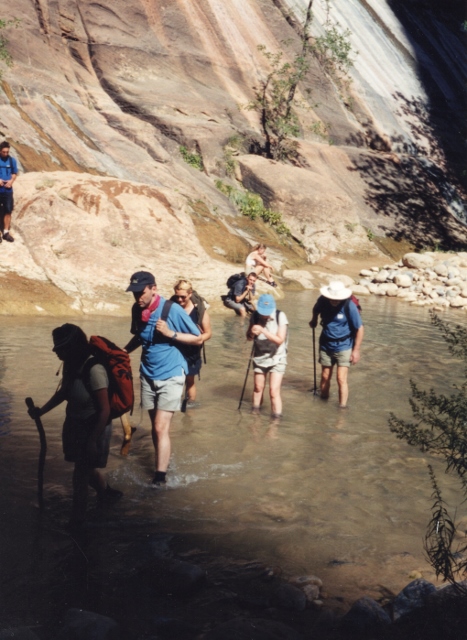
Wading up the Virgin River

That afternoon we had a walk with a difference, wading in our boots up the Virgin River at the Zion Canyon Narrows.  I was prevailed upon to buy a Zion stick at the Lodge for the purpose, which I must confess, came in useful; and eighteen year-old Daniel especially had a high old time fooling around in the water. We scrabbled upstream for an hour over large pebbles and rocks in the slow-flowing water, overshadowed by the towering canyon sides, then back again.  Feet cold and wet.  I spotted my second humming bird, and we had a pleasant Mexican meal at a nearby dive where I found a computer and e-mailed my family. Thank goodness – in the light of future events – I was able to do that.

We drove out of Zion through two tunnels in the rock, and immediately the land changed to green rolling pastures, fields and farms. What a vast, varied place is America. Some of it reminds me so much of Africa, but on a much grander scale. So enormous it can scarce be grasped. One wonders why they’re so keen to explore Africa when they have this wealth on their own doorstep. I suppose it must be all to do with the animals.  Such friendly people too. Waiters cheerful and happy, shop assistants full of pleasantries; obliging, ordinary people – unlike the rather loud-voiced tourists and spoilt brats we sometimes came across in Kenya.

But you have to learn to add 30% onto every priced meal (for taxes, and tips up to 18%) which makes it so expensive. In shops, tips are dropped into a tray near the cash register, and people expect it for the slightest favour.

The world was about to change…

Posted in Travels | Tagged , , , , | Comments Off on A vast and Varied Place

Writing a book is … Deliberate Plodding, Pushing into the Crevices of your Life

I’m hosting a delightful not-so-new writer today. Kate Moretti, who has offered some honest insights into author expectations and self-commitments. It’s a pleasure to meet you, Kate.

IMG_0012_2

 1. Kate – your book Thought I Knew You, was published nearly 18 months ago. Are you satisfied with your sales, and have you covered your costs?

Thought I Knew YouI am very happy with my sales. I won’t be hitting the NYT bestseller list anytime soon, but I’ve done pretty well for being with a small press. I think sales naturally go in a bell curve. At the height I sold a few books a day. I can’t speak to my costs because one of the great things about not self-publishing is that you don’t actually have any. A reputable publisher should never ask you for any money to produce your book. Now, if you’re asking if I’ve covered my own costs – that’s a whole different thing altogether! My publisher has paid for ad space on sites like book Bob, but I spend a lot of money on promotion, software, flyers, business, cards, bookmarks, refreshments for signings and book talks. I recently found that I enjoy taking online classes to hone my craft. Those can be a little pricey. So I definitely find that because I enjoy it, I have been spending a bit more money than I make.

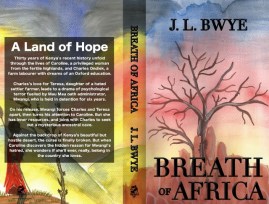
2. Reviewers have compared your book with Jodi Picoult. It is a tremendous boost having a story spoken of in the same breath as a famous author. It happened to mine, when two reviewers of Breath of Africa mentioned Doris Lessing! Were you influenced by Jodi Picoult when writing yours?

Absolutely. I lean towards deeply flawed or internally driven characters. I love when a writer can take a typically very unsympathetic character and situation and make the reader feel for them. That was always my hope with Thought I Knew You. That sentiment is a hallmark of Jodi Picoult. Her her latest novel attempted to do this with a Nazi. I am nowhere near that talented. Or that brave. So I always take these comparisons very tongue in cheek. It’s an unbelievable honor that anyone would make that comparison but whether or not I believe it is another story.

3. What marketing methods did you use – and what will you use for your next book?

I use a combination of social media and good old fashion boots on the ground. I did a lot of local promotion: local bookstores, newspaper, libraries, church book clubs. For a while I called my father in law my booking agent. I spoke at the Italian American Club and the Exchange Club. I’ve also practiced some “out of the box” techniques, like leaving “book cards” in waiting rooms – local doctor’s offices, my dentist, even my tax accountant! I did a book signing at an art gallery, which had the biggest turnout! It’s been great fun. I’ve learned the fine art of marketing through connection. I’m a typically more introverted quiet person. Wanting to sell my book has pushed me out of my shell in a completely wonderful way. I always imagined marketing my book would feel slimy, like selling Amway. But it’s not all!

People are genuinely interested, and many times talking about my book leads to just plain talking. Feeling genuinely grateful for the support I’ve received doesn’t hurt either.

As for social media I’ve done all the usual channels: Twitter, Facebook, Goodreads, Pinterest. My book is geared towards a crowd over thirty-ish, so I do most of my online marketing on Facebook. I like using a fan page rather than a personal page to promote my writing. With a page, you can buy ads to boost engagement and many people will click the “Like” button before they’ll Add a Friend. My goal is to, of course, reach beyond my circle of people who know me and target readers from all over the globe.

4. Have you had feedback from book clubs in response to the invitation and discussion questions on your website?

I’ve done about five to six book club talks. I love them! They’re so much fun. We used the discussion questions at a few of them, but others were more interested in the writing and publishing process. I have gotten feedback that the questions were a good discussion springboard from a few clubs that chose Thought I Knew You as their book of the month. Talking at book clubs is a tiny bit terrifying – I’ve had to hear about what my readers think of my characters face-to-face, which is not always kind. It’s not always easy. I smile and nod, but sometimes, I wince. I resist the urge to say “NO! You’re not getting it!” I try to remember that once your book is out there, it’s no longer “yours”. It belongs to every reader. Their interpretations are as valid as the words you wrote. At least this is what I tell myself.

5. You have a new book coming out in April. What can you tell us about it – and are you using the same publishers?

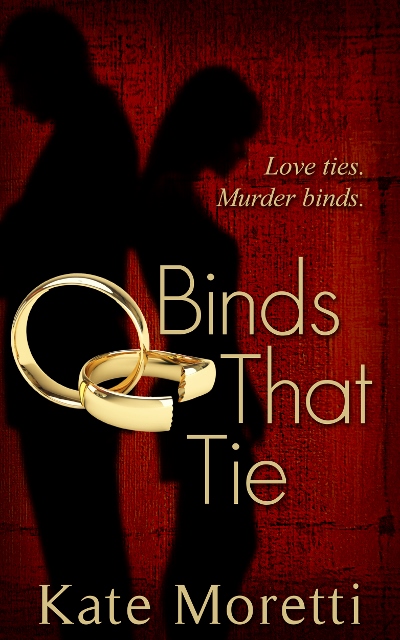
ImageMy second book, Binds That Tie, will be out the last week in March. I’m so excited to release this book. I’m learning as I go with writing, and Binds has more character development, more complicated relationships. It’s very different than Thought I Knew You although, again, I try to take on unsympathetic characters and make the reader identify with them. Binds That Tie is about a married couple that accidentally murder a man. Instead of calling the police, they bury the body. The story is about what that does to them as individuals and also as a couple, as they try to evade the police investigation. It’s much darker than Thought I Knew You. Yes, I am using the same publisher. I’ve been very happy with Red Adept. They have fantastic cover art and impeccable editing, they pay for advertisement, and set up a 20 plus blog stop tour. I took a gamble with them – they were brand new. Thought I Knew You was their second book out! Their catalog has grown exponentially and they continue to put out high quality contemporary fiction through ever expanding distribution channels. I tend to find that most small presses stick to Amazon, or KDP Select, and I like that my titles can be found at Kobo, Apple, Sony, Barnes and Noble. That being said, I do not think my works reaches as many readers as the “free runs” on KDP select. I can see where that would be extremely beneficial, especially in a debut novel, in getting your name out there to really get that ever elusive “word of mouth”.

6. How do you balance your work / family life with your writing – do you keep to a timetable, or write when the muse strikes?

This is probably my FAQ! Truthfully, it’s always a struggle. I can’t write at work, even on my lunch break. I just find that I can’t turn my brain around that fast. But I have an hour and a half commute and a Bluetooth, so I dictate a lot. I correct all my dictation on the weekends. I try to sit down one day weekend and write for 3 to 4 hours at a stretch but that’s getting increasingly difficult, as my kids age into the world of extracurricular activities. Luckily I have a supportive husband who doesn’t mind taking over for this time. Or at least he pretends he doesn’t. I’m very lucky that when I sit down to write I can write really fast. I find that if I think about my plot all week and dictate notes, in that three hour stretch I can bang out 3K words pretty easily so I get out about a chapter a week. Things like editing and promotion get in the way of drafting, so it can take me a year to draft a work in progress. I used to feel frustrated by what seemed like lack of progress. I’ve accepted it, and I can’t give it any more time than I do. I need to reserve most of my weekends for my kids and most of my work week for my job. My mind however is always writing.

7. You enjoy travelling; you’re a girl after my own heart! (see my Round-the-World blog)

Thanks for sharing your traveling blog! Your descriptions of San Francisco are gorgeous – it’s a place I’ve always wanted to go (and
Image

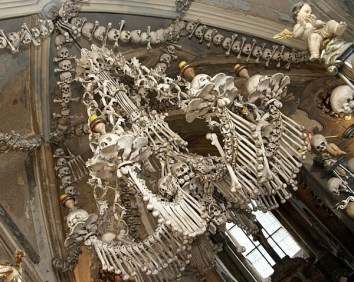
will get there… one day). I did most of my traveling before kids, obviously. It feels false to say I currently love traveling. Right now with little ones, ages 3 &5 traveling to the grocery store is exhausting. I remember loving it, though. My husband and I have been to Italy twice. When I was in college I backpacked Europe for two months which was amazing. Greatest experience of my life. Asking about my favorite places is much like asking about my favorite books – it depends on my mood! I loved Rome, Budapest, and Dresden, Germany. The craziest thing I ever saw was a bone church (ossuary) in Kutna Hora, Czech Republic. Those are human bones! (Victims of the plague). I need to write it into a novel someday, for sure.

Inside the United States I’ve always loved Boston. To me sitting in Fenway Park eating a hotdog is a cornerstone of American culture. But I still think my favorite city, maybe in the world or at least that I’ve seen, is New York. I can’t explain it, it’s just always been a place I feel at home.

8. You say your dream is to buy an old house with a secret passageway. What would you do in this secret place?

I have absolutely no idea. I’ve never been asked that question before! For me the great fun would be finding it. I’ve literally had this dream my entire life. As a kid, I used to search my parent’s house knocking on walls, looking for unaccounted for space. I have a wonderful recurring dream where I’m twelve again and I finally find it. In my dream it’s hidden behind the bookcase, just like in the movies, and it opens into the biggest slide I’ve ever seen. For a few seconds after I wake up, I have this impossibly young euphoria. It’s such a double-edged sword, this wonderful recapturing of childhood, that carefree lightheartedness because it’s soul crushing when you realize, oh yeah, the mortgage is due.

9. You claim to be an “overanalyzer.” Care to elaborate?

I’m a scientist by day and a writer by night. I can’t think of any hobby or profession that would hone a natural tendency to scrutinize more than this combination. In my personal life I spend my time analyzing my children. When I blog which isn’t very often, I lean towards blogging about parenting. The scientist in me likes things to fit into neat little boxes and for there to always be an answer. The incredibly complicated layers of childhood make this impossible and gives my mind endless fodder for analysis. I have a tendency to self-reflect. If I had to put my priorities on my life, happiness and self-fulfillment would be number one. I feel very strongly that if you can find contentment for yourself (any mother will tell you this is practically impossible), then that found happiness reaches out words towards your husband and your children. I think motherhood can be consuming, to the point that many women forget themselves. I analyze this a lot – if I’m stressed or unhappy, what are the root causes and how can I fix it?

10. What has been the proudest moment of your life so far?

Pride is a funny emotion and I haven’t quite learned how to wear it. For me the proudest moments of my life so far have also been mixed with terror. Without a doubt, publishing a novel is right up there. It’s probably the only thing I’ve done deliberately for any length of time, determinedly. I know I should say my “proudest moment” is childbirth, and it was a great moment, don’t get me wrong. But I don’t think I felt a lot of…pride. Exhausted? Yes. Overwhelmed? Yes. See, once you decide to have a child you make that decision once. For the next nine months I’m quite sure that if you asked any pregnant woman if she would undo it at least half of them would say (at least once) “Yes! Here! I’ve made a terrible mistake! Give me back my body, and my mind, and my unswollen feet!” But you’re on that train, no turning back now. Writing a book is making that decision to continue every time you sit down at the computer. This deliberate, plodding, pushing it into the crevices of your life. There’s no happenstance there. There’s no “oops, I did this, gotta see it through.” So yeah, I’m a bit more proud of my books than I am of the fact that I was able to birth a child. Although I can see this answer already changing, when I watch my five year old dig for change to give the Salvation Army bucket, pick up garbage on the ground to put in the garbage can (the whole time grumbling about “litter!”), or quietly help another kid in her class, with no expectation of recognition. I can see how “making people” is more deliberate than “making babies”. I’m quite sure that the proudest moment of my life is yet to come.

Thankyou for coming, Kate – that has been a most interesting and informative interview!
Posted in Authors | Tagged , , , , | 3 Comments

It’s Valentine’s Day!

Photo

Happy Valentine’s Day Everybody!

What could be better than curling up with a Crooked Catbook on a wet and windy day in the middle of winter?

And in case you don’t want to scroll down that far

Here’s a shortcut to one of them:

Breath of Africa cover

Why not take another look at the video, while you’re about it?

Thumbnail

Posted in Uncategorized | Comments Off on It’s Valentine’s Day!

From Rage to Page

(the ultimate response to an ending I didn’t like)

A behind-the-scenes look at this brilliant re-take of a famous love story by Sue Barnard, which is already an Amazon a best-seller, and the e-book launch day, 14th February (how appropriate!) hasn’t even happened yet!

Sue Barnard

It’s over thirty years since I first saw Franco Zeffirelli’s wonderful 1968 film of Romeo & Juliet.  There wasn’t a dry eye in the house at the end, and I came away thinking, more in anger than in sorrow: This is the world’s greatest love story – so why does it have to end so badly?  That question has haunted me ever since.

I wasn’t, I hasten to add, angry at Zeffirelli, who had done a wonderful job in bringing Shakespeare’s story so spectacularly to life.  Nor was I angry at The Bard himself, who had just taken an existing story (The Tragicall History of Romeus and Juliet, by Arthur Brooke) and adapted it, very successfully, for the stage.  But I was angry at the way the events of the story all combined to add up to such a catastrophic ending.  Each of those individual events might, in isolation, have been manageable – but the whole was definitely greater than the sum of its parts.

For years – decades, even – I wondered: what if just one of those events had happened differently?  What difference would that have made to the outcome?  This point was made very forcefully in Baz Lurhmann’s 1996 film version of the story, in which the director adds a further ingenious and heartrending twist to the tragedy.  In the final sequence, Juliet begins to stir from her trance before Romeo takes the poison, but she wakes just too late to prevent him from swallowing it.

So why, I wondered, shouldn’t there be another version of the story where things work out differently?  After all, it happened for King Lear way back in the late 1600s!  And then, I wondered, why shouldn’t I write one?

I mulled over the idea for a while, but it took a while before anything definite happened.  I’d dabbled with Creative Writing in the past, and had taken a few courses on the subject, but had never attempted to write anything longer than poems or short stories.  The thought of tackling a full-length novel, even one on a subject about which I felt so strongly, was a daunting prospect.  Then, in one of those serendipitous moments which really makes one believe in Guardian Angels, whilst browsing in a bookshop in France I came across a novel which took the form of the lost diary of a woman who had been the secret lover of Count Dracula.  A voice in my mind whispered “A lost diary?  You could do something like this…”

Back at home, I powered up the laptop and started writing.  I was writing the book mainly for myself, because it was the outcome which I’d always wanted, but when I’d finished the first draft (which took about six months), I showed it to a close friend, who said “You really ought to take this further.  It could even be a best-seller.”

Even so, despite this vote of confidence, it was another year or two (during which time the manuscript underwent several revisions) before I plucked up the courage to submit it to Crooked Cat Publishing, an independent publisher whom I’d found on Facebook, and for whom I’d recently started doing editorial work.  I wasn’t very hopeful, so when I received the email from them telling me they wanted to publish it, I had to print it out and re-read it four times before I was able to convince myself that I hadn’t imagined the whole thing.

The book’s title, The Ghostly Father, is based on a quotation from the play (it’s how Romeo addresses the character of Friar Lawrence), and the story (which is a sort of part-prequel, part-sequel to the original tale) is told from the Friar’s point of view.  I’ve often wondered why, in the play, he behaved as he did – and by giving him what I hope is an interesting and thought-provoking backstory, I’ve tried to offer some possible answers.  Plus, of course, I wanted to reduce the overall body-count, and give the lovers themselves a rather less tragic ending.  I hope I’ve succeeded.

I’ve certainly succeeded in overcoming my anger…

Sue Barnard

February 2014

The paperback of The Ghostly Father is available to order from Amazon (and yes, it did reach their bestseller list!) and Waterstones.  The e-book will be available from 14 February 2014 from the Crooked Cat Bookstore.

Posted in Authors | Tagged , , , , , , | 2 Comments

A Strange, Still Place

ROUND THE WORLD WALKABOUT

Diary Excerpts.

Part 5. Death Valley and Las Vegas

September 8th 2001

img022 (640x397)

We leave Yosemite over a high pass in the surrounding mountains and stop near a tarn to bid farewell to Half-Dome. Descending swiftly, we see remnants of glaciers and stop at Bodie, a ghost town which has been left as found, in the desert, when deserted by gold-seekers long ago.  A strange, still place.

Death Valley (640x410)

Death Valley

We explore Mono Lake shore – some birds, many salt pillars, very hot – before camping late at Lone Pine, a lovely site beside another lake.

img023 (640x412)

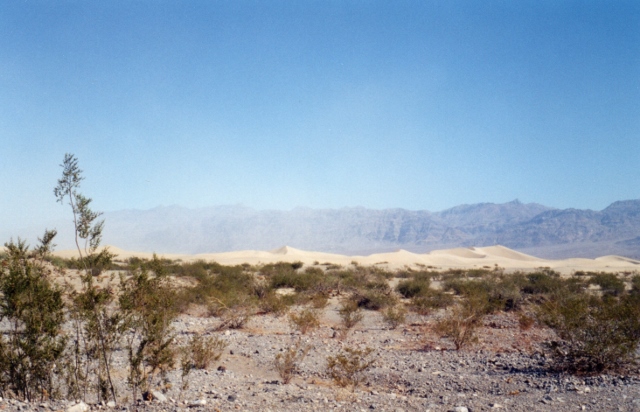
Sand dunes

We break camp after an early rise to get through Death Valley before it becomes too hot. A long hot day – endless straight roads. Low scrub, salt pans, Joshua trees, high mountain ranges in varicoloured hues; lava folds and cracks, like parts of the Rift Valley, but more bleak and lifeless.  Endless salt flats like those found at LakeMagadi, but on a bigger scale.  Heat 100 degrees in the shade (the record is 134 degrees). Thank goodness for the air-conditioned bus.  We drive below sea level.  An extraordinary place.

Suddenly, Las Vegas is upon us.  We book in at Days Inn and all make a beeline for showers, and then the laundry.

img024 (640x412)

Coming into Las Vegas in daylight

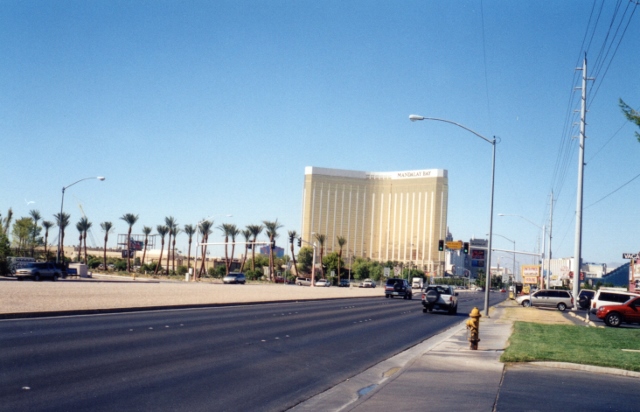
Las Vegas – what a place! Refreshed, we meet outside our hotel and Jane marches us the length of the “strip” (including one monorail break) to the Luxor Hotel. On the way, she calls for volunteers to try out a $12 seven-minute water massage in “NewYorkNew York”.  Nobody comes forward, it looks so inviting….  Lovely!  Those aching muscles from the hips down have a good going-over. Somebody takes a photograph of me, but I’ve lost it. Everything is overwhelming, and I haven’t mastered the flash on my little (non-digital) camera, so you will have to get an idea of what it is like HERE on the internet!

The Statue of Liberty holds down her swirling skirts with one hand while brandishing her torch in the other in ridiculous pose above the gaming tables and rows and rows of slot machines.

I leave the group eating all they can for $15 in the Luxor and explore this Egyptian look-alike, then wander on to Mandalay and back again through endless lines of slot machines and croupiers by their tables. The thousands of gambling machines and tables are the only common denominator in these Vegas hotels, each one aping a place or city in typical exaggerated American fashion. Astonishing -and no expense spared.

I speed through MGM with half the group, the ceilings spangled with stars; and on to Paris, picturesque with blue skies, pavement cafes and a live band with singer in a corner. We queue for the Eiffel tower and the others laugh, for they have all been to the real Paris, but I enjoy the experience, especially when we break through the fake afternoon clouds into the night outside with an amazing view of this flashy city. Lights of all colours winking and blinking; Central Avenue is alive with car lights, yellow on the left (headlights) and red on the right (tail lights) all the way up The Strip.

Down again, and everywhere the clink and chatter of the gaming machines, the occasional roar of victory at roulette, crap or vingt et un; the hum of people, the thump of music. Sporting events flashing on a myriad screens while punters lay their bets. I take a quick look, and learn that Venus has beaten Serena in the US Open Womens’ final, and Leyton Hewitt has got through to meet Pete Sampras in the Mens’ final. Great outdoor videos, people everywhere wearing anything. We squeeze past at least half a dozen wedding parties, brides young and old, beaming in pure white gowns of all descriptions.

Venice has even bluer skies than Paris, complete with moving clouds as you stride along the pavements. A moving staircase slopes us up and over a bridge, with canal beneath, and gondolas tied to jetties. We are too late in the evening to see them at work, but admire the Michael Angelo look-alike ceilings. The Fountains of Bellagios perform in beautiful cascades timed to romantic orchestration amid the razmatazz.

Jane does us proud, indefatigably hustling us whither we suggest, and our remaining little band of six finally make it back to the hotel at 1 a.m.  My feet ache so, and my lips are parched in the dry desert air.

Never again will I wince at brash tackiness.  You somehow come to accept it in Vegas, allow yourself to be carried along with the flow, take it as a matter of course, and eventually let the sensations grow on you until you just become part of it all.

Posted in Travels | Tagged , , , , | Comments Off on A Strange, Still Place

Full Stop, Capital Letter

Some random thoughts on the vagaries of editing by fellow Crooked Cat author, Pamela Kelt.

My High School geography teacher once said: ‘As I get older, I’ve discovered that I know less and less about more and more.’

This describes my relationship with editing to a T. I should be an expert. You should see my CV. Proof-reader, copywriter, formatter,  translator, editor, sub-editor.

I’m always happier editing other people’s writing. It probably stems from a traumatic childhood incident. I wrote a descriptive piece about a winter scene and ‘snow-caped’ mountains. The teacher thought I’d spelt the word wrongly and had the nerve to correct it to ‘snow-capped’ and deducted a mark. If she’d bothered to ask, I would have told her that I meant ‘caped’, which described the circular snow pattern rather better, I thought. I’ve never recovered from the slight, it seems.

mountains

Snow caped mountains

So, I became an editor – and got paid for it. I’ve done it all, from checking a doctoral thesis on inorganic computational chemistry to marking up a civil engineering brochure about dams – in Portuguese.Set me in front of my own manuscript, and it’s different story. All writers know this, but we still have to do it.

These past 12 months, I’ve edited six books of my own, plus my father’s, and it’s been quite a challenge. Here are some things I’ve learned the hard way.

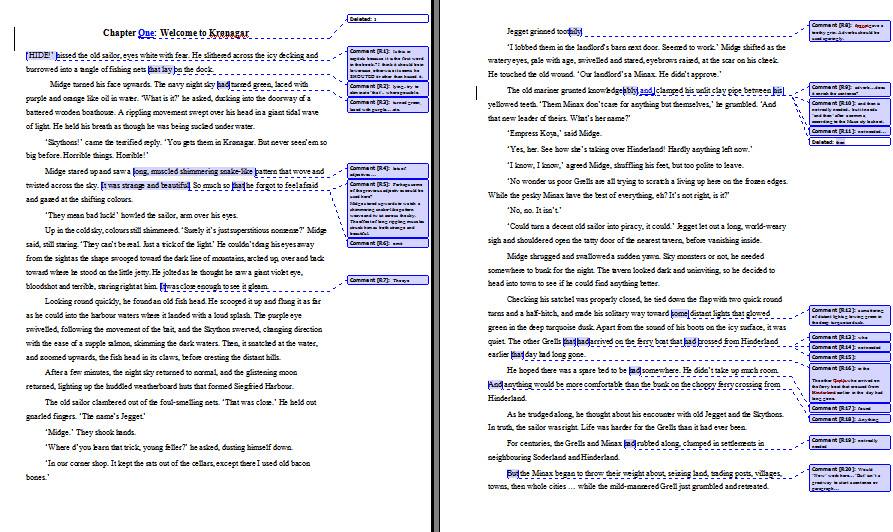
I started out by swearing I’d never ‘Track Changes’ EVER AGAIN. I’ve mellowed. It’s now a necessary evil. (Happily, my version is from an antique version of Word, so I can switch off most of the lurid features, but don’t tell anyone.) In truth, my hatred sprang from the corporate world where I used to work. Tetchy go-getters would use Track Changes as a personal forum to air their views. Now, as long as there’s just one person using the manuscript at a time, it works.

Pam editing

Track Changes – they’re never as bad as you think

Editors are actually nice. No, really. They are. I’ve been treated with such courtesy that I’ve been quite humbled. I can say that I’ve happily exchanged quips and in-jokes in the ‘comments’ with gay abandon. I even have a standing invitation to a vineyard in Oregon from one editor to meet his wife and family. Match that.

Agree on a dictionary. Three of my books have been edited by a Canadian publisher – great news for me, because Canadian spelling and word use is so close to UK English that I can avoid such abominations as ‘color’, ‘equalize’, ‘envision’ and ‘normalcy’. My favourite is the online Collins (and thesaurus), for many reasons. It’s modern, it has a US variant, audio pronunciation and some lovely examples of word usage which are often quite hysterical. For fun, I looked up ‘proofreader’. ‘No expense has been spared on the production of this volume either, except, sadly, that of a final proofreader.’ Times, Sunday Times (2002)

Proofreading

Proofreading symbols chart

Never be afraid to go back to basics. I’ve had to relearn some basic sentence structure. As an ex-journalist, I’ve had subtle constructions drummed out of me. So, it’s back to some online grammar sites to tackle some of my personal weaknesses, such as commas in a sentence with two independent clauses. I was always bit vague about those, but now I know what to do. (See?)

Get in control of your Spellchecker and dictionary. You must own it, not the other way round. And don’t believe everything it tells you. Funny story. One of my husband’s colleagues was supervising a particularly obnoxious doctoral student. Her spelling was atrocious. Instead of correcting the mistakes, she added them all the dictionary so she didn’t have to emend anything. She was obliged to resubmit, so justice was had. Oh, how we chortled.

Always assume there is a howling error in the first paragraph and possibly several in the first three chapters you submit. Don’t be proud. Get someone else to read it.

It pays to be humble. If you accede to a small point, you have the moral high ground to push a key issue later on.

A small lay-out tip. If you’re checking covers, blurbs etc, look at it upside-down. You’ll be surprised what you can pick up.

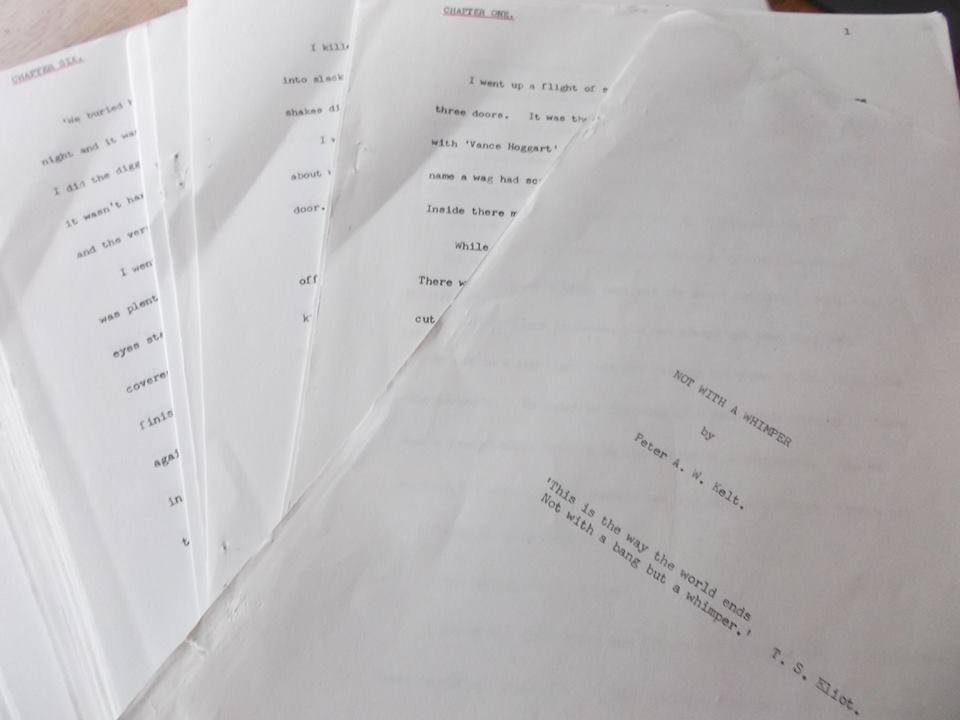
So far, so good. However, none of the above applied to my latest challenge. A year ago, I received a giant box of my late father’s manuscripts, hand-typed on a typewriter from hell. The first was an original Cold War thriller, which I thought was terrific.

Father's book

My Late Father’s book, Not With a Whimper, out on Crooked Cat Publishing in June

With help from tech-savvy husband Rob, we bought a printer with OCR. This sounds like a disease, but of course, it’s ‘optical character recognition’.

We experimented, with horrendous results. As the machine scanned a type-written page, it misinterpreted the line breaks and inserted the next line in a separate column. Hmm. After much fiddling about, we ended up using rtf, rich text format. Each chapter emerged as one continuous series of lines, each with a carriage return at the end. Once I deleted these, I ended up with a continuous block of text which I then had to break into sentences and paragraphs. Gulp. It took a while, but it was a cracking story, with edgy characters and razor-like dialogue. I took a chapter at a time, and read it as I went.

The next step was turning it into English, word by word, sometimes syllable by syllable. The character recognition was rather hazy, to say the least. Here’s a small example. What does ‘IVlartini breabh’ mean? In fact, it’s ‘Martini-breath’. The scanner failed to recognise the ‘M’ and attempted a facsimile using capital I, V and the letter l.

I won’t even begin to bore you with what it did to punctuation. Added to all this, my father’s old typewriter had a dodgy upper case W. Imagine how often that came up? (In case you’re interested, a tightly-written 60,000 words of manuscript took me two weeks of solid work.)

And before you ask, I did attempt to retype from scratch. Anyone who’s seen my typing will be sighing and shaking their head right now. Fast but inaccurate. That’s me. After two pages, I gave up.

So, when it comes to editing, let’s say I get a lot of practice.

My final thought? Nobody’s perfect. Editing is a skill. Good editing is an art. Take all the help you can get.

PS I hope you’ll forgive any mistooks in this piece. As mentioned, my ypting can be, um, erratic.

Crooked Cat.tiff

Posted in Authors | Tagged , , , , , , | 12 Comments

A Cacophony of Languages

ROUND THE WORLD WALKABOUT

Part 4. San Francisco and Yosemite National Park.

 1st September 2011

I love Chinatown and its vibrant crowded streets. Shops are brim-full with fascinating antiques, jade, jewelry and knicknacks. People spill over into the streets, causing patient cars to crawl at a snail’s pace. I catch a tantalising glimpse of San Francisco Bay down a hill between busy shops; a cacophony of languages, smiling faces, happy, bustling people. It is Labour Day weekend and the entire world is out and about, carefree and looking for fun.

The aroma of a crowded Chinese bakery attracts my attention. My airline meals don’t warrant a restaurant tonight, but I am feeling peckish. I settle for a delicious melt-in-the-mouth saucer-sized almond cookie, and duck into a fruit stall to buy some bananas and a couple of juicy yellow plums. Chinese shopkeepers swallow their consonants, but once my ears are attuned I catch the gist of what they are saying.

After an enormous bowl of porridge for breakfast in the hotel café, I meet my Explore group. We are twelve, plus leader Jane who does this part-time but whose real job is with the BBC, and French driver Manu. Four of us are Janes! I am immediately nicknamed Jane RTW (Round the World).

3GoldenGates

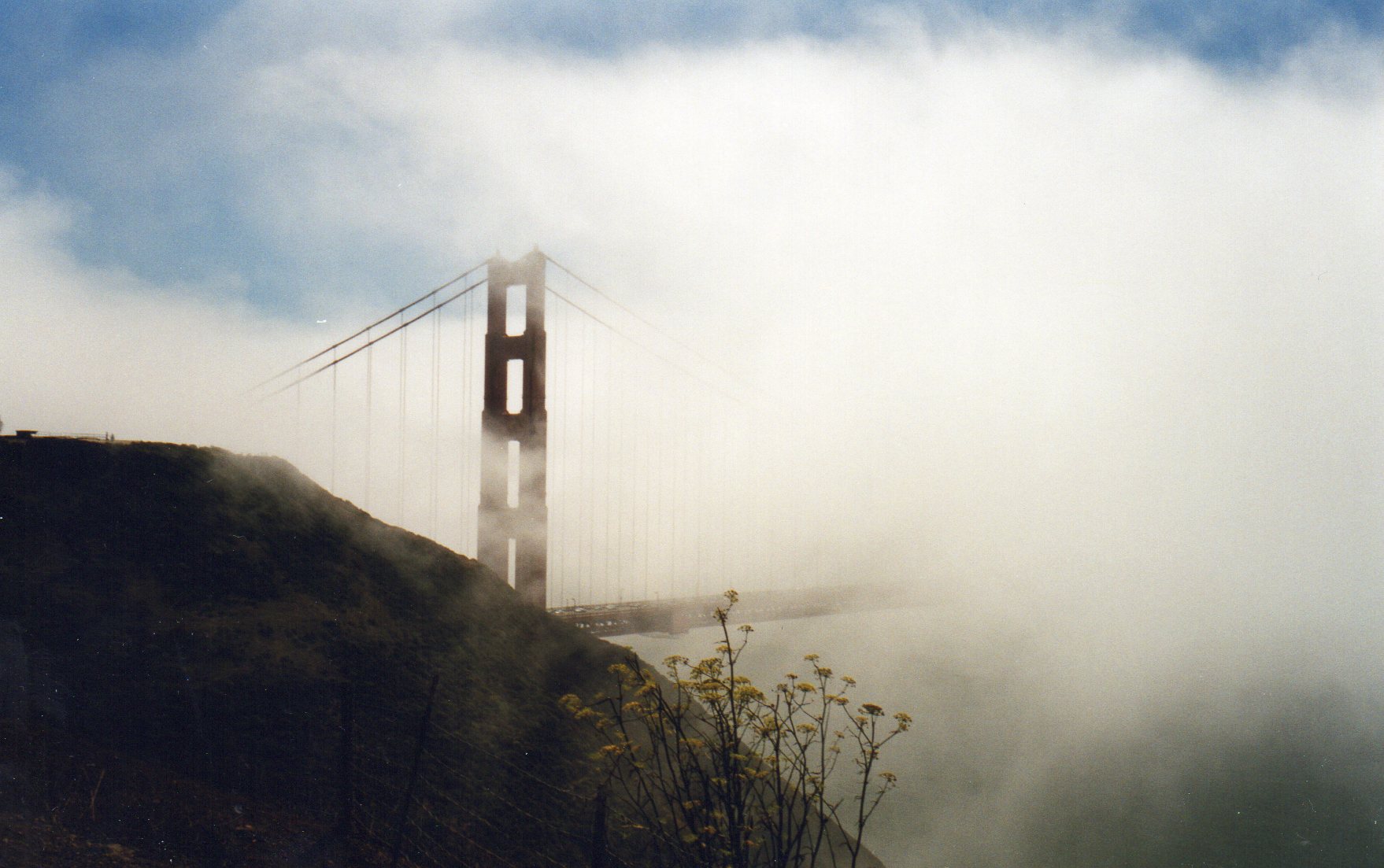
The Golden Gate Bridge in the mist

We pile into our crimson mini-bus for a city tour. Sprawling satellite towns spread into the distance below the Twin Peaks. Mist swirls around us, blotting out parts of it. We can hardly see the Golden Gate Bridge. We motor over the Bridge and park above it to catch glimpses between the clouds, caused by a cold Arctic current meeting the warm ocean; but we see no gold. We march for forty minutes across the length of the Bridge, the incessant four lanes of traffic booming by on our right. Boat foghorns echo mournfully as they pass beneath us in the mist.

We are left to our own devices near Fisherman’s Wharf. Crowds of holidaymakers spill onto the streets. People cram the pavement cafes, and I let myself be carried past several street performers. I elbow to the front and watch a “wild bushman,” face smeared with some black stuff, hiding behind a wall then suddenly jumping out at an unsuspecting passer-by, rattling his prop of leaves and roaring ferociously. The crowd goes wild with hilarity at the fright on the face of the victim, who then stops to chortle at the next casualty.

3SFFishermansWharf

A grotesque gathering of sea lions

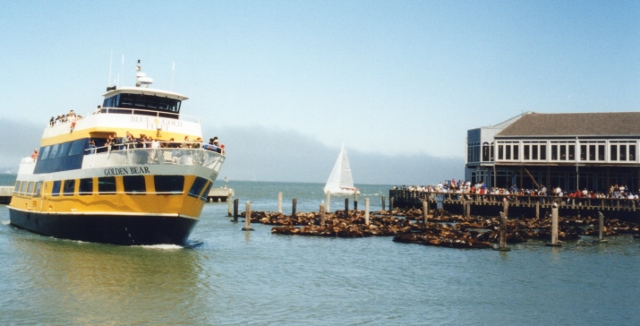
I approach comparative peace at the end of Pier 39 and see a fleet of yachts racing, spinnakers billowing in bursts of colour. Alcatraz Island lies in the background. I have to apply extra sun block on the back of my neck. Behind me, a grotesque gathering of sea lions honk and seethe over each other among the moorings, especially when a pleasure-boat steams past.

3SFcablecar

Cable Car in San Francisco

A bewhiskered busker sings of the sixties as I queue to ride the length of Hyde Street in a cable car, clutching my back pack on my lap between crushed people hanging onto the poles in front of me. Enormous wheels or “shivs” pull the cables through the streets, and the cars are hitched on or off with levers operated by the drivers. It is nerve-racking on the steep slopes approaching intersections. The driver has to ring his clanging bell to warn the traffic operators to switch the lights favourably and allow the car a smooth run. Our bell-ringer sweats a bit as a long tailback looms at a set of lights, and it seems his frantic ringing is falling on deaf ears.

That night, I retire to my hotel room to watch Martina Hingis in an easy victory over Justine Henin in the US Open, and on the journey out of San Francisco the following day we pass thousands of giant windmills churning on the hilltops.

5/9/01 Yosemite.

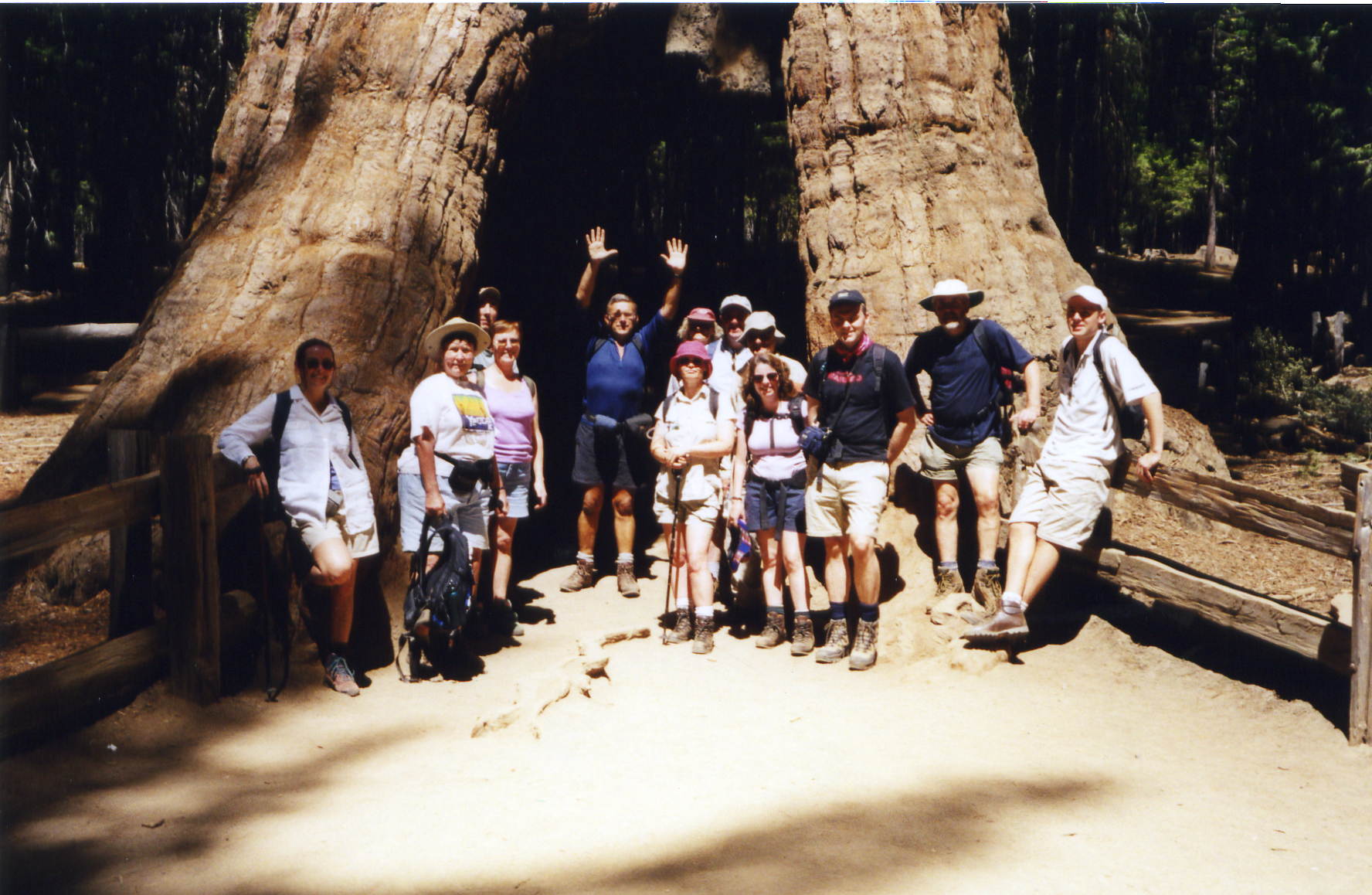
If you’ve never been there, you must go; bigger than big scenery, sheer silvery cliffs rise above gigantic redwood pines, and a grove of amazing sequoia mammoths. We camp in a narrow valley beside a river. Water is a problem, and the Indian Flat campsite outside the Park asks us to conserve it. We watch a black bear (she is brown, actually) and her cub foraging by the river outside the camp site, and are warned to lock all food in smell-proof containers before we retire to our tents at night.

Yosemite Giant Sequoia

Giant Sequoia

Two hikes. The first among the sequoias, a hard fast slog in the heat of the afternoon, and although we are mostly in the shade, I find it difficult to breathe. I bring out my solar cap with its little fan for the sunny patches, and it proves a good talking point as well as producing a welcome breeze for my brow.

Yosemite Half Dome (640x399)

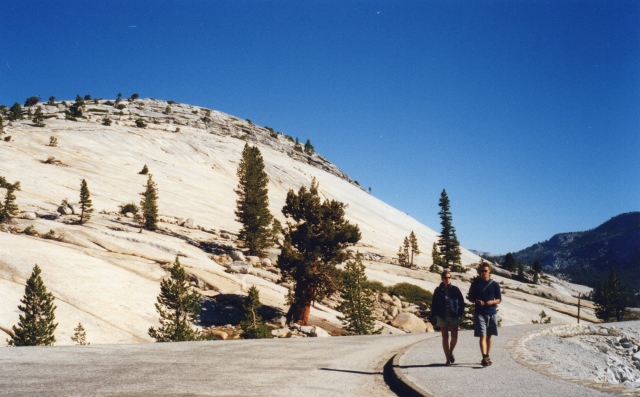
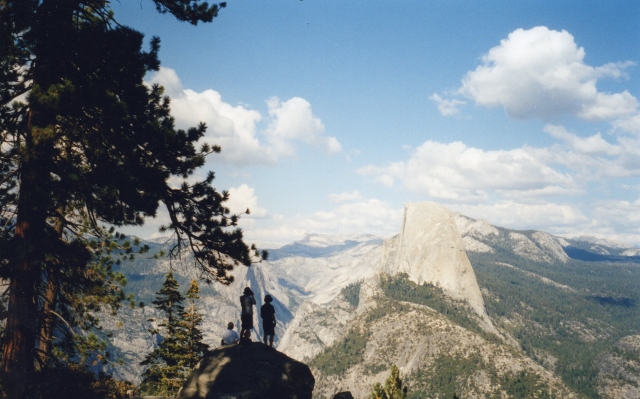
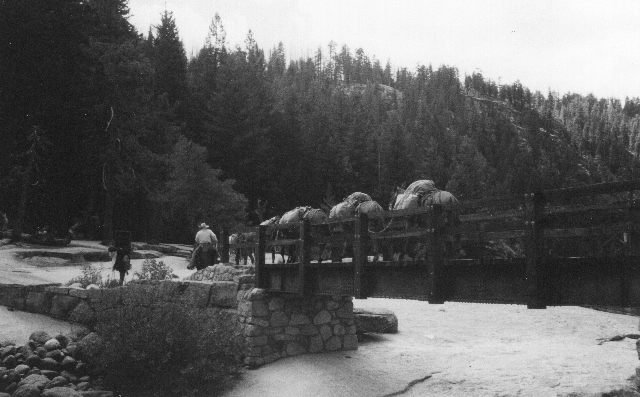
We drive through altitudes ranging between 2000′ to 7,500′, stopping at the beauty spots. Half Dome glistens across the valley, at 8,800′ the highest rock climb in the States. A seven mile walk up one side of Vernal and Nevada waterfalls and down the other, takes four and a half hours, and I am proud of myself for surviving the ordeal. At the top where we lunch, a mule train crosses the wooden bridge.

Yosemite Mule train (640x397)

Mule Train

The final day finds me sitting on a bench at the edge of a meadow on the road to the Ahwahnee Hotel. Half-Dome is before me, the sun shining directly onto its ashen face. Tall redwood pines strain up in the foreground, and robins hop tentatively close, while a stellars jay screeches harshly in a pine tree behind me. I wander the paths round the Happy Isles and the fen, where I spot a black phoebe (quite like the African bulbul). I catch the shuttle to the stables and hike the trail through back-packers camp, past the Ahwahnee ruins to Yosemite village. The heat is intense, and I can smell the burning tarmac under the cars and shuttle buses which pass by.

The others have dispersed to climb Half-Dome, hike a trail, or hire bicycles. Things are expensive – mainly because of the 18% tips. I pay $20 for a tough steak, baked potato and salad. Explore plan their trips well, but I do think we could have more meals in camp.

Posted in Travels | Tagged , , , , , , , , | 3 Comments

Music, Violence and Faerie Mayhem.

We Crooked Cat authors are a supportive and friendly crowd, and Maggie Secara, who sounds such fun, is one of those special people who goes the extra mile. I am honoured to have her as my guest today.

Thanks so much, Jane, for giving me a chance to introduce myself and talk about my new book, The Mermaid Stair, soon to be released by Crooked Cat. To do that, I thought I’d take a few cues from the extraordinary Chuck Wendig, and answer a few basic questions.

M Secara

Who on earth is Maggie Secara?

I’m the girl who got a D in 7th grade sewing and became a costumer anyway, because a love of history, myth, and theatre had led her to the one place in the world where they all came together in 1977: the Renaissance Pleasure Faire in Los Angeles. And I couldn’t present myself as the MacColin’s sister, or the Countess of Southampton, or a German campfollower unless I made the clothes myself.

I’m also the girl who got a D in Typing then took up writing as both a career and a vocation. (The typing has improved a little.) A technical writer by trade, I’m an occasional poet, and the author of three novels and a little Elizabethan handbook for writers, actors and re-enactors. I love what I do.

So what’s The Mermaid Stair in 75 words or less?

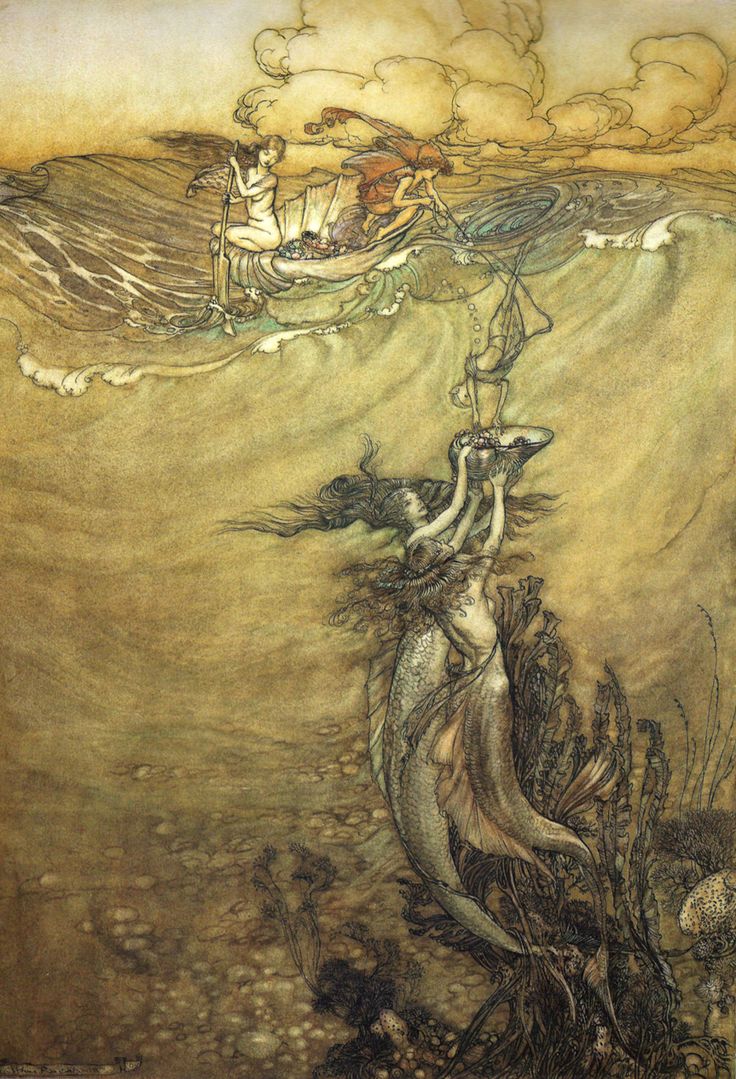
rackham mermaids  Mermaids. Nixies. Nereids. Lost rivers. Ancient goddesses who make the fae look young. A half-fae serial killer who believes he can earn redemption by killing them. Music, violence, and Faerie mayhem while time-walker Ben Harper and his shape-shifting partner Raven track the killer from ancient Britain to modern London. A little help from Will Shakespeare and an unhappy Roman housewife. Not just another mermaid love story. Not even close.

Where does this story come from?

Honestly, I’ve never been one of those people who are “into” mermaids. While of course they have many virtues, it’s never been my particular fantasy. But I kept coming across this impossible phrase, usually as a mis-read of something else: mermaid stair. What did it mean? What does a mermaid need with stairs? Then it occurred to me that mermaids were deeply under-represented in the fantasy genre, and maybe there was a story in this somewhere. I didn’t want to write yet another “Little Mermaid”. It had to be different. So I started diving into research on all manner of watery fae and, well, here we are.

How is this a story only you could’ve written?

Almost half the story takes place in the 16th century, and the Elizabethans are my specialty. My research in this period has been going on for more than half my life, some of which you can find on my history website Renaissance—The Elizabethan World. Most of the rest is set in Roman Britain, which I’ve always found fascinating. IN fact, I spent part of my recent visit to London with a friend who is an expert in the subject, walking some of the Roman sites in the City. They say you should write what you know? This is what I know.

What was the hardest thing about writing The Mermaid Stair?

mermaid Writing the villain! The antagonists in the previous books in the series were strong, determined women of power. They were each challenging to write, which is as it should be, but it was time for a guy to sit in that chair. But Simon Carew is a scholar, a student of ancient languages, secretary to the man whose books became the basis of the British Library—and a serial killer. He’s also an Elizabethan who, among other things, believes that faeries of all kinds are demons.

His targets aren’t just women or even children, but the childlike nymphs and mermaids. I can’t begin to say just how disgusting it was to spend time in this guy’s head. I felt like I had to take a shower after every one of his scenes.

What did you learn from writing The Mermaid Stair?

Mostly that every project is different. The first two books had come so easily—even King’s Raven where the story is not so much plotted as braided together. This one had completely different challenges. The second draft was almost like starting again from scratch.

 What do you love about The Mermaid Stair?

Actually I love it all, but two things stand out. First, all the little river nymphs are just adorable. They’re childlike and innocent, which isn’t always the same thing as nice—but mostly they’re delightful, which makes their deaths so much more horrible. Second, there’s the secondary plot, a kind of irresponsible teen-age love story that appeared just as I got to the climax of the first draft. A brand new character just popped in and demanded to resolve the main plot for me. Then of course, on the second pass, I had to figure out where he came from, where he fit in, and what else he was doing while Ben and Raven were chasing Carew. And I just love the ending!

 How about a sample?

How about a little exchange between Ben Harper and the nymphs that live in the river behind his house on Dartmoor? He is standing on a footbridge.

***

One of the girls raised up, balancing her slender pink feet on a mossy stone, and reached a tiny hand as dainty and as strange as a Brian Froud painting. When she touched his shoe he felt a slight, almost electric tingle, and realized what he must have known all along. The little Ravenbeck wasn’t that deep—she was closer than he thought. In fact, she could be no more than two feet high, standing on her tiny toes.

She tapped his foot again, then held out a hand like a child asking for candy.  Transparent moth-like wings, which could not possibly be meant for flying, fluttered with agitation. Ben threw a quizzical glance at his partner, who lifted his hands and his eyebrows, totally useless.

Not to be ignored, the pixie frowned, hopped into the air with a boost from the little wings, and this time gave Ben’s knee an irritated slap.

No one brings us offerings anymore!

***

What’s next for you as a storyteller?

I suddenly seem to have a lot of irons in the fire. I’m giving the short story form another try—I was never very good at it in my youth, but I may be figuring it out at last.

DragonRaven2

I have several more novels in planning, including one that’s a spin-off of characters from King’s Raven. It’s a ghost story that I’m writing as a series of ghost stories that will all be knitted together eventually

Crooked Cat.tiff

Posted in Authors | Tagged , , , , , , | Comments Off on Music, Violence and Faerie Mayhem.

A Refreshing Green Paradise

ROUND THE WORLD WALKABOUT

Diary Excerpts.

Part 3. Washington DC

August 2011

I am warned to take special care while in the States.  It is a dangerous place, especially Washington, and especially when you’re alone.  I should watch my bag, beware of pickpockets, and never relax. But there are no problems when I arrive; I am late collecting my luggage, which stands unguarded on an empty floor beside the carousel, a mere fifteen feet from the roadside where taxis, buses and cars pick up passengers. People wander casually in and out of the building.

Washington is a refreshing green paradise compared with Toronto’s concrete motorways. There’s hardly a truck to be seen on the six-lane highway from the airport, which is lined with tall forest trees, enclosed by barriers of stone or wooden walls “to keep out the noise,” Phillipa said. Street names are logical: alphabetical E/W and numeric N/S. Rock Creek Park is full of cyclists exercising on its paved paths which meander along the Potomac River, and the dwellings are mainly large, two or three-storey houses, some semi-detached with short lawns to the street.

Phillipa lives on the ground floor of a large “condo”, and I master the secrets of swipe cards to enter buildings, and get lost in the confusing corridors.

Down town the next day, we drive past the White House, somehow not as imposing as the pictures because of people, traffic and other grand buildings. Washington is a stately city. We stroll along the Potomac riverbank past the public golf course amid hundreds of people also enjoying the hot, humid weather. The South African Embassy in Embassy Row is whopping; I glimpse the Kenyan flag adorning a more modest building set back from the street.

Nick prepares our meal, tomatoes tastefully enveloping mozzarella cheese, then baked salmon, pumpkin and collard seasoned to a T (the nearest vegetable like it is the swahili sukuma wiki). We finish off with chunks of melon, and cheese platter. The plates are set out on top of each other from the start of the meal. You polish off your starter, the dirty plates are collected, and you remove your implements for later use on the main course, which is served onto the next plate down, and so on; a sensible, bother-saving idea.

It takes me some time to figure out how to set the plug in the basin that evening, and I declare that there are almost as many different ways to turn on hot and cold water, as there are taps in this city. And I still can’t figure out which way to look first before crossing a street.

We go to Benediction at St. Paul’s Episcopalian Church – a high church Anglican service, complete with incense, and beautiful chanting by an all-male choir. It reminds me of my convent schooldays when I attended evening chapel, the only difference being that then, it was all in Latin.

I pamper myself at the National Gallery of Art. But first I have to get there … it is easy! Down into the metro, onto the red line, and out at the right station. I even find out what to pay, use a machine to get my ticket and change and get on the escalator, all without asking.  Then I manage to walk in the right direction for three blocks. By chance, I am in time for an excellent guided tour of the Gallery. Our guide traces the development of art through the ages, picking out selected old masters, many of whom were familiar favourites of mine when as a child I would pour over picture books of the great painters. The tour lasts an hour, and I stay on for three more, returning to my favourite paintings, and finding exciting new ones.

Body signals compel me to take a break from the air conditioning, so I go to the sculpture gardens for a drink and a sandwich. It is hot outside.  I turn homewards, my face dripping with sweat within minutes. Taking refuge in the FBI building, I join a one-hour tour, culminating in a real-live demonstration of shooting with three different guns.  We are shown a section of their “library” of over a thousand guns.  We pass through the DNA lab, forensic lab, and see a collection of confiscated items including a diamond-studded watch, some valuable pieces of porcelain, and even a life-size stuffed grizzly bear.

Image

I move to a penthouse flat down the street, where my heart lifts as I see my first humming bird, no bigger than a bumble bee, and so very busy. George (my temporary landlord) is a dear man who spends his time sitting in the foyer, or outside on the wall watching the world go by, chatting to people. He was a Jesuit priest, defrocked for opposing the Pope’s stand on birth control. He married, was widowed, and is recently back from six weeks’ travelling alone round Canada and the US in his BMW sports car. He collects hats, and has located the website of my new Chinese solar-powered cap.

The cap is a good conversation piece when I wander into the park, and a great boon as it fans my brow in the sultry heat.

On my last evening in Washington we go again to Hains Point.

“The Awakening” is an amazing metal giant of a man struggling out of the sandy pebbles beside the road. Phillipa is tall and willowy, but diminutive beside the massive figure.

Image

Phillipa comes with me to the check-in desk at the airport. We hop onto an airport shuttle which, ten minutes later, deposits us at a distant bay. We idle away the time with chatter and a cup of coffee, before parting at the ‘plane door. I wonder what would happen if she just walked onto the ‘plane with me. Nobody seems to mind what anybody does.

San Francisco, here I come!

Posted in Travels | Tagged , , , , , , | 4 Comments