Tomorrow It Will Be 2059

13th April, 2002. We have an early start and there is a spirit of expectancy among the group as, illnesses forgotten, we gather for a ride to the airport. After a lengthy check-in at the Buddha Air desk we wait impatiently for our delayed flight. Cameras click nervously at every opportunity – even while we wait on the apron for the signal to board our 16-seater aircraft.

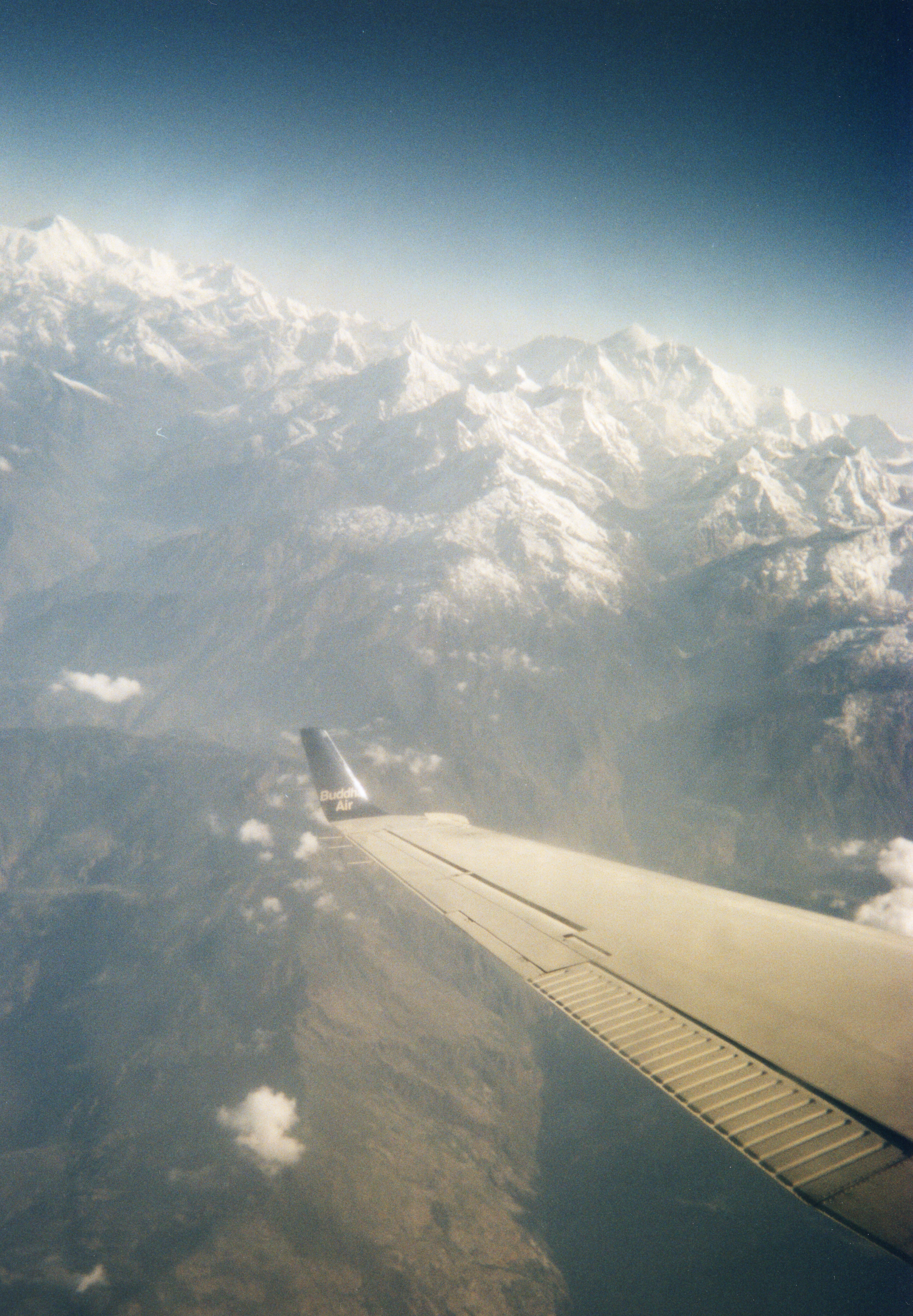
We fasten our seatbelts; the plane rises into a thick layer of clouds; and through to the other side. Mountains emanate from the mist, a majestic series of snowy peaks and crannies;  deep valleys and ragged ridges. Our charts show us which peak is which, as the plane flies westwards along the range, not close enough for my liking, and I wish that my porthole is clearer and less scratched. One by one we go to the cockpit and are blinded by the brightness of the vista through the pilot’s spotless window. At least my photo, catching the cone-shaped tip of Mt. Everest with a wisp of flying snow wafting at its peak, will come out well; but the light is too bright, and I have to settle for an inferior shot. Perhaps there’s method in muted light, after all.

img135The plane turns and flies back, giving those on the other side a chance to gaze in wonder and angle their cameras through the murky portholes.  On my side, dark deserted ridges and deep valleys stretch southward through the foothills.  Then we bump gently down through the clouds, and it is all over. How short a time.

We enjoy a late breakfast and some quiet time to ourselves before embarking for a final bus journey. The afternoon visit to Bhaktapur is a leisurely stroll through the cobbled streets accompanied by soothing Nepalese music. Our guide is a wealth of information supplied in a monotone, which is too easy to tune out of in the subdued clamour of the city around us.  Again, we pass many temples, goats, chickens, cows – blood and gore, the occasional gory head abandoned in a doorway.  A few motor bikes growl past. Today is Nepalese New Year’s Eve and there is an air of expectancy and preparation.  Tomorrow it will be 2059.  We pass an enormous crudely-made chariot, undergoing preparation for the festivities.

Blocked streets delay our return, and then we gather at the Rum Doodle for a farewell dinner.  What a contrast; it is full of tourists. Upstairs, large footprints cover the walls, bearing names and messages of climbers down the years. Edmund Hilary’s tent adorns one corner. Loud ‘70’s music fills my ears as I watch gyrating Nepalese in the garden below getting ready to greet the New Year. I am disappointed that dal bhat is not on the menu.  Instead, I have an eggplant lasagne which I cannot finish.

I say goodbye to my fellow travellers; my adventure is not over, and I look forward to experiencing yet another angle to this multi-faceted city.

Posted in Travels | Tagged , , , , | Comments Off on Tomorrow It Will Be 2059

Tonking Temple Bells and A Living Goddess

I am not looking forward to today as I dislike cities, and the sights of Kathmandu are on the agenda, but the time goes by surprisingly quickly.  Our Nepali guide, who tells and re-tells everything in different words, supplies us with information in a continuous monotone, barely discernible above the clamorous melee of honking car horns, bicycle and rickshaw bells, snorting motorbike exhausts, tonking temple bells, and of course the ubiquitous crying of hawkers.

Children line the streets, sitting on soiled cloths beside smelly gutters waiting for sweets, for it is the festival of the racing horses. There are two months’ worth of holidays in a year in Nepal.

Shops come in clusters. First, camping and climbing gear shops, interspersed with internet cafes at the astonishing price of R1 per minute (R100 = approx. £1). Then carpet shops, wool stores and an occasional corner temple.  Grain shops display lentils and cooked rice flakes, with fresh spices. We come to a street colourful with vegetables: succulent carrots, cauliflower, broccoli, onions, potatoes, egg-plant, chillies, sweet corn. There is a gleaming corner of brass and copper ware, intriguing carvings of gods and goddesses, bulls, horses, bangles, silk purses, necklaces and knick-knacks.

img132

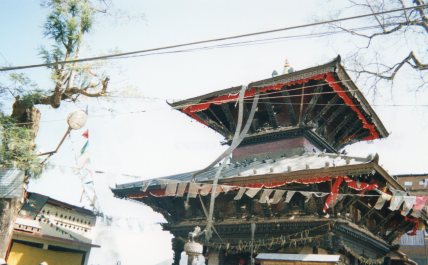
Our attention is drawn to yet another temple and the buildings beside it. The red brick walls are not bonded with cement, so they only last for fifty years before the building has to be pulled down and rebuilt.  But the ornately carved windows and doors are preserved – the joints easily discernible – and installed in the new building, causing quaint waves and uneven cracks where the new brickwork does not quite fit the old wood.  Some of the woodwork dates back to the 16th century.  One or two houses literally lean over a bit, due to the occasional earth tremor.

As we progress towards the centre of the city, the temples became larger.  The cooing of doves adds to the clamour, their white droppings falling everywhere, and we are continually warned not to stand below any eaves.  People wearing blood reds and orange, children in rags play, men and women make the rounds of the temples, touching the red-stained icons in the niches, then their foreheads, and running their hands along prayer wheels.

Bloody feathers are ground into the road, half-chopped and skinned carcasses of goats and chickens are displayed on slabs above the filthy gutters. Motor bikes go in all directions; policemen with whistles try to direct the traffic, but nobody takes any notice.  Everybody is in a jaunty holiday mood.

We come to Durbar square, and the crowds have vanished in this World Heritage site. Our guide collects tickets and distributes pamphlets.  For the first time I notice other tourists and there are few hawkers.  A soldier outside the old palace kitted out in full Gorka uniform allows photos to be taken.  No people throng around the large temples, only pigeons, hundreds of them, pecking at seed then rising in noisy flapping flocks when disturbed.  It is eerie, somehow.

We enter the temple of the living goddess and ask to see her, while Udaya places an offering for us.  She is a pouty four year-old, decked out in a fancy red sari, who appears briefly at a window above our heads.  Only recently selected for this significant solitary role, she is destined to perform for eight whole years in these unnatural surroundings, until she reaches puberty; but the offerings go to her family, who are freely allowed to visit her.

We lunch in a rooftop restaurant which takes nearly an hour to produce our tomato soup, so we have to rush out to catch a taxi to manoeuvre us back to the Hotel Malla, twenty minutes  late for our next appointment.

Our party is succumbing like ninepins to stomach cramps, nausea and diarrhoea.  One stays in bed. We use our bus this time, past the army parade ground where multitudes of people crane over each other to catch a glimpse of the King when he arrives for the horse racing festival. The traffic crawls at a snail’s pace, then pick up again past the entrance as we glimpse plumed white horses and carriages attended by a troop of cavalry.

img134

The holiest Hindu shrine in Nepal – Pashupatinath – is a shock. We run the gauntlet of wares sold in aid of the lepers before emerging on the far bank of a wide riverbed. The temple roof is barely visible across the river above a murky wall, along which a troop of monkeys play.  I notice two funeral pyres, and raise my binoculars. They are cremating some bodies. An orange-covered form lies, waiting on the ground as another is carried reverently down to the water’s edge to dip its feet into the sacred river, before being committed to a slab of concrete. They cover it with grass and set it alight. Thick smoke rises from the pyres as solemn men and women looked on, mourning silently. An arm sticks out, swollen and black, from the smouldering grass.

This is too much for us, and our guide has to cut short his spiel.

img133

The next stop, Bakhtapur, is a blessed contrast.  Bodnath, the largest stupa in Nepal, lies a few yards from a busy street. Its enormous stone dome is topped by Budda’s all-seeing eyes gazing to the four corners of the world, and the thirteen steps to Nirvana tower. Tibetan monks in red robes mingle with the reverent crowd  striding round and round the base, always keeping the stupa on their right. The faithful pass beads through their fingers as they murmur their prayers and spin the prayer wheels.There is a peaceful aura about the place.

Shops line the circular way, but there are no pushy vendors here. Several internet cafes are evident, and I read messages from my family for all of 12p, then emerge to start a tramp round the stupa. I climb the steps to the topmost circle below the eyes of Budda, pausing to have my forehead daubed with vermilion dye, and complete the regulatory three circles, looking down at the faithful prostrating themselves in continuous press-up-like postures in a walled courtyard.  Monks sit chanting prayers and chatting quietly, every face a picture of peaceful serenity.

I give myself an early night, in preparation for the highlight of our tour the following morning.
 

Posted in Travels | Tagged , , , , , | Comments Off on Tonking Temple Bells and A Living Goddess

Project Me

What an intriguing, honest title for a book! It’s been good getting to know fellow Crooked Cat, Carol Anne Hunter today. I, too, started writing my books from short stories; I wonder how many of us authors have done the same?

CH_01

I love the crinkly effect of your website, Carol Anne – and your gay humour. Tell us what fuelled your desire to take up writing?

I’ve always written daft poems and stories, some of which ended up in the office magazine, and once wrote a comedy poem for a fund-raising event which I read out on stage in front of over 2,000 people at the Glasgow City Chambers. It would have been much scarier had I not been wearing a cat costume and mask, which I hid behind! After early retirement I was bored and looking for a new way to fill my time so I went back to my writing.

Project Me – your first novel – promises to be a rip-roaring success and I’m looking forward to the read. What made you choose comedy?

I write in two genres – comedy and psychological thriller-type stories where someone ends up dead, killed by someone they know. It’s not the act of murder that I enjoy, it’s the mind games that lead up to it. I do worry that I enjoy writing these far too much!

How much of the book draws on your own experiences?

Quite a bit. Like all authors, real life inspires ideas so several smaller scenes were taken from real life and blown out of all proportion.

How long did it take you to write your book – was it long drawn-out agony, or did the words flow onto the paper?

A bit of both! For fun I wrote six short stories based on minor events in my life and again, exaggerated them for comic effect. Then I realized I could meld them together into a bigger story and the book evolved from there. Four of the stories were cut during the edits but don’t ask which two were left because I’m not telling! Some parts flowed onto the page, other parts were hard work but it all came together in the end.

How did you find Crooked Cat?

My fellow Crooked Cat Emma Mooney and I were already part of a writing group who posted information on Facebook about competitions or calls for submissions. She posted a Crooked Cat call and I went for it.

What are your writing aims for the future?

I’m writing a sequel to Project Me, working title The Pia Protocol, but it’s slow going due to my other commitments. After that I’d like to write a crime novel, albeit with a psychological edge.

You seem to have done many things in your life – like to tell us about your most rewarding experience?

Having my step-daughter and her family in my life is amazing. Her dad and I split up when she was at school and it was difficult to maintain the contact so it dwindled over the years but we reconnected four years ago and she now lives nearby. Her and her partner are the best support – ever.

If there were no barriers, what would you like to do / be / have in the future?

It’s a pipe dream but I would love someone to turn Project Me into a movie. I already know who I want to play the lead roles!

Like to tell us about a favourite interest – apart from writing?

I know it makes me sound like a hippie but I’ve had lots of hobbies over the years, ie dressmaking, cake decorating, glass painting, all of which have been abandoned for my writing. I still do a bit of Tarot reading, but only for fun, and I love to cook.

If you were given the opportunity to travel – where would you go and why?

There are so many places, it’s difficult to choose one. Paris would be high on the list, as would South America.

Half Res-001


Project Me on Amazon: http://www.amazon.co.uk/gp/reader/B00NE2VBAE/ref=sib_dp_kd#reader-link

Carole Anne’s website: http://www.carolannehunter.co.uk/


Posted in Authors | Tagged , , , , | Comments Off on Project Me

An Astonishing Mixture of Hit and Miss

A bone-shaking bus ride takes us from Chitwan, north to the Gorkha Hill Resort, then a swift afternoon thunderstorm clears the air.

img129

A Hindu Temple on the skyline

We are greeted the following morning by beautiful mountain views (too far away for my modest camera). We go to Gorkha village and walk 300 steps up to a Hindu temple on the skyline, stopping many times to record and wonder at the majestic snowy apparitions rising from the downy white clouds around us.

img124

Gorkha Main Street

A brief wander round an unfinished palace, red brick decorated with intricately carved doors and windows, now destined to be a museum; then an amble down the narrow, littered main street before lunch.
img130

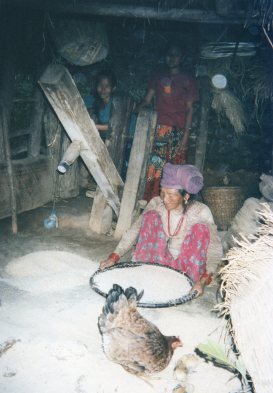
Afternoon, and once again we trudge out, this time to a couple of rural villages. Three women work at grinding and winnowing rice, another splits lentils on a fine grinding stone. We examine tumeric roots and dried radish strips; and we stoop low into a smoky room where, coughing harshly, a young woman heats water and prepares the evening meal. Chickens, dogs, goats, buffalo, boars and pigs and cows all crowd in stalls next to the houses, while chicks peck under our feet.  We encounter a pheasant in a cage, shy girls, bold boys and an old man enjoying a long straw pipe.

Here it is too dry to grow rice. Tiny maize sprouts emerge from the brown earth. Terraces are not as well maintained as in the lower valley; there are more signs of erosion of the red soil, just like Africa. Nevertheless, they make pretty patterns along the hillsides. We pass one or two coffee trees, and a lime tree gives off a delicious aroma when we crush the leaves.

Suddenly the wind whips down the hill in a great rush of straining trees. We hurry back up the path to the hotel. Supper is delicious sweet and sour pork in a buffet of intriguing salads. The food in this place is great; I wish we could stay longer.

img131

The Manakamana Temple

The following day we travel back towards Kathmandu and four of us catch the Manakamana cable car to the Temple.  Nearly 3 kms of cable rise 1034 metres across the valley. The ride is spectacular; no photograph does it justice. We disembark and trudge up more steps through a crowded street lined with trinket stalls, chickens, goats and chattering people.

The temple is a hive of activity with an oil fire at the front and a line of elders squatting to one side receiving gifts from the stream of pilgrims. Temple bells clank, people move piously from point to point, daubing themselves with die, disappearing behind the temple with chickens and reappearing with the bodies minus heads (which are sacrificed to the temple).

The mountains are a pure backdrop to this melee, and doves flutter and coo, messing all over the place. Women clad in every shade of red and blue apportion flowers, dye and grain among themselves.

img123

We stroll down the street, where goat carcases are cut up and chicken innards strewn around, while two boys practise cricket in the midst of it all. The stench does not allow us to stay long, and we return to the cable car to wait for the others who have gone white-water rafting.  They appear at 4 o’clock, battered, a bit bruised, but exhilarated.

The long journey back to Kathmandu takes more time than necessary because of a huge tail-back from a minor accident. The driving here is an astonishing mixture of hit and miss – mostly miss. Vehicles pass on bends, while oncoming traffic pulls up patiently; there is an intricate system of horn-honking and light-winking; inches seperate vehicles; pedestrians are everywhere, lorries sit stationery on the roads, sometimes flashing hazard lights, sometimes not.

One of us starts vomiting and we have a couple of hasty loo-stops for those with tender tummies. Everyone rejoices when we finally reach the Hotel Malla, and the healthy among us enjoy a Chinese meal before bed.

Posted in Travels | Tagged , , , , , | Comments Off on An Astonishing Mixture of Hit and Miss

I’m a Serial Killer

Please welcome my very distinguished guest this week. I am proud to host Frances di Plino once again. Frances is one of my favourite crime/thriller authors, and a lady of many talents, whose words of wisdom are worth digesting.

Lorraine Mace, Frances di Plino

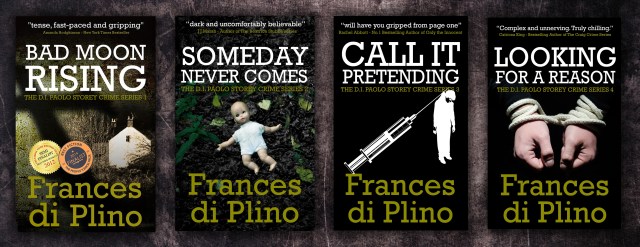
As a creative writing tutor, I receive many emails asking how to structure a series. This is partly because under my pen name I am the author of four D.I. Paolo Storey novels. You would think (as do the senders of emails asking for my help) that I would be able to answer in a trice – oh, yes, simply do this or that and you have the set up for the next ten books.

Paolo four cropped

If only life were that simple! You see, I never intended to write a series when I penned Bad Moon Rising. In my mind, it was a standalone crime/thriller with a deep psychological thread running through it. I only needed the police there so that the criminal would be stopped.

But Paolo Storey, my detective inspector, had other ideas. As I neared the end of the book, the conclusion took a sudden turn I hadn’t anticipated. Paolo had decided he wasn’t going to be a one-trick pony – given a case to solve and then put out to grass. Oh, no, he made it quite clear he had no intention of vacating my mind until I’d written another book with him in the starring role.

Which is how Someday Never Comes came to be. I thought I just needed to write another book with Paolo in the lead to tie up all the loose ends flapping in the breeze from Bad Moon Rising. By the time I was a third of the way into Someday Never Comes, I knew there was no way I could put Paolo to one side – and so my series came into being.

There are, of course, many benefits to writing a series. One of them is that I know the characters as well as I know my husband. In fact, I know Paolo better than I know my husband! There’s always a possibility with my spouse that he might act out of character and do something outrageous – maybe not very likely, but it could happen.

With Paolo and the other regular characters, that can never be. They have to behave according to the natures I have bestowed on them – anything else and my growing fan base would lose faith in them.

So that particular benefit is also one of the main disadvantages. My readers believe in Paolo, his family and his colleagues. If I make even one of them do something out of character, I run the risk of losing the dedicated readers I’ve worked hard to acquire.

I know this because many years ago I read a John Lescroart novel in which his entire cast of regular characters did something so out of character I threw the novel against a wall in disgust. (Fortunately, this was pre-Kindle days or that could have been an expensive bout of temper.) I had followed Dismas Hardy and his friends from the very first book through so many trials and tribulations, I knew how each one of them would react to the situation Lescroart created in the finale of The First Law, the 9th Dismas Hardy novel. And then Lescroart made them do something so outrageous I stopped buying his novels because I no longer believed in his characters.

In each of the D.I. Paolo Storey novels I’ve advanced the personal lives of all the characters and that’s something that has to be taken into account when looking at new plotlines. From Bad Moon Rising through to the third novel, Call it Pretending, relationships grew, dissolved, fell by the wayside and were picked up again. The fourth in the series comes out this month and those relationships have moved on still more.

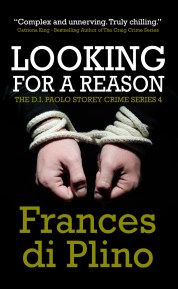
LFAR front cover

Book four, Looking for a Reason, involves Paolo’s toughest case so far. Someone is subjecting men to systematic rape and torture, but who? More to the point – why? After three days of cruelty, starvation and water deprivation, they are released. Paolo has many questions, but the biggest one of all is this: why, to a man, do they refuse even to admit they were held captive? As if the hunt for the elusive abductor wasn’t enough, Paolo has to spend time finding out if money has been pilfered from public funds poured into a new youth centre. He upsets a few local bigwigs in the process, but ruffling feathers is the least of his worries. His most important task is to work out why the attacks take place. If he can do that, he’ll be a step closer to knowing who is behind them; but can he uncover the answers in time to save someone close to him?

I’m delighted to say book five, No Easy Sacrifice, will be out in August 2015.

Now that I’ve accepted I am a serial novelist, I felt it was important to mark the event. I’ve ordered my husband a mug with a message on it: My wife kills people for a living!

***

If you have time, you may wish to read what Frances said last time she visited me: https://jbwye.com/2013/12/17/killing-him-softly-with-my-words/

***

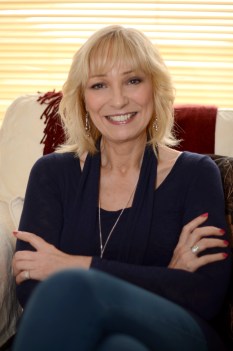
Frances di Plino is the pen name of Lorraine Mace, children’s author, humour columnist for Writing Magazine and a competition judge for Writers’ Forum. She is a former tutor for the Writers Bureau, and now runs a private critique and mentoring service for writers.

Writing as Frances di Plino, she is the author of the crime/thriller series featuring D.I. Paolo Storey: Bad Moon Rising, Someday Never Comes, Call It Pretending and Looking for a Reason

www.francesdiplino.com

www.lorrainemace.com

Writing Critique Service

www.flash500.com


Posted in Authors | Tagged , , , , | 3 Comments

Squeals of Fun

We make an early start for Chitwan. The lowlands are richer and cleaner than the midlands near Pokhara and crops are more varied. We decant into an army lorry for entry to the National Park, where we move into basic bandas with generator lighting.

img118

In the early afternoon we bath an elephant, a tourist gimmick where you get on its back in the river and it squirts water at you left, right and centre; then it rolls onto its side depositing you with a splash into the water. Squeals of fun.

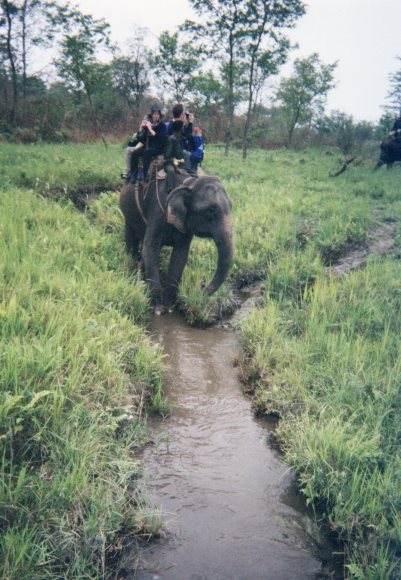
Then we go for an elephant ride, four atop a platform into the dusk. We see both spotted and barking deer, wild boar, peacocks, and armour-plated rhinos which are most impressive, especially when they turn their backs to us.

img119

We sway and dip as our majestic beasts plod over banks, through mud, and up steep slopes. It is a wonderful way of enjoying the jungle – but the mahouts issue constant urgent instructions with their toes behind the scraggly flapping ears. We enjoy another elephant ride in the dawn, but there is a murky mist allowing us to spot only one or two birds and a rabbit, but nothing big.

While the others go on a jungle walk (seeing nothing but trees, they report) Harka takes me on a bird walk, and we add 45 to my list. We also find three lapwing eggs, like mottled stones in the grass. Towards mid-morning it is still humid and muggy, so I have a cold shower and down two cokes in a row before sitting in the mottled shade with my solar hat spinning madly.

img120

A heavy hailstorm surprises us, putting paid to the planned afternoon’s jeep ride.  Once the storm clears, Harka and I dally outside the elephant stables watching the orioles and drongos; a shikra swoops and darts at the myriad insects, chattering wildly. We visit a tiny baby wild boar rescued days before, and work up an appetite for supper, watching, then taking part in a village stick dance; athletic and rhythmic, going on and on and on…  first the white-robed men use sticks, then harvest sheaves, then rattles with great timing and dexterity.

Tuesday morning’s game drive is in monotonous forest, passing sambar, and barking deer.  We have to stop and remove debris from the storm, and fill up a wash-a-way before the jeep can pass.  And just as I begin to regret not opting for another bird walk instead, Udaya claps his hands in a signal to stop, and a beautiful giant hornbill flies across our path. A couple of sunbirds round off the Chitwan stay – a very satisfactory total of 70 birds in all.


Posted in Travels | Tagged , , , , , , , , | Comments Off on Squeals of Fun

A High Fantasy Epic

Author Photo Lela Markham 2 9.14
My good friend in Alaska, Lela Marham, is my guest on this very special day, the launch of her wonderful atmospheric book The Willow Branch, which I first read on Authonomy. If you wish to be reminded what a versatile and interesting person Lela is, please refresh yourselves on our previous meeting a few months ago….The Aurorawatcher

Tell me about your book, Lela.

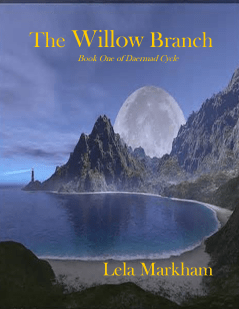
The Willow Branch is the first book in the Daermad Cycle, a high fantasy epic.

A healer (Padraig) must mend the fractured kingdom of Celdrya, find the prophesied True King and unite the Celdryans and their ancient enemy the Kin before a greater enemy destroys them both. He will contend with rival human factions, scheming black mages, warring religions, lost history, and vengeful Celtic goddesses in his quest. With all that distraction, a man might meet the True King and not recognize him.

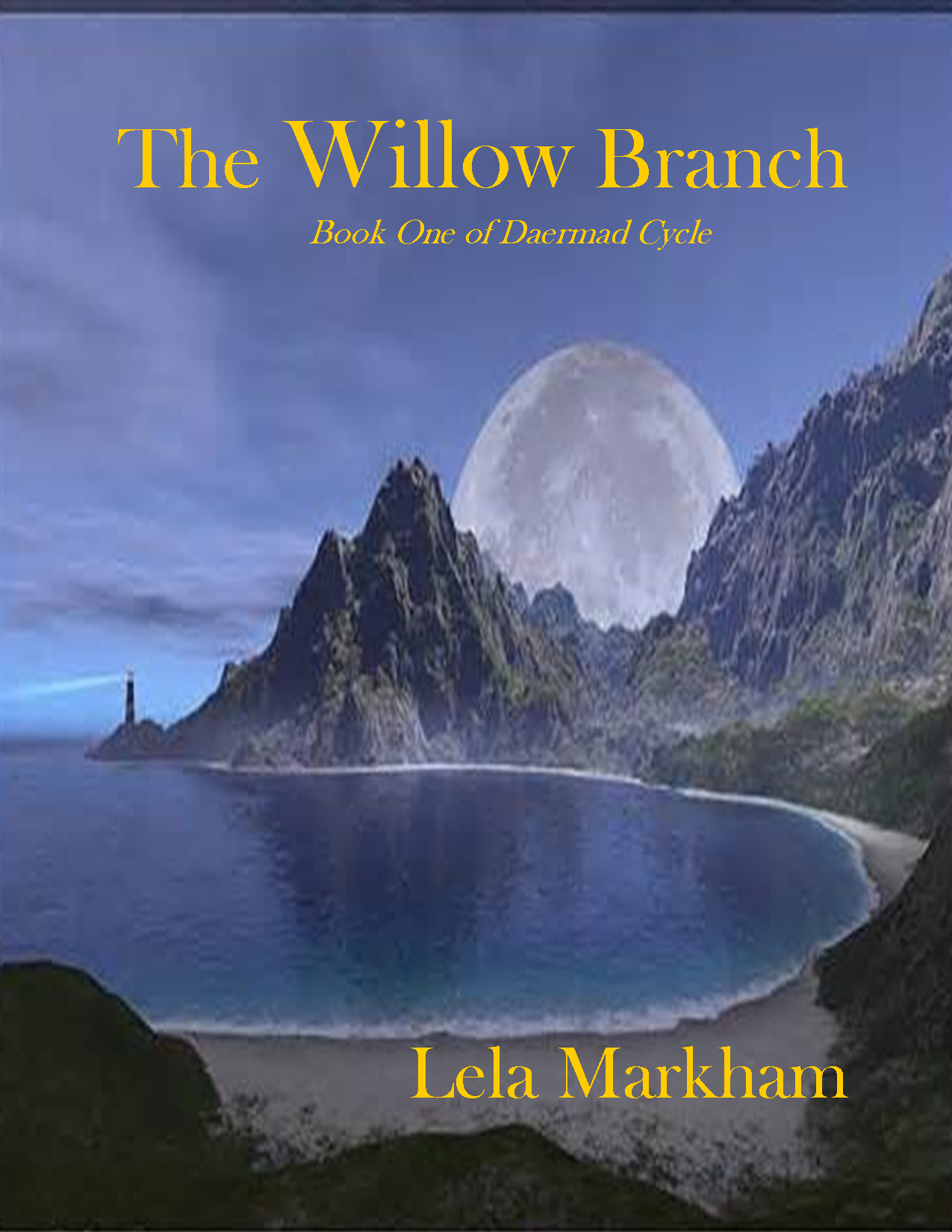
Front Cover

Where is it available?

It is released on October 20 on Smashwords and Amazon.

What are you up to next?

I’m always writing something. I’m a bit of a genre-hopper. Right now, I am working on a non-fiction on Alaska’s colonial (ahem, statehood) status with the United States, a dramatic fiction about grief, loss and redemption, and a dystopian about the end of the world as we know it, but my solid plan is to publish The Shadow Forest, Book Two of the Daermad Cycle, sometime next year. It will further the stories begun in The Willow Branch. I plan to continue using aurorawatcherak to debut works and rabble rouse as the interest strikes me.

Lela’s Websites:

http://aurorawatcherak.wordpress.com/

http://thewillowbranchbookonedaermadcycle.wordpress.com/

http://aurorawatcherak.tumblr.com/

https://twitter.com/LelaMarkham


Posted in Authors | Tagged , , , , | 2 Comments

Ten Crow-flying miles in Ten Hours

After the Panchase Temple, the tedious part begins. Down and down through thick forest, the stone stepped path winds in tortuous patterns in the dull late morning.  Those who charged in front are now suffering from sore knees and feet.  Marion lags even further behind.  I go at my own pace, and am on my own – blessed peace – in the middle of the Nepal forest. Tenzi my Sherpa companion has gone hot foot down to bring up more drink for Marion.

I find it harder to adapt from the Australians to the English people than from the 1st to the 3rd world. The sherpas, guides and Nepali people are warm, friendly and interesting. My fellow travellers are still a bit alien to me, with their talk among themselves of previous holiday experiences, and not much reaction on what we’re seeing and doing at this moment.

I come to a fork in the path: left to Kande via Bhadawe Derali, right to Pokhara and Phewa Lake (spelt Fewalake) via Thulaket. I sit down for yet another drink of water and wait for Marion and her sherpa companions.  Eventually she comes into view, red faced and suffering.  I give her a couple of electrolyte pills, some more water and a bite of my protein bar, then we proceeded left, my legs going quicker than hers. An hour further on a couple of Sherpas approach with refreshments.  Another half an hour and I am met by two more, carrying our lunch, but we both make it to lunch at the village.


img113

Away again down the cobbled and windy village road, past a woman weaving fine cotton. We wind again down and down, through habitation now, passing buffalo, chickens, goats, children and babies.

img114

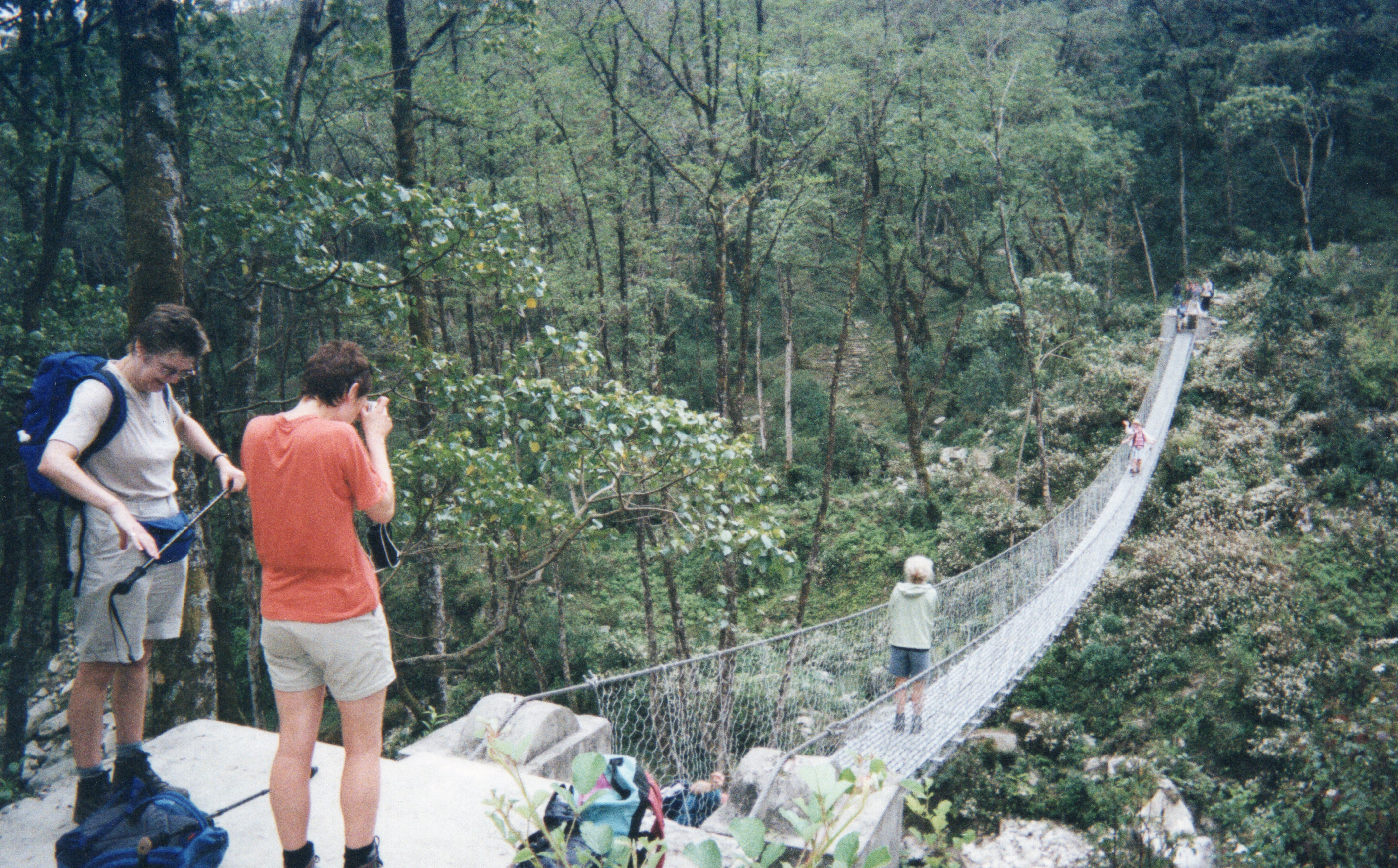
We round a corner into more forest and come to a deep ravine with a trickle of water at the bottom; a long silver footbridge sways before us, slung between its banks.   Sally is afraid of heights, but John holds her hands, facing her and stepping backwards all the way, talking steadily. We all sway over the bridge. On and on, up but mostly down; on and on. My legs are like automatons. A tarmac road.

Youths playing volleyball, some are absorbed in a board game with discs, flicking them into corner pockets like pool, but with their fingers. We stop for a soda and children ask for pens.

It starts to rain and as we all put on our waterproofs, I get left behind because I have to put my binoculars and bird book away, and then take out my umbrella. I trudge through a town, then up a tortuous steep path off the road to arrive in camp at 6 p.m. drizzling wet, darkish and miserable, but not as cold as last night.

img115

We are in Naudanda, have walked for ten hours, and achieved 10.8 miles as the crow flies (you can double that for actual distance covered, John says).  Marion, with Peter as company, comes in half an hour after me with Udaya and Mahesh in tow and we all cheer.

They bake Marion a chocolate cake for pudding that night (still hot), iced with egg white and sugar.

Posted in Travels | Tagged , , , | Comments Off on Ten Crow-flying miles in Ten Hours

A Tendency Towards the Dark Side

Isn’t it interesting how some children’s or Young Adult authors like to take refuge from time to time in “dark” works? Charlotte Comley is a case in point – but she has combined the two, and she also writes educational text books. I know you will enjoy joining us as we chat on my blog today.

Charlotte Comley

Charlotte – you belong to a group of writers – would you tell us about some of the benefits?

I currently teach creative writing and run a writing group called The Writers at Lovedean. Although writing is a solitary business, it is good to mix with people who share your own interests and understand the highs and lows of the writing process. We are a bit different from most critique groups, one week we read and get feedback the next week we do a writing exercise. These exercises have often gone on to provide ideas for longer work.

Would you give us a brief history of your literary journey so far?

I have had a great deal of success in publishing non fiction. I have written ten educational resources. Unfortunately, most educational publishers now sell resources as PDFs so that teachers can print out the parts of the book they need. So I have missed out from seeing my text books on shelves. Non fiction does pay better than fiction. I write for magazines and have a small number of clients needing blog and newsletter content. My goal is to be successful in the fiction market.

What genre of writing do you prefer?

Most of my writing is for middle grade and young adult, however I currently have a series for the young reader almost ready to send out to agents. I tend to lean towards the dark stories.

Please tell us about the books you have published

My latest novella Best Friends Forever has been published by Spinetingler Press and us available for Kindle. It is a dark tale of the friendship between two teenage girls which is tested by a series of murders. My poetry anthology, Revealed is also on sale on Amazon.

What form of marketing works best for you?

I’m a people person who likes to meet people face to face at conferences and spoken word events. I feel uncomfortable promoting my own work, but often help to promote others. This is how I gained the wonderful opportunity to be interviewed for this blog, through cross promotion of someone else’s work. 

What are your aims for the future?

I am currently doing an MA in creative writing at a Winchester University. I have managed to go away and complete a writing project of my own for every module I’ve taken at the university. I have an idea for a middle grade horror which I hope to complete the first draft of before the New Year.

Tell us about a special moment or milestone in your life.

I would definitely say that having my children, and family life is so special. I give thanks for them and those I love in my life daily. Those special moments of everyone being piled in the bed together, eating meals together and walking the dog make my life worthwhile.

If there were no barriers, what would you like to do / be / have in the future?

Those gatekeepers of the publishing world often feel like a major barrier to every writers dream! How nice to live in a literary world without the rejection letter.

Like to tell us about a favourite interest – apart from writing? 

I’m a bit of a movie buff, I’ve always loved the cinema. Even in my darkest times, when the lights go down and the movie starts I feel better. I also like to read, draw and anything crafty.

 If you were given the opportunity to travel – where would you go and why?

Now I have a long list, see the Northern Lights, I’ve always fancied visiting Italy, China and Japan. I’ve been to Canada and America, but there are other destinations in those countries I want to visit.

Best Friends Forever

http://www.amazon.co.uk/Best-Friends-Forever

Revealed

http://www.lulu.com/shop/charlotte-comley/revealed/paperback/product-21829947.html


http://www.lulu.com/shop/charlotte-comley/revealed/paperback/product-21829947.html


Posted in Authors | Tagged , , , | Comments Off on A Tendency Towards the Dark Side

Great Rhododendron Trees Tower Over Us


img111

3rd April, 2002. We break camp at 8.30 in the morning and walk 8.3 crow-flying miles up another 2,300 feet in 8 hours.  This is much steeper than yesterday, with even more ups and downs.  We leave the villages behind and plunge into the forest; blessed shade, birdsong. I am unlucky with my spotting, but see a steppe eagle and a Darjeeling pied woodpecker which betrays itself during one of my very many stops.

We all have different levels of fitness, and there is Marian who is even slower than I am – hooray! We meander along together at the back, stopping to enjoy tantalising glimpses of Annapurna South and the Fishtail (sacred to the locals and never been climbed to the top). The wondrous range did peep at us above the clouds early in the morning, but not really well enough for a photo.

img112

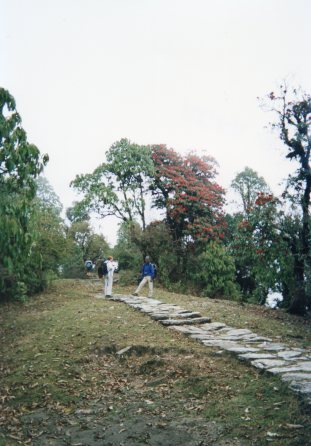
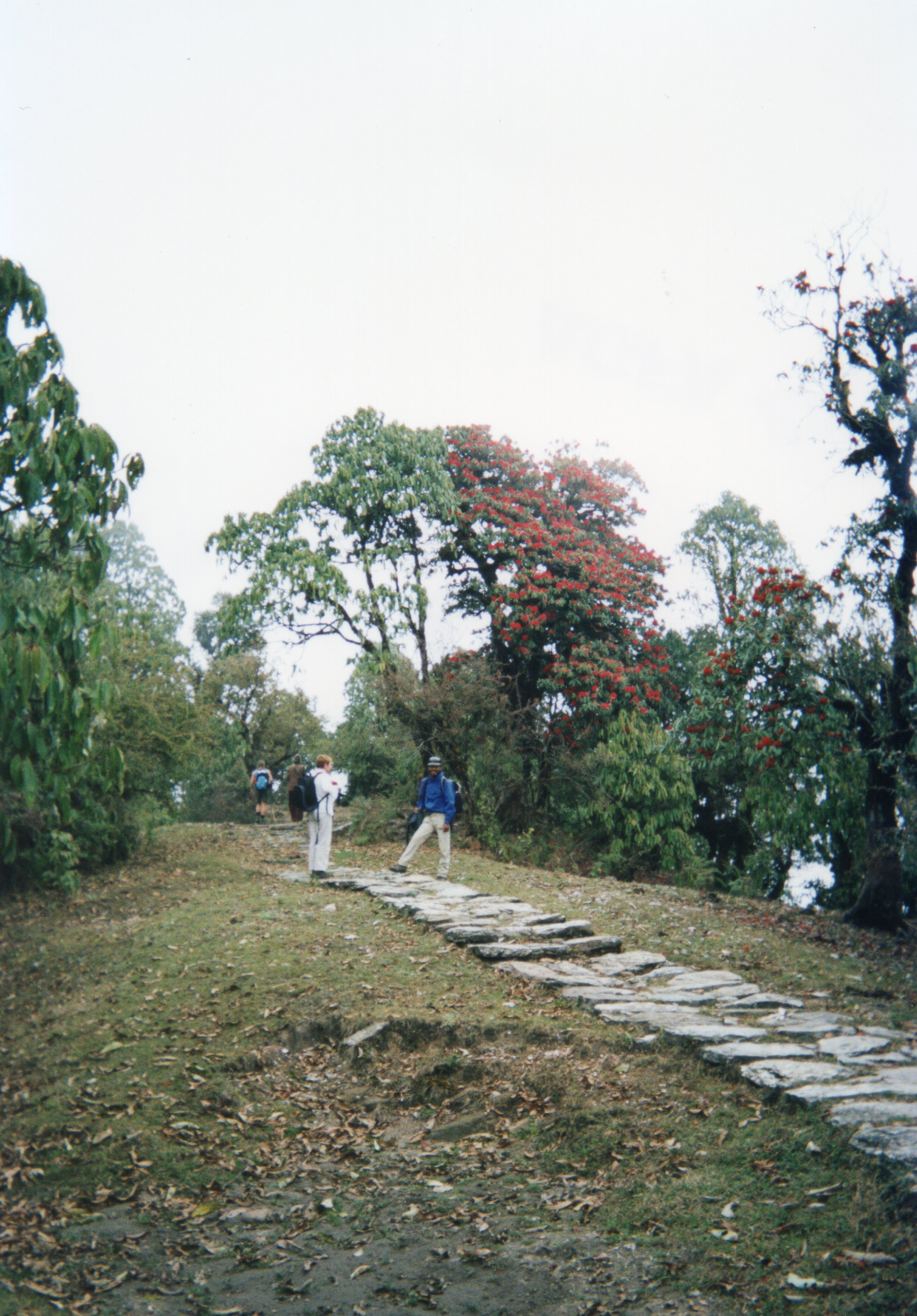
The sherpas and Udaya are first class; there is always someone with us way at the back, most often Udaya himself, so we have the benefit of his knowledge of the berries and trees, and he spends time spotting birds with me too. Orchids trail from the branches, just coming into flower. We see several varieties. Great rhododendron trees tower over us, revealing their deep red flowers in ones and twos. The mountains must look a picture in the background when they’re in full bloom. Bracken appears, with giant ferns lining the narrow path.

Lunch is in an open terraced clearing and the sun blazes down mercilessly. I forget to use my umbrella, and try to sleep face-down, burning the backs of my knees.  I must be getting acclimatised now, because I find it easier today, and it is cooler than yesterday.

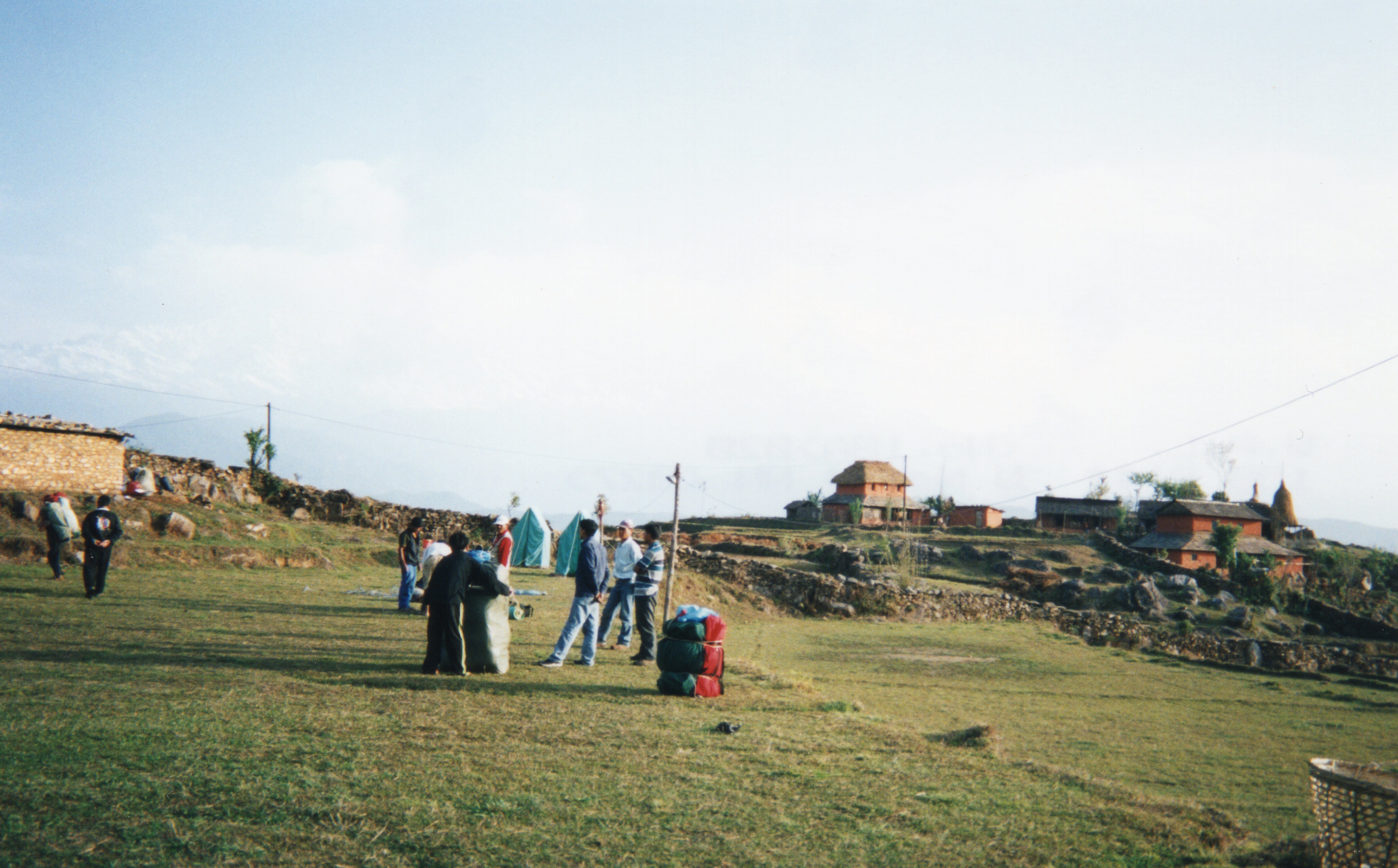
Our camp is in a picturesque village perched on a ridge overlooking two deep valleys to the north and south; our blue tents cheerful on the soft green turf. Only two other small parties are camped in the area. We have two loo tents between us, and use our own toilet paper; iodine water and soap stands outside for our convenience. I’m not going to change a habit of a lifetime, but make a point of washing my left (impure) hand thoroughly afterwards. I’m getting used to squatting.  It is very cold and the grey clouds sit low overhead, blotting out the hills, faint in the distance. Udaya tells us that if it rains hard tonight, we have a better chance of seeing the mountain peaks.

4th April, 2002.  No mountains today; just a tantalising outline through the clouds. We have another early start and walk upwards on a winding forest path, paved and conveniently stepped. Up and up through the cloud, admiring more rhododendrons, orchids coming into bloom, with birdsong in our ears.  However, few birds stay long enough to identify. On one of my frequent stops with Mahesh (the sherpa headman) we watch three raucous spotted forktails take wing nearby, their striking black and white tails streaming out behind.

Some of us charge ahead; Marion struggles mightily behind. I start off from each stop in front, but soon lag further and further behind as I chase the occasional birdsong and stop to admire the orchids. We come across three fascinating lilies sticking up out of the forest floor: from the arum family, Udaya tells me after consulting his book.  Occasional glimpses of mountain outline tantalise us through the trees, but none worth a photograph.

Over two hours later we arrive in dribs and drabs at Panchase Temple (pronounced like “fantasy”), our highest point, and are greeted and daubed with vermilion dye on our foreheads by the Brahmin priest.  It is a dual Hindu/Buddhist temple, like many in the area.  Priests and infants less than one year old are buried here, as they are not reincarnated.  All other people are cremated, their ashes feeding the roots of trees.

Posted in Travels | Tagged , , , , , , , , | Comments Off on Great Rhododendron Trees Tower Over Us