Life Has a Habit of Kicking You in the Teeth –

– And sudden sickness in a thriving relationship can turn everything on its end.

I’ve seen it happen. An accident or serious illness strikes, everybody rallies round at first, and being the centre of attention and empathy helps, but it doesn’t last. Eventually the couple have to learn to live with it; but often things fall apart, and the healthy partner can stand it no longer.

Why does this happen and how can it be prevented? It is such a shame. Privately, I would side with the injured party, the abandoned one who is left alone while the other flies away in hurt bewilderment, not able to cope because love is not strong enough – or something.

And then it happened to me.

Which is why I have written this book. It is not a true story, the plot carried me away, and I feel freer when expressing myself in fictional form. When I come to the end I discover the secret, which is no secret – but a widely acclaimed truth, that is well known and tantalisingly elusive.

cover1 (419x640)

HERE’S YOUR CHANCE!

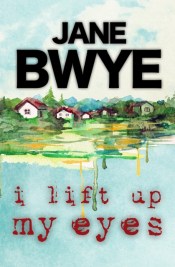
IF YOU REVIEW this novella of 30,000 words before 30th October, you will have a chance to win a unique hand-made card with original artwork by my talented daughter, Heather Parsons. She painted the cover of BREATH OF AFRICA and she produced a sketch from which the cover of I LIFT UP MY EYES was designed.

There are only two stipulations:

  • You need to show that you have read the whole book
  • And tell me at:  http://www.janebwye.com/contact where and under what name you have published the review so that I can check it out. A link would be most useful.

The winner will be drawn on before Monday 3rd November 2014.

Posted in Authors, I Lift Up My Eyes | Tagged , , | Comments Off on Life Has a Habit of Kicking You in the Teeth –

A Strike Has Been Called

We learn at supper briefing in our Kathmandu Hotel that a strike has been called for four days, when no vehicles will be allowed on the roads. The Maoists are threatening the government. So our itinerary is changed, and we have to drive straight to Pokhara the next day for an alternative trail called the Panchase Trek.

The journey is 200 ks and six hours long; a steep winding tarmac road with no potholes, but very heavy traffic. I learn the local horn-blowing system: two peeps = I wish to pass; one peep = thankyou, or get out of my way;  right indicator = now you can pass; left indicator = there’s someone coming so don’t pass.

Vehicles miss each other by a hair’s breadth, but there are hardly any accidents.  We pass through numerous check points where the buses have to show time cards, to prevent speeding, and the locals have to pile out and have their baggage checked for explosives. We pass hydro-electric stations flanked by sandbagged squares manned by armed soldiers in camouflage uniform.

img106 (640x392)

Beautifully maintained terraces in Nepal

Beautifully maintained terraces creep in wavy lines down the hill slopes and along the valley floors. Paddy fields, oxen pulling ploughs; brick factories, batteries of hens. People smiling everywhere; houses everywhere, with red brick or crazy paved walls, and flowers in pots.  Distinctive stacks of dry rice stalks pile up and up around a tall pole on a wooden slatted platform, providing fodder for the cattle or water-buffalo.

We wind alongside a wide river, which flows in a deep gorge to our right. This is where our white water rafting will happen, although I have no intention of taking part. We stop on the road to watch two rafts negotiate the hardest,class three rapid, while the traffic negotiates patiently round us. Screams, then shouts of triumph reach us from far below as they reach the end of the run.

We check into our Pokhara hotel and then are driven to supper at the lake front.  My room-mate is Mary. Our habits our different, so we don’t coincide much: she reads far into the night while I sleep. I get up early to watch a non-sunrise and add to my bird list while she sleeps in as late as possible.

Our first day’s trek takes us south, then westwards to the far side of lake Phewa Tal. Up and up we go for six and a half hours and 2,500 ft, covering just over eight miles as the crow flies. John says we can double that for actual mileage walked. He has a GPS gadget which provides us with the details, plus an impressive graph of our daily achievements.

img107 (442x640)

The Panchase Trail with the World Peace Pagoda on the skyline

We pass a Japanese Monastery and stop at the World Peace Pagoda, a shining white monument with four golden images representing Thailand, Nepal, Japan and Sri Lanka, looking gigantically to the four corners of the world. We remove our shoes and keeping the Pagoda to our right (the pure side), circumnavigate the monument. One or two people sit splay-legged against the side, a couple walk round and round, deep in conversation. I say a quiet prayer for peace.

We pass through many villages, say “Namaste” to countless people, and are followed by troops of children saying “hallo pen”, but we’re told not to give anything. We will be donating to a school later. The terraces become steeper and steeper; they grow rice, maize, spinach and cabbages; cows and buffalo get in our way, and  the occasional dog sniffs around us. Udaya is a wealth of information, but it is impossible to retain all he tells us of this ancient country with its caste system, rituals, and different religions. One terrace contains a grove of trees with roots encased in mounds of stones, cone-like, about four feet tall. These are monuments to the dead, whose ashes lie deep within the cone. We see an infant one with a small sapling planted at the top; a lovely custom.

img108 (640x398)

Our tents are up and ready

It is hot, as we have started late. My solar hat is invaluable and causes the usual interest, especially among the Nepali children. Lunch is a tasty tinned salmon with chips and salad, then bananas, eaten in the sun.  We’re camping in luxury. The sherpas have our tents up and ready at the campsite beside a terraced village.  Thunder and rain have threatened all day, and now a few drops splat on the canvas. We have nothing to do but refresh ourselves from individual basins of warm water, then troop to the dining tent for supper before early bed.

Posted in Travels | Tagged , , , , , , | 2 Comments

Breaking The Mould

There’s a well-known adage in the writing world; once you’re onto a winning streak, you should continue in that mould, churn out best-seller after best-seller, as that’s what your public demands and what your publishers require, as they rub their hands together in glee and count the millions, be it in pounds or pence.

But what of the poor author? It’s a great feeling producing that first successful book, and it must be gratifying as story after story is built upon the foundation mould. But euphoria cannot last forever – can it?

We have at least two brilliant successes in our Crooked Cat’s cradle. I know, because I enjoy a good whodunnit and I have read every one of David Robinson’s and Catriona King’s series of novels. They are both excellent writers in their fields, but an excellent writer does not stagnate. True artists are always trying to perfect themselves with exploring new angles and meeting new challenges.

Trouble is, once the mould is set, it is a brave person who tries to break it. Both David and Catriona have made the attempt, and both have reverted, for the time being anyway, to the tried and tested. Patience is needed, and a gradual build-up of a different following, like starting all over again. That’s exhausting and one shies away. I’m about to know the feeling – sort of. I also know that their diversions have produced mature and well-written works, vastly different from the lighter “pot-boilers” they continue to produce with great success. I know because I have read them both and thoroughly appreciate the differences.

I can’t talk, really, because I’ve only produced one book so far – written entirely for myself as a catharsis. Its success (measured by my own expectations) has been gratifying. But after handing over BREATH OF AFRICA to the publisher, I deflated into a wet rag. I’d left an opening for a sequel but was drained of energy. Yet the habit of writing was upon me and I didn’t want to stop. I needed a complete change.

So, defying the odds, I pleased myself and wrote something entirely different, on a subject, which admittedly has been running around in my mind over the past fifty-odd years. Tentatively, I submitted the novella to my publishers – and you could have knocked me down with the proverbial feather…

I LIFT UP MY EYES will be launched next Tuesday, 7th October 2014. Don’t expect the stunning scenery and drama you found in Breath of Africa. This one is intimate and penetrating. It deals with loss – a situation faced by everyone at some point in their lives – but it incorporates a message of hope.

cover1 (419x640)

So – I have started two very different lines. Will they continue to develop, or will I begin yet another? I’m working on it and will let you know. For once a writer, always a writer…

My website: http://www.janebwye.com/

Posted in Authors, Breath of Africa, I Lift Up My Eyes | Tagged , , , | 7 Comments

A Chapter of Near Accidents

World traveller (2)

April 2002. A chapter of near accidents has brought me to Kathmandu from Perth. We drive with grandkids and dogs north from Busselton and enjoy fish ‘n chips in Fremantle while watching colourful acts in the kid-friendly Buskers’ Festival.  Then I have a leisurely shower, hair wash and chat with family before going to bed. I change into night-shirt and take a look at my ticket to see what time I can sleep in until – then I look again. Departure at 0125 hours it says. I count, twice. No, it isn’t midday-ish tomorrow: it is midnight-ish tonight! It is 10 p.m. Time enough – just.

On the dash to Perth’s International Airport, a lighted notice flashes past my vision and I remark to my son Colin that the police are imposing double penalties for traffic offences during this Easter holiday weekend. Seconds later, Colin is flashed going through a red light. Then, missing the junction onto Tonkin Highway, he is flashed again. But he gets me there in time.

The ‘plane to Singapore is very full and cramped, but the airport terminal a delight to wander in, with its gardens and poi fish ponds. On the flight into Kathmandu I am given a luxurious seat in business class, sitting next to a talkative Kiwi entrepreneur who recounts his chequered life-story non-stop until we land, but I cannot remember a word of it.

I go through customs without a hitch, stopping just before the final gate to delve into my backpack for my ticket and wait while a scruffy-looking official tears off the luggage sticker. Finding a taxi is easy: a tout beckons as soon as I pass the barrier. Avoiding some begging kids, I pile into a clapped-out saloon which winds through narrow noisy streets between countless cars and buses going in different directions.

It is a mayhem of noise, horns, bicycles, people, rickshaws and vehicles all vying for space in narrow roads. Yet no-one collides. It is easy for me to shift gear from first-world Australia to third-world Nepal. The minute I leave the airport I feel at home amid the frenzied traffic, stinking litter and smiling people. It is as if I were back in Nairobi.

The four-star Malla Hotel is a plush haven, where I meet Udaya, our striking long-haired Nepali tour leader. I have a bath and prepare to go out for a wander. I can’t find my black pouch containing travellers’ cheques anywhere. I comb through my luggage. I go to reception – no, Udaya has not picked it up by mistake. He is concerned and most helpful. I might have dropped it in the taxi; I’d better go with him to the airport when he meets the rest of the tour group. The odd thing is I still have my ticket which had also been in the black pouch.

My jet-lagged mind slowly starts turning. We ask the desk at the airport to trace the taxi driver. Then I enter the baggage hall and speak to an official. Proud of myself, I suddenly recognise and point out the scruffy man who originally asked for my baggage ticket. Udaya approaches with a Singapore Airlines official and I go through my story again, not really thinking there is any hope. I’ll just have to use a cash-point, I suppose, and claim on insurance for the lost travellers’ cheques.

The official takes me outside.

“Wait here” he says, “I’ll go to the office.”

I wait until he returns about fifteen minutes later “Is this yours?” He shows me my black pouch, complete with everything in it. It was handed in, he says. Perhaps I will give a reward to the finder?

I look round for the finder.

“No – I will pass it on,” he says, quickly.

Gratefully, I empty my purse of the R300 I have just cashed. What luck. But my brain is cranking into gear and I wonder if the “finder” might perhaps be that same scruffy individual who had torn off my luggage sticker in the first place…

Posted in Travels | Tagged , , , , , | Comments Off on A Chapter of Near Accidents

Writing In Different Genres

The word “genre” was never in my vocabulary before I tried to sell BREATH OF AFRICA to agents and publishers.

90551-facebook

I am now aware that it provides a convenient means of categorising the misty art of writing books, so that those middlemen can put the volumes onto certain shelves to attract relevant readers. It sounds logical enough. And that’s okay if you’re the sort of writer who chooses the genre before setting out on the journey.

But I wonder how many authors are like me, and feel compelled to allow the words to flow, the characters to develop minds of their own, and everything else takes a back seat?

The word “literary” comes in and out of fashion. I was advised not to submit my precious work under that banner at the time. What was I to do? The book was about Africa, and it was set in the past. Historical Fiction seemed to be the obvious choice. I included historical notes and even a Glossary for the benefit of my readers. I stuck with that choice through agonising years and 70+ rejections. Although I received encouraging feedback from some, there was no hint of an explanation why no contract was forthcoming, other than the standardised “it was not right for us”.

I can now visualise dozens of historical fiction editors sitting at their cramped desks piled high with manuscripts steeped in the Middle Ages, Victorian times, and anything in between. They come across an African manuscript, glance at the blurb, see the period is the 1950s – 1980s, and plonk it without further ado onto the rejected pile.

So when is a historical novel not a historical novel?

The answer came in a flash of enlightenment.

“Perhaps you should submit it as Contemporary Fiction, Jane?” This from a wonderful Authonomy friend, “I see there’s an advert in Writing Magazine – why don’t you try it?”

And the rest is history.

I have also been advised that once you have written a successful book (and I use that word with hesitation … it depends what you mean by success), you should keep to the genre in order to build on your following.

But what if you’ve lived with that book so long and so intensely that you need a change? And there’s another utterly different one clamouring to come out of you?

Never one to avoid a challenge, I’m breaking the mould before it has even had a chance to set.

It is the present time – give or take a few years – but the era is of no consequence. Set somewhere in England, my novella I LIFT UP MY EYES is nothing to do with Africa or history. It deals with emotions and situations familiar to people the world over.

But there’s one tiny thing in common with the first – yes, the genre is Contemporary Fiction.

cover1 (419x640)

I LIFT UP MY EYES, published by Crooked Cat Publishers, will be launched as an e-book on Tuesday 7th October. Look out for it on line on the day. I’ll publish the link when I know it. Meanwhile, you’re all invited to the on-line LAUNCH PARTY – sign up and enjoy the frolics!

Crooked Cat.tiff

Posted in Breath of Africa, I Lift Up My Eyes | Tagged , , , , , , , , , | Comments Off on Writing In Different Genres

42 Degrees Centigrade

World traveller

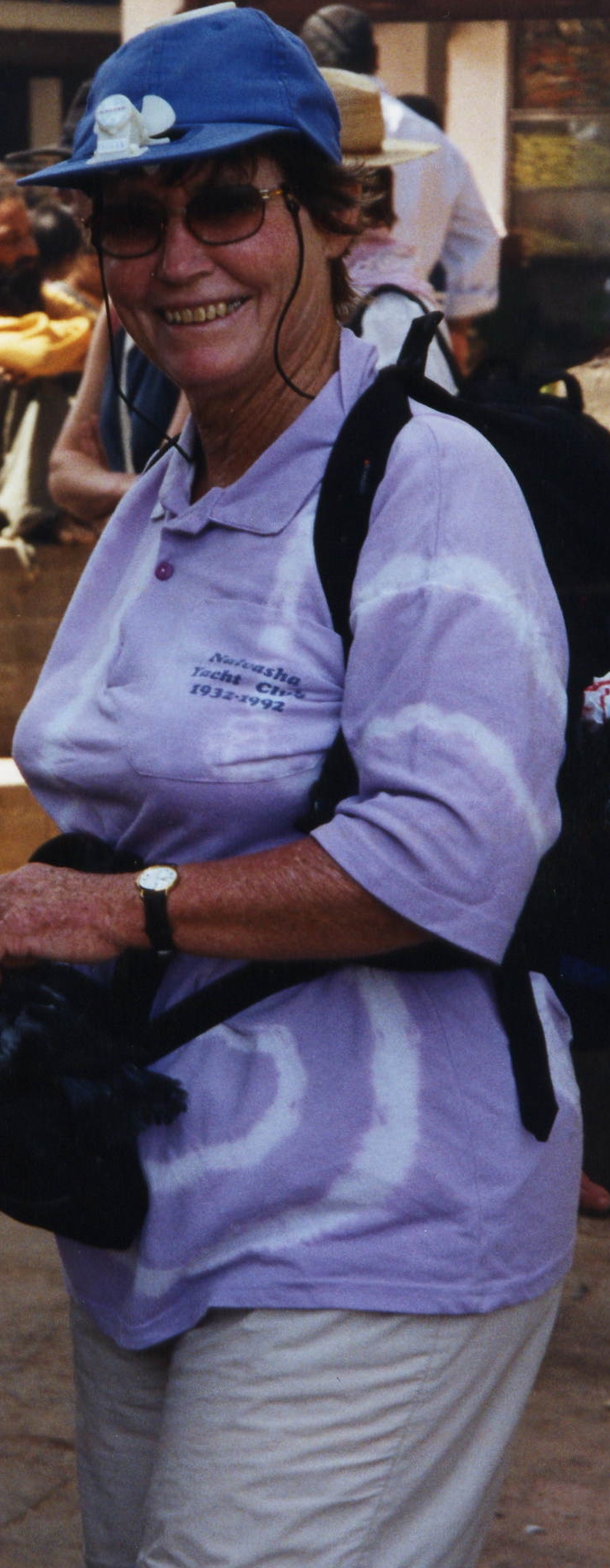
Jbwye in her solar hat

The Stirling Range is a line of bush-covered, odd-shaped peaks sticking out of the south west Australian landscape on a roughly east-west alignment.

I decide to climb the highest peak – Bluff Knoll (1094 m). It is a 6km return hike, the blurb says, which will take me 3-4 hours.

The tourist track bobs up and down the foothills in dappled shade, then turns right in ever-increasing steepness as it winds beneath the vertical bluff towering ominously above me. The sky is so blue, and I stop to gather breath at each small piece of shade, so precious in its scarcity now that the bush is becoming lower. My car in the sun-exposed park below gets quickly smaller and smaller, the view ever wider.

Steep steps, bigger boulders, more breaths, one water bottle already finished. The path winds on and up towards the saddle where the south-east side opens itself two hours later. I still cannot escape that sun.

An overhanging boulder looms a little off the path. Keeping a wary eye out for snakes, I make for it. I squeeze under the meagre shade and settle down to eat my roll and a biscuit, while savouring the patchwork fields far below. They stretch out  towards the Porungurups and the hazy twin peaks where Albany nestles.

Refreshed, I clamber back onto the path and trudge less steeply up to the bluff itself.

The view widens and I see a series of salt lakes to the north. 360 degrees of wide open spaces, some signs of farms, but mostly bush. A trio of wedge-tailed eagles swoop and dive above me.

I stay up there an hour before steeling myself to face the long downhill walk. The sun seems, if anything, to be even hotter and the shade just as elusive. I pass a large straggling party on their way up, sweating, panting and suffering. As I near the car park, my limbs correspondingly become weaker; but finally – oh bliss – I arrive.  4.45 p.m. – five hours of self-inflicted torture.

At the Retreat, I wallow thankfully in the pool, eat a meat pie in my caravan, and sleep like a log. Then I am informed the temperature during the day was 42C.

The following morning I drive the Sterling Range scenic route, stopping off at sites and viewpoints in this wild and wonderful place. 60 km per hour is the right speed to ride the rutted road. A short hike takes me to a beauty spot to admire yet another vista, punctuated by peaks of different shapes and sizes.

A long haul takes me past the salt river and lakes, which I had spotted from the Bluff, and I arrive at the Porongurups at 1.15 p.m. The park at Castle Rock is shaded, so I put my feet up and doze for an hour to avoid the heat of the day. I needn’t have bothered. The 1.5 km hike (45 minutes) to the top is beautifully shaded by karri trees. I pass the precarious Balancing Rock and find a convenient slab just below the Castle Rock where I sit and eat an orange. A noisy party is there before me, disturbing the peace by vociferously sliding down through fissure. I wait for them to leave before scrambling the last 30 metres up solid rock and mount a ladder to the top. Miles and miles of Australia spread into the distance, and I discern the faintest glimpse of the town of Albany on the far horizon.

It is time for me to return the car to my family and say goodbye to Australia.

Posted in Travels | Tagged , , , , , | Comments Off on 42 Degrees Centigrade

Turning History Into Histoires

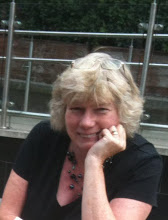
I am delighted to welcome fellow kitten Sue Barnard to my place today – her debut, award-nominated novel The Ghostly Father, is one of the best books I have ever read. But she has moved on from there, and reveals an astounding secret about herself while she delves into family history as a basis for fiction.

Sue Barnard author pic

The very first Creative Writing course I ever took, back in the summer of 2006, was a short course with the Open University entitled Start Writing Family History.  The twelve-week online course (which has sadly since been discontinued) covered the basic principles of studying genealogy, and combined them with basic writing skills.  The final tutor-marked assignment invited the students to choose a particular aspect of family history, and describe how it applied to their own circumstances and also to families in general.

It was at this point that I first realised how family history can be a very rich source of material for the writer.  Most (if not all) families probably have at least one guilty secret lurking somewhere in the background.  I myself spent the first forty-eight years of my life as a skeleton in someone else’s cupboard – a secret baby who was given up for adoption because of the unforgiving attitudes of the time.

But in fact I’d been interested in family history since my teens – ever since the day when I became aware of a mystery surrounding my (adoptive) surname.  It was a very unusual surname, and one which, frankly, I’d always hated; it was very susceptible to being mispronounced, and as a result I was very susceptible to all sorts of horrible childhood nicknames.  It was only when I was sixteen that I discovered, quite by chance, that the rest of my paternal grandfather’s family, who lived two hundred miles away in rural Somerset, had a completely different (and much nicer) surname than ours.

I enviously asked my Dad why the rest of the family were blessed with a nice surname, whilst we were blighted with an awful one.  The explanation is too complicated to go into here, but suffice it to say that the discrepancy could be traced back to an illegitimate birth two or three generations earlier.  It took me thirty-odd years to get to the bottom of it, but in the course of my investigations I discovered something else: that my great-grandparents had celebrated their Golden Wedding a year early.  The party was held a respectable sixteen months before their first child’s fiftieth birthday – but if they had celebrated in the correct year, the rest of the family would very quickly have realised that they had only taken four months to produce him!

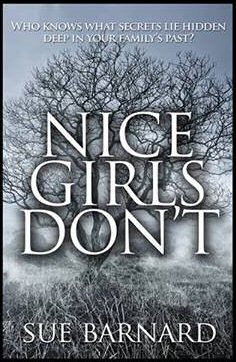
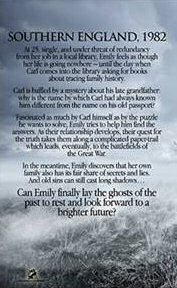
This anecdote formed the basis of an article which was published in the Skeleton in the Cupboard section of Your Family Tree magazine in October 2007, and more recently it found its way into my second novel, Nice Girls Don’t (published by Crooked Cat Publishing in July 2014). The two main protagonists of the story, Emily and Carl, attempt to trace their respective family histories, and in both cases they uncover an intriguing web of secrets and lies, dating back throughout the twentieth century as far back as the battlefields of the Great War.  To talk about this in detail here would give away far too much about the story, but two of the episodes in the book are based on real events, and several others have at least some basis in fact.

Everyone has a family, and every family has a history.  Why not take a peek at yours?  You never know what you might find!

NGD frontNGD back

Sue’s Website: http://broad-thoughts-from-a-home.blogspot.co.uk/

Posted in Authors | Tagged , , | 2 Comments

Blood Swept Lands and Seas of Red

Thought you might like a break from Australia for a week – so let’s go over to London for a change, where I spent the day last Saturday with our walking group.

London never fails to fascinate me and I always look forward to our annual trudge along the Thames walk, soaking in the atmosphere and the history of this most varied city. Thirteen of us divided into two sensible groups aiming for the Tower of London in a roundabout route, for the Circle and District Lines were closed that day.

CIMG1856 (640x359)

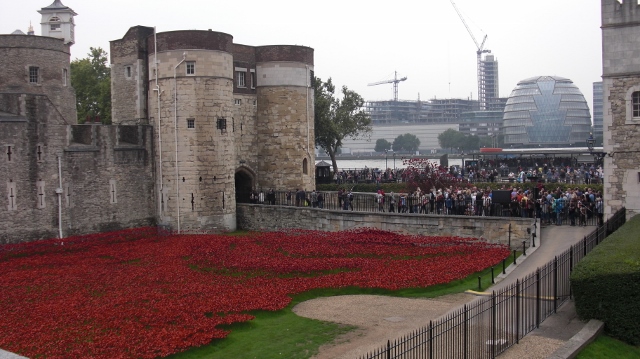
We joined the hushed crowds hanging over the railings and strolling sedately round the perimeter. The view over the moat facing the Tower walls was breath-taking. “Blood swept lands and seas of red” lay before us in the form of a growing myriad of ceramic poppies, each representing a British or colonial military fatality during the First World War. Orange-coated volunteers casually patrolled the area, pausing to take their own photos while shutters clicked continuously over their heads. We offered private prayers, before entering once more into the maw of London’s underground.

CIMG1854 (359x640)

All went well, until we boarded the sleek DLR train, which whisked us eastwards to Canning Town. Our aim was Pontoon Dock. We were Julie’s group, and were rather too slick with the change, finding ourselves back where we’d started. But there on the platform was Jane’s group, who’d done exactly the same thing.

Oh well, we just had to repeat the exercise – more carefully this time, before emerging at Pontoon Dock and making a beeline for the Info Centre toilets.

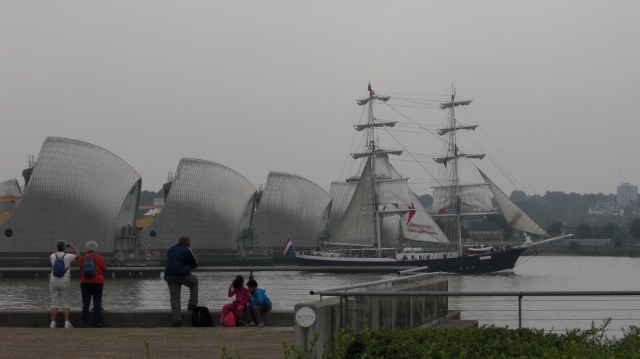
We strolled alongside a sunken garden of wave-like hedgerows towards the river and sat on a bank to munch our sandwiches, facing the grey shapes of the Thames Barrier.
CIMG1859 (640x359)

To the east, murky clouds closed down on us, and ghostly shapes of tall ships, riggings bare, slid silently between the pontoons. The Barrier, we learned, closes under storm surge conditions to protect London from flooding from the sea, and can also reduce the risk of river flooding in west London.

Back to the station for the ride under the Thames to the South Bank, where we walk between stalls of exotic Afro-Caribbean produce and bypass the remnants of the famous Woolwich market. A totally different world greets us as we enter the Tall Ships Festival site of Woolwich Arsenal and run the gauntlet of brash amusement stalls, balloons, loud music and a merry-go-round. Patient queues back onto the walkway, waiting for a ride on the river.

CIMG1864 (640x359)

We turn westwards at the start of the 3.5 mile Thames walk to the O2 Arena, but I am utterly disorientated. It feels as if I’m walking east, but Julies assures me we’re going west. It doesn’t help that the sun is on my left, for we’re on a bend of the river. But as we come to the Thames Barrier from this side, the sun glints through the clouds, clothing this man-made wonder in soft gold. A tall ship, sail unfurled, slips through and catches the rays.

CIMG1867 (640x359)

Our path diverts for half a kilometre through an untidy corner; and a cable car crossing from the O2 Arena in the muted evening sunshine marks the end of our walk – but not the end of our adventure, for we return to Victoria Station in the weekend rush.

CIMG1866 (640x359)

The door closes on a packed carriage before Julie can jump aboard.

“We’ll meet at Victoria toilets,” she shouts, stepping back to await the next tube.

As we jostle through the ticket barriers and climb the steps, suddenly Julie is with us. Our train leaves in ten minutes. We head for Platform 16, then hesitate.

“Where’s Sheila?”

“I’ll go back and look for her,” says Jane. The minutes tick by and it’s a long walk to the front part of the train; in the nick of time, they re-join us.

We crowd into carriage No.8. But contrary to the station information board, the canned voice tells us to go to the first four carriages and the rolling display confirms this.

“Don’t worry,” says Jane, sitting firmly put. “It’s a 12 carriage train. We’re okay.”

We approach Haywards Heath, where the train divides. A new “live” voice tells us that eastbound passengers must be in the first 8 carriages, and there immediately follows a canned voice contradicting the instruction. People get up to go in different directions, but Jane encourages us to stay put. There is a last minute panic as westbound passengers rush out through the closing doors.

AndJane is right, after all.
Posted in Travels | Tagged , , , , | Comments Off on Blood Swept Lands and Seas of Red

It’s Never Too Late to Start Writing

Happy Birthday, Vanessa!

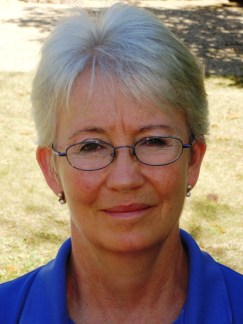
You can be a young writer at any age, Vanessa Couchman tells me. She is one of the more recent Crooked Cat “finds”, and I can vouch for the quality of her book.

Vanessa

I describe myself as a “young writer”. This doesn’t, alas, mean that I am young. It means I came to writing fiction comparatively late – in my fifties. Education, career (and a lot of excuses) got in the way. But joining online expat writing community Writers Abroad in 2012 was the spur I needed to get pen to paper – or hand to mouse.

To start with, I dabbled in short stories and flash fiction and cringe with embarrassment today when I re-read my early efforts. But, with the help of my more experienced Writers Abroad friends, and by dint of a lot of practice, I improved. Some placings in creative competitions and publication in anthologies followed.

A couple of years ago, I began to feel ready for the challenge of a more sustained piece of work, i.e. a novel. A number of ideas washed around in my head but none of them came to anything. However, a visit to Corsica provided the inspiration to get me going.

We stayed in a B&B in a small Corsican village. On the walls hung framed love letters. We asked the owners about them and learned that they were found in a box when the house was restored, walled up in the attic. They were all that remained of a doomed love affair in the 1890s between the daughter of a bourgeois family, who lived in the house, and the local schoolmaster. Since her family would have disapproved, she and her lover met in secret and communicated via a letter drop.

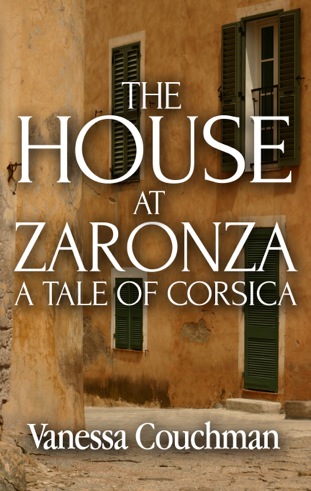
The stuff of novels indeed! This was the genesis of my debut novel, The House at Zaronza.

Back home in south west France, I developed the characters and the plot. It was also necessary to carry out research about Corsica during that period and, later, on nursing in World War I, since my main character becomes a nurse. I wrote the bulk of the novel during National Novel Writing Month (NaNo for short) in November 2012. Without NaNo, I would probably still be on page one. I always write best if a deadline looms and the discipline of writing a minimum number of works every day was essential.

The novel languished in the proverbial drawer for about a year, and some desultory editing took place. Then a bit of luck intervened. I entered the Flash 500 Novel Opening Competition, run by author Lorraine Mace. The judges, Crooked Cat Publishing, asked to see the whole manuscript and the rest, as they say, is history.

The House at Zaronza was published in July this year.

The point of all this is to show that it’s never too late to start writing fiction. There are some well-known examples of “young writers” who went on to become best-selling authors. The Big Sleep was published when Raymond Chandler was 51; Penelope Fitzgerald’s first novel, The Golden Child, came out when she was 60; and Mary Wesley published her first adult novel, Jumping the Queue, at 71.

And, of course, there’s our own Jane Bwye, whose fantastic first novel Breath of Africa was published in 2013 when she was 72! (I’m only as old as I feel, Vanessa!)

If you had told me four years ago that I would not only write a novel but that it would also be published, I would have fallen over. Now, I’m planning the sequel to The House at Zaronza. I will probably still need the spur of NaNo to make me write it but, now that I’ve discovered the exhilaration of writing a novel and seeing it published, there’s no going back.

Front cover final

Set in early 20th-century Corsica and at the Western Front in World War I, The House at Zaronza tells the story of Maria Orsini, the daughter of a bourgeois family. She and the village schoolmaster carry on a secret romance, but Maria’s family has other ideas for her future. She becomes a volunteer nurse during World War I and the novel follows her fortunes through the war and beyond.

You can read my review of Vanessa’s book HERE.

The House at Zaronza is available in e-book and paperback formats from Amazon UK, Amazon US and other Amazon stores.

Blog: Life on La Lune

Writing site: Vanessa Couchman freelance writer

Amazon UK author page

Amazon US author page

Twitter: @Vanessainfrance

Facebook: vanessa.couchman.3

Authorsden


Posted in Authors | Tagged , , , , , | 5 Comments

Snakes Alive!

The road turns the Ute into a rattletrap as I navigate the corrugations which bring me to the start of the Contos circuit.

I remember as a child in Kenya when we drove to the coast for our annual holiday, my father would accelerate along a particular section of road, claiming that it was better to skim quickly over the bumps than to crawl at a snail’s pace for miles on end. We would clench our teeth and hang grimly onto our seats. There were no seat belts in those days. But the Ute belongs to my son, the track is narrow and I might lose control if I speed along to ride the bumps; so I crawl excruciatingly along at 20kph. 

The footpath is narrow and overgrown along the cliff top. Just ten minutes into my walk I round a corner and my eye catches a movement under a rock encroaching on the path. Several large grey coils slither onto the track. I am walking too fast and can’t stop; with a heart-pounding lurch I take a gigantic leap and glance back. I can’t see the snake’s head but I run as fast as the going allows for several yards before pulling up to gather breath. I have no  desire to investigate further although I know I will be quizzed by family on my return home. Thereafter I keep a vigilant eye on the prickly path, missing out on the great views up and down the coast from Redgate to Cape Freycinet.

img093 (640x390)

I am not looking forward to returning the same way and wonder about alternatives.

Several notices warn against venturing too near the edge of the crumbling limestone cliffs which tumble steeply to the beach below. A stepped path plunges between the cliffs, passing small caves, towards a tinkling spring where small birds flit among the vegetation. I continue along the track, looking north towards Redgate over low bush country.

But I have to turn back eventually. I find a prickly branched stick to ward off snake attacks, and divert to a path meandering among the sandy tufts towards the beach. I sit on a boulder to eat an orange. There are tracks in the sand, not too deep, and the tide is well out. It won’t be too hard going – and much more attractive than facing that snake again, even though I’d had enough of beach walking after last time. With lightened steps I choose the safer option. 

I pass the white-cleaned backbone remnant of an enormous whale, beached three months previously.  500 metres later a calf-sized vertebra complete with hole for spinal cord stands out in the sand. A stop at the point to watch three eager surfers try the breakers, and then I turn for the final kilometre trudge up the winding road to the car.  9 kms in 2.5 hours.

My final Cape to Cape trek from Boranup up to Trig Hill and back to the car, is the most uneventful of my walks.  The view is masked by high bush, though I have a pleasant enough 10 km (2.5 hours) evening walk along a sheltered car track. Birds flit in the tall karri trees, but no vistas distract me from aching feet and my sciatic nerve.

Next stop – the Porongurup range way down in the south of Western Australia.


Posted in Travels | Tagged , , , , | 2 Comments