Up on my High Horse

Lakelands Walking Holiday September 2013

Image

Our happy band of pilgrims

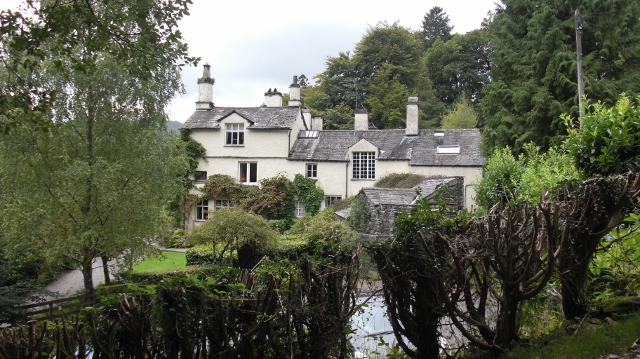
The Windermere Centre is a large house with a peaceful and friendly ambience. It is allied to the Gothic-style United Reform Church nearby. I was allocated a spacious family room with an armchair where I spent many fruitful hours of writing beside the open window overlooking the tiny garden.

We enjoyed a delicious, well presented meal: melon starter, roast beef and Yorkshire pud, and apple pie which melted in my mouth. The food is wonderful, and lovingly served. But my stomach wasn’t used to an evening meal, so I didn’t fall asleep until after midnight. I read and re-read a booklet of anecdotes picked from the bookshelf downstairs, which made me think. Our host had given us an impassioned history of the Centre, then he recited the Windermere Centre prayer, used for its dedication in 1986.

I resisted cooked breakfast on Monday but succumbed to porridge laced with prune juice.

No one was able to answer my question, which of the lakes were the setting for the Arthur Ransome stories? Was it Windermere or Coniston? It was such a long time since I’d read his books.

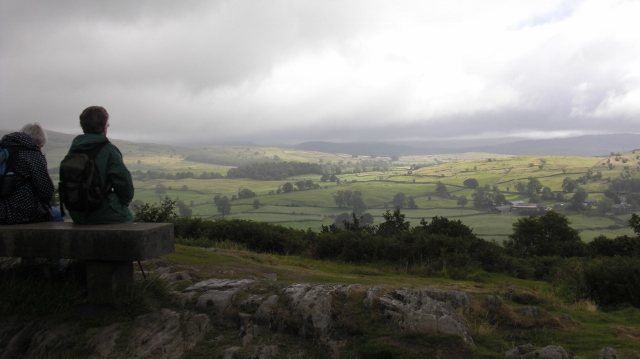
Our four mile morning walk took us up the road to Orrest Head, through Elleray Wood and on a steep climb to a breath-taking circular viewpoint – except, it was raining all the way, and the only visibility was a brief glimpse of sun on the Yorkshire moors to the east.
????????????????????????????????????

It was still raining as Julie led us back the long way round through emerald green fields bordered by stone walls and dotted with sheep.

??????????????????????

Back at the Orrest Head signpost we split up, and I headed for the station with a small group to enjoy delicious turkey and stuffing sandwiches. It was a sign of things to come – all our packed lunches were superb, we had different choices every day, and they even gave us one for our return journey at the end of the week.

The plan was to go on an exploratory walk round Windermere, but I cried off. My shirt was damp because I’d removed my mackintosh when sweating up the forest track in the rain, and I didn’t want to spoil my holiday by catching a chill. Now, I know people never “catch” chills – but I always do, so I am obviously not a proper person. I found my way back to the Centre (going wrong twice) for a hot shower, a cuppa tea and fruit cake left over from my lunch pack. Then another cuppa, and the Twix – also in the lunch pack – with an orange. This habit was to repeat itself every day of the holiday. No wonder I put on 5lbs.

Supper was early, a delicious starter of liver pate, then chicken breast, cheesy aubergine and courgettes – and tiramisu! Now I understand why travellers like to write about their food: there’s so much time to savour it, and when the cuisine is good, one can enthuse at will.

We trooped into the nearby church afterwards, impressive in its gothic simplicity, for a talk by Rev. Richard Church. He was sincere and honest, with delicious touches of humour. His ‘holiday photos’ were of a 33 day pilgrimage, walking and praying the Camino de Santiago  in northern Spain (I found this clip on the internet). We felt privileged to be there.

Steve and Jane showing us the way

An early start the next day for the Bowness Ferry crossing and a six mile walk up the hill, looking back over Lake Windermere. We passed a distinctive church on the way to Hill Top and Beatrix Potter House.
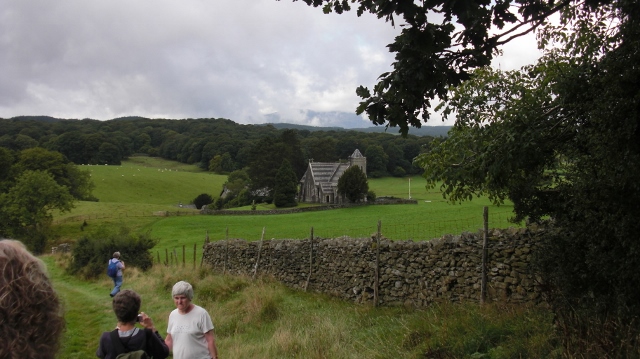
??????????????????????then onwards and upwards towards Claife Heights. It was a fine day through rolling green fields, dotted with sheep, as we trudged up a farm track to tiny Moss Eccles tarn, a jewel of a place, where Beatrix Potter would go of an evening with her husband.

Julie teetering over Ellis tarn

Another tarn revealed itself, Wise Een, with a breath-taking view to the mountains beyond. We sat on stony tufts to savour the idyllic scene and enjoy our second packed lunch.

?????????????

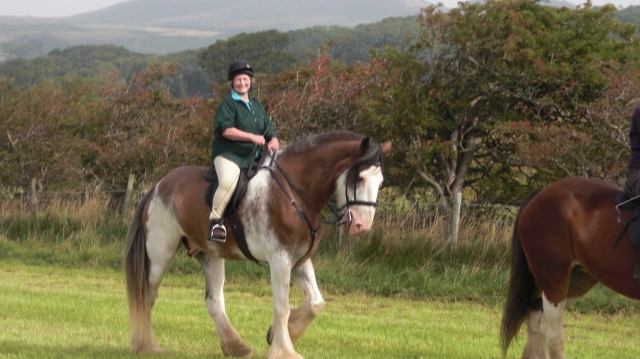
I had been looking forward to Wednesday all week. Tina and I drove the 50 mile round trip to Millom for two blissful hours of riding the farms on Cumbrian Heavy Horses – as seen on BBC’s Countryfile. Ollie, my 18 hands high Clydesdale was an utter joy to ride.
????????????

I’d never been on such a high horse before, and had to negotiate two steps onto a wooden platform in order to put my foot in the stirrup. I soon settled into his powerful, free going, and immensely long strides. We were broken in gently by individual walk, trot and canter exercises under Yvonne’s discerning eye. Then we had plenty of opportunities to canter, when Ollie would tense up with a squeal and a fart, before leading off. It was exhilarating to be back on a horse after four long years, but it was a very long way down when I dismounted.
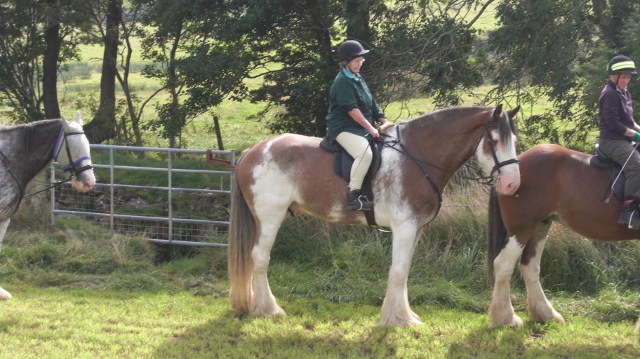
Contentment personified

Contentment personified

Thursday saw an arduous seven mile walk skirting round Lakes Rydal and Grasmere, up the hill along the Coffin Path, through woods and past a “penny tree” where we inserted copper coins. We hammered them firmly in, to the amusement of a passing Japanese couple.
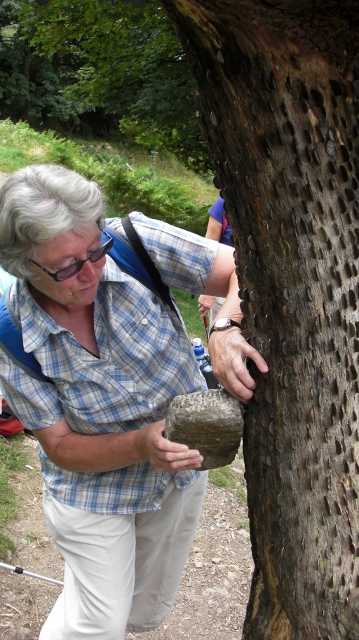
Wendy tapping in the Pennies

Wendy tapping in the Pennies

This is Wordsworth country, and we walked by his two houses before crossing the main road for the western route back to Grasmere village.
??????????????????

The hard stony paths played havoc with my feet and legs, and the trudge to find the loo after returning to the car park was agony.

I was almost too tired to clamber into the shower when we got back to the Centre, but after another delicious dinner, we could not resist the venting of good-natured spleen on each other over the deadly game of UNO.

Our final day was wet. We went to the Windermere Visitor Centre and I dallied in the shop while the others went on a boat ride. I found a colourful booklet that solved my problem over Swallows and Amazons. The answer was neither, and both. I flicked through the pages of photographs and sketches for an hour in full view of the lady behind the counter, and then felt I had to buy it. Then she offered me a first-edition autobiography of Arthur Ransome for £1 so I had a bargain after all. I’ve nearly finished it now, and think every student of Russian history should read it. Ransome was a respected foreign correspondent as well as author, and he gives an interesting eye-witness account of the start of the Russian Revolution.

It was a relaxed and fruitful day to round off a memorable week. I’d had opportunities to progress my new book, and the journey home was accomplished with a minimum of stress.

Posted in Travels | Tagged , , , , , | 3 Comments

That’s What Writers Do – They Write

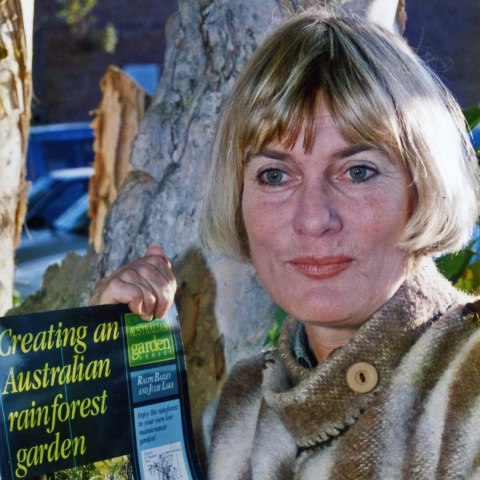
Jill Lake is a lady with a fascinating history. I wish I could meet her in real life, but am privileged to host her today – we found each other through Facebook, when she “Liked” my book Breath of Africa. You can find her review of it HERE.

I wrote my first book when I was eight years old and have been writing ever since.  That’s what writers do – they write.  Sounds like a truism I know, but I am forever encountering people who tell me they want to write a book and ask me how to go about it.  I have one simple answer for them: “Write!”.

I love to write.  It’s my pleasure as well as my work and I cannot imagine not doing it.  Those who don’t feel that are not “writers” in the truest sense of the word.  They are just occasional wayfarers along the long, hard road of writing for a living.

Like most would-be writers I became a journalist.  This honed my grammar and syntax, taught me to write succinctly (when necessary) and gave me sound, disciplined writing habits. Above all I learned to write what people wanted to read.  I became accustomed to accepting the criticism and taking the advice of editors – an important lesson for any writer to learn.  Then, when I became an editor myself, I taught the lessons I had learned to others.

In those days, journalists were not only expected to have good writing and editing skills, they were also expected to have a broad education in politics, current affairs, history and literature.  The newsroom and, particularly, the sub-editors’ desk, provided an erudite post-graduate education for young journos.  This all became obsolete with the advent first of visually-dependent television news and then the digitalisation of our society.  When I realised that “all the news that’s fit to print” had become “all the news that’s shit to print” I decided it was time for a career change!

Like many a journalist before me, too much exposure to the sad and seamy side of life had made me both cynical and disillusioned about people.  I desperately wanted to re-invent myself in some positive way and decided that the thing I loved most in life was plants – and growing them.  Plants make the world a more beautiful place and to devote oneself to learning more about them and sharing this knowledge with others seemed to offer a possibility of the life well-lived.   And so I studied horticulture, set up a consulting business and happily involved myself in all aspects of plant growing and marketing.  I also began writing about plants, first for horticultural industry magazines and then for the gardening public.  This was both fun and interesting and it took me all around the world.

Then one day I was asked to write a book about the horticultural/botanical area in
which I had decided to specialise – the rainforest  plants which have been my passion for more than 20 years now.  I was thrilled – I had a cupboard full of hopeful but unpublished novels and now a publisher – albeit a specialist publisher – was actually offering to publish a book that I hadn’t yet written!  Several other books followed, on general gardening subjects and a second book on rainforest plants.  They all sold modestly well but not enough to make a living so I continued to earn my bread-and-butter through magazine writing , plant photography, book editing and a bit of consulting.

One of the good things about being a published writer with a small but respectable readership is that you get asked to sit on committees, take part in forums, make guest appearances and give talks – and these can be surprisingly lucrative.  I never let a chance go by to talk about my favourite subject – and get paid for it!

The problem with gardening books is that, unlike cookery books, they don’t sell all that well.  And when they do sell, the author only gets a small part of the profit.  What’s more, gardening book publishers are generally rather conservative.  I’d shown quite a bit of flair in plant marketing and thought I’d bring this experience to the marketing  and promotion of my books.  Take a look at the cover of any gardening book and what do you see? – a plant!  Or perhaps a garden!   Booooring!  On the bookstand, your book looks like every other gardening book because a rose is a rose is a rose, as Gerty Stein so incomprehensibly put it.  Thus, when publishing my lovely big coffee table book Gardening in a Hot Climate  back in the 90s I wanted a bright, cartoonish sort of cover with a girl in a bikini lounging in a hammock under a palm tree, with a trowel in one hand and a piña colada in the other!  I knew it would attract attention on the bookstand – but my publishers (lovely people though they were) didn’t agree and though the book sold well enough (and I still get the public lending right fees from libraries even though it’s out of print) it could have sold a lot better if my idea had been used instead of a rather ordinary photograph of a clivia!

And then along came electronic reading and Amazon.  This is a perfect medium for gardening books because what readers/gardeners/consumers want is short, pithy, easy-to-read documents packed full of useful information.  So I came up with the GardenEzi method which offers a simple five step program for developing gardens or growing and caring for particular plants.  All my gardening books are written to this plan because I don’t actually write for gardeners.  Gardeners know it all anyway!  I write for ordinary consumers – homeowners who want attractive gardens but don’t actually enjoy gardening and don’t have the time for it anyway.  Of course, I am always trying subtly to get across the message that gardening is a wonderfully healthy, relaxing and creative activity because my secret aim is to turn gardening-haters into good gardeners!  The best way of doing this is to show them just how easy it all can be.

Having written gardening books for 20 years now, and with seven books now in e-format on Amazon, it’s hardly surprising that when I decided to try my hand at fiction again I put a garden firmly at the centre of my book A Garden in Africa.A Garden in Africa  This is a real garden that actually existed; a garden created out of sorrow and loneliness and betrayal.  It stands as a metaphor for the colonial experience in Kenya – first the taming of the wilderness  through sacrifice and hard work, then the years of flowering and abundance, then the loss of it all.  The garden, like Kenya’s colonial society, exists no more.  But as my grandmother – on whom this story is based – used to say: “A garden is an act of creation, not of completion”.  In this way, gardening is like writing, for a REAL writer it’s the doing that counts!

My latest book has nothing to do with gardening.  It’s a fictionalised account of the 19th century Australian explorer, pathfinder and sometime-outlaw Christie Palmerston – an enigmatic  figure with whom I fell in love a long time ago. In fact the original manuscript is one of those that has lain in the cupboard for years and I’m now reworking it in the light of my better knowledge and experience.  It does have some rainforest in it and the other lead character is a journalist so I’m not straying totally from my usual path.

Oh, and by the way, I still have that first book I wrote when I was eight.  It’s called Sadie and Dave On the Island    and is about two children who are shipwrecked on a South Pacific “desert” island.  Maybe I’ll try and rework that one, too, when I’ve used up all my other ideas!

You can find details of Jill’s Gardening books HERE

And you can find my review of Jill’s A Garden in Africa HERE.

Posted in Authors | Tagged , , , | 3 Comments

More Than a Lighthearted Bit of Fun

I just can’t wait to read Kathy Sharp’s first novel, Isle of Larus, reputed to be “a lighthearted bit of whimsical fun.”

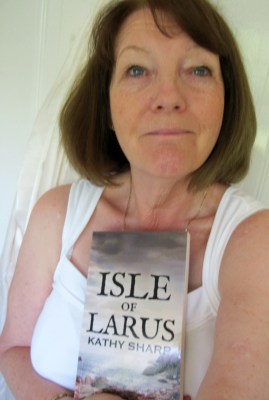
KSharpwithbookKathy is a fellow member of the diverse Crooked Cat community.

“Thank you very much, Jane, I’m thrilled to be here.”

Tell us a bit about yourself, and how you became a writer.

My mother didn’t mention that I was born with a pen in my hand, but I think there’s a strong likelihood of it! The need to write seems to be built into the DNA somehow. But marriage, motherhood and work all conspired to slow me down. It’s only in the last few years that I’ve finally had the time and opportunity to explore different forms of writing fully.

You sound sooo like me, Kathy! What prompted you to write Isle of Larus, and how long did it take to write?

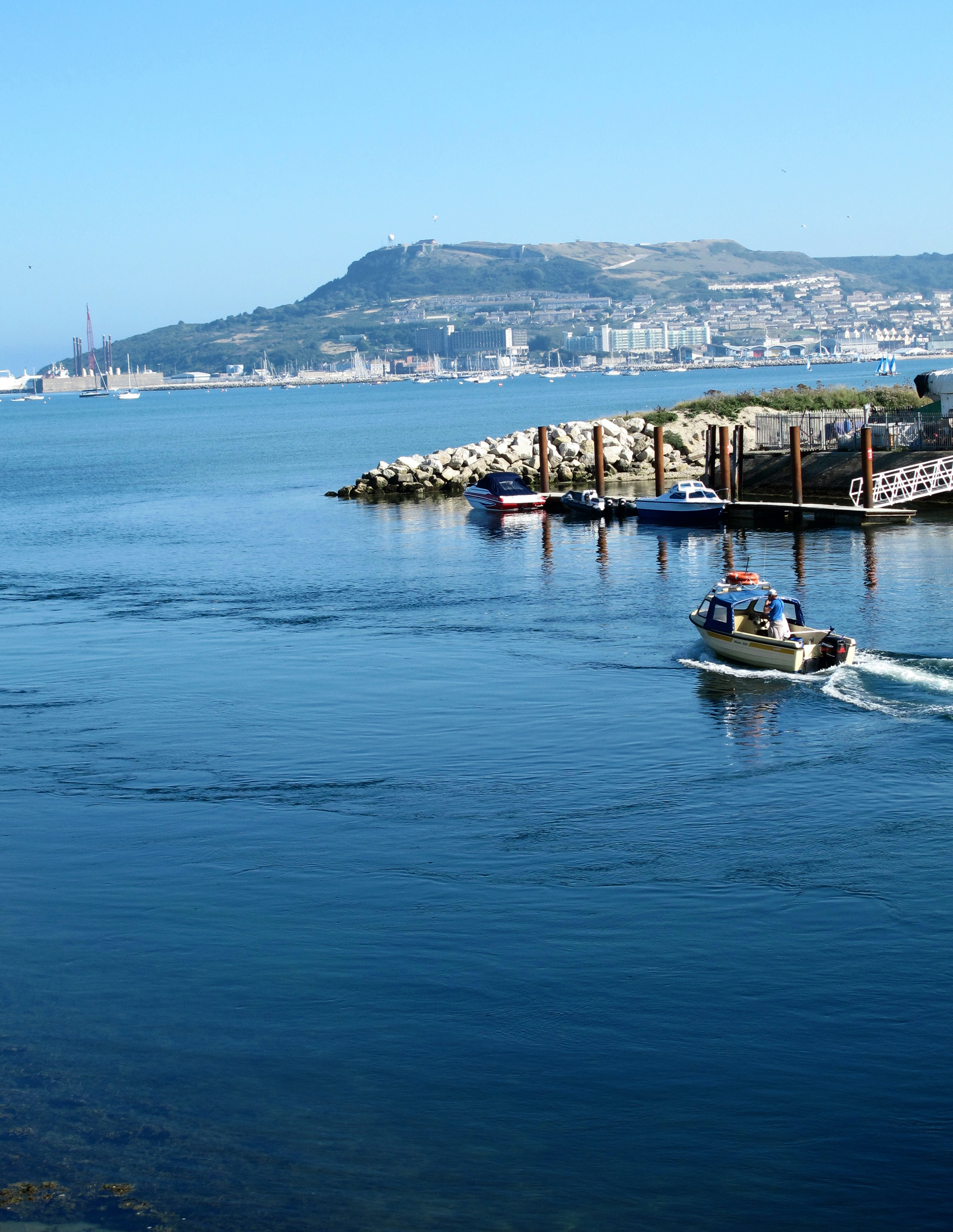
KSharpPortlandView

Portland view

The main inspiration was the fabulous landscape of the Jurassic Coast, where I am fortunate enough to live. The first idea came from a writing exercise I was doing with a newly-formed writing group in Weymouth – writing from the point of view of a building or inanimate object. I found this an excellent way to create characters. It was the way into fiction writing for me, and suddenly my head was full of ideas. You could say the characters of Isle of Larus literally grew out of the landscape. Seven months later I had a completed novel.

What made you decide to write a humorous book?

I’m not sure I did set out to do that, Jane. It’s just the way my writing tends to turn out. I have always used humour as a way of coping with the ups and downs of life, so it felt quite natural to have a giggle or two at my characters’ expense as they coped with unexpected and mysterious goings-on.

I wish I’d had time to read Isle of Larus before this interview – but it is on my to-buy list. Might you describe the kind of readership who would most appreciate it?

This is a very interesting question, and one I sincerely wish I’d considered before I began writing! The book is, as they say, genre-defying. I threw in all my favourite themes – islands, the sea, boats, mysteries to be solved, self-discovery, dramatic events, adventure, gentle humour and a touch of the supernatural, all set in an imaginary past. It’s a fantasy of a sort, but not at all typical, and very difficult to pigeonhole into a genre. My best guess is that readers who enjoy mysteries in a historical setting with a touch of humour would be the natural readership. But it’s just a guess.

Is this going to be the first of a series, or will you try new genres?

I’d very much like it to be the first of a series – the second book is well on its way. I don’t rule out the idea of other genres, though. I’ve had ideas for stories set in and around the first world war that I might develop further. Perhaps the historical novel is my proper genre, and I’ve simply slipped into fantasy by accident!

 What books / authors / people have most influenced / helped you in your writing?

I have been influenced by a considerable range of books and authors – though the unlikely combination of Patrick O’Brian and J K Rowling comes to mind first. The biggest help, without any doubt, was the Weymouth Writing Matters group, and after that the Dorset Writers’ Network. There were people in these groups who listened, who encouraged, who said of course you can write fiction, when I had my doubts. Isle of Larus would not have happened without them.

 What was the most surprising thing you learned in creating your book?

I learned a great deal from it. I certainly hadn’t expected to enjoy creating complex plots and have so much fun devising ways to tie up loose ends. The answers were usually in something I’d already written. I seemed to have already provided the solution to a problem that I hadn’t yet identified. Weird, isn’t it?

 I understand that you sing in a choir, and write lyrics. Ever thought of writing poetry?

Yes – another benefit of the writers’ group. We went through a phase of studying a variety of verse forms, and tried out sonnets, triolets, alphapoems, haiku, villanelles, pantoums, form poems and all sorts of others. The restrictions in construction or rhyme pattern concentrate the mind wonderfully, I find. It’s an excellent way to learn more about writing, even if you don’t see yourself as a poet. Some of my poems were set to music and became song lyrics, too. Double value for the time invested!

KSharpSeaPoppy

Sea Poppy

What is your favourite pastime?

I love plants. All kinds. Weed or treasured cultivar, I admire them all. I enjoy studying and photographing them, or just gazing at them in disbelieving admiration. There you have it.


How did you find Crooked Cat?

276719_301592883274755_578428817_n

I didn’t. A friend from my writers’ group saw they were open for submissions and told me to jump to it and get my synopsis sorted out since Crooked Cat was clearly the perfect publisher for me. So I did. I’m eternally grateful to her. A splendid example of the power of networking, isn’t it?

Isle of Larus is published by Crooked Cat Publishing and is available in paperback or e-book format at Amazon:

You can also read Kathy’s regular Monday blog on Goodreads

Or find her on Facebook


Posted in Authors | Tagged , , | Comments Off on More Than a Lighthearted Bit of Fun

A Formidable Lady with many Personas

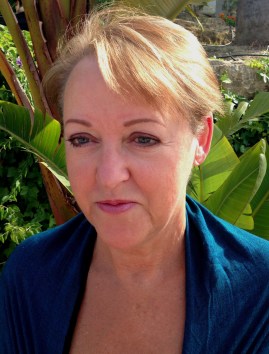
Today I am honoured to host Frances di Plino, a formidable lady with many personas in the literary world. At last she has unearthed for me the secret behind finishing a book.

Lorraine Mace, Frances di Plino

Would you care to give an order of preference between your many personas – as Frances di Plino, the writer of dark psychological fiction; as Lorraine Mace, the gentler, humorous creature who can turn her hand to women’s fiction, poetry or photo features; and finally as the educator, tutor and adjudicator. Have I missed anything?

Yes, as Lorraine, I am also the author of children’s novels. My debut in this genre will be published in America in April 2014. It’s because I also write for children that I use a pen name for my crime thrillers. I feel it’s important to keep the two personas completely separate.

I also run my own critique service and am the founder of, a competition site with three categories: flash fiction, humour verse and novel openings.

I normally shy away from dark thrillers, and the first chapter of Bad Moon Rising nearly sent me cowering into a corner. But I persevered, and even wrote a 5* review. How long did it take you to write the book from conception to the finished product?

Lorraine Mace Bad Moon Rising

Bad Moon Rising was my first attempt at a novel. It was conceived as an idea about ten years ago. I committed the standard mistake of polishing, rewriting and rethinking the opening chapters, instead of getting on and finishing the story. I played around like this for about six years, never getting beyond chapter seven. Then one day I decided enough was enough, it was time to write the rest, which I did in four months!

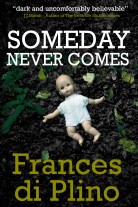
The second in the DI Paulo Storey series Someday Never Comes, has recently been launched (16th August). Was it easier/quicker to write?

Yes, Someday Never Comes was much easier to write because my main characters were already established. Also, over the intervening years since I started my novel writing career, I have finished several books, so I am better at simply getting on with things instead of trying to perfect the opening chapters.

How many more in the series do you plan to write? Is your “dark side” going to be satiated, or will it feed on itself, do you think?

I have the plots in outline for at least two more. The first of these, Call it Pretending, is already half written. After the next two, who knows? I think I’ll let the characters decide if they want another outing.

Are you going to try any more genres?

I have a literary novel I work on in between my other projects. This one is set partly in the present day and partly in occupied France during World War II.

Would you consider using a short story as the skeleton for a novel?

Funnily enough, that is exactly how the literary novel started out. I wrote a short story from the point of view of a woman whose father had betrayed her Resistance mother to the Gestapo. The story was published in The New Writer magazine and I thought that was it, done and dusted, but Jean-Claude, the father, came to life in my head and demanded that I tell his side of the story.

The novel, working title of La Putain Anglaise, uses two points of view to gradually unfold the truth hidden in the past. At least, it will if I can find time to finish it!

What has been your experience of on-line peer review websites? Would you recommend them?

Yes, absolutely! However, each writer has to find the right site. I have been a member of various sites over the years, moving along as my needs changed. For beginner writers, peer feedback is invaluable, but as writers progress they might find they are more in need of a smaller critique group – one where the feedback is more robust.

What is your most satisfying achievement so far?

In real life? Being a mother. In my writing life? That is so difficult to answer. I am very fortunate in that I have been successful in many writing fields. For poetry, it was flying over to London to attend an awards ceremony at the Canadian Embassy when I won an international competition. For non-fiction: two things, being given my first column and having my first non-fiction book published. For fiction: I’m very proud of my D.I. Paolo Storey novels, but also can’t wait to see my children’s novel in print.

Who is your favourite author?

Terry Pratchett – I love his Discworld series. It’s clever, funny and holds a mirror up to human nature.

How did you find Crooked Cat?

276719_301592883274755_578428817_nA writing friend told me about Crooked Cat Publishing and suggested I submit Bad Moon Rising. I did and it was accepted. I don’t think I could possibly have found a better place for my debut, as the editorial feedback and support was excellent.

Someday Never Comes – the second in the D.I. Paolo Storey Crime Series

Lorraine Mace Someday Never Comes

Has Detective Inspector Paolo Storey come up against a criminal he cannot defeat? Paolo is determined to shut down the syndicate flooding Bradchester’s streets with young prostitutes. When a child is murdered, Paolo becomes aware of a sinister network of abusers spread across Europe, and spanning all levels of society. But Joey, the shadowy leader of the gang, always seems to be one step ahead in the chase.

“dark and uncomfortably believable.” JJ Marsh, author of the Beatrice Stubbs Series

Frances di Plino is the pen name of Lorraine Mace, humour columnist for Writing Magazine and competition judge for Writers’ Forum. She is a tutor for the Writers Bureau, and author of the Writers Bureau course, Marketing Your Book. She is co-author, with Maureen Vincent-Northam of The Writer’s ABC Checklist (Accent Press). Lorraine runs a private critique service for writers and is founder of the Flash 500 competitions for short fiction, humour verse and novel openings.

Website: http://www.lorrainemace.com/


Posted in Authors | Tagged , | 3 Comments

Other Worlds Through Other Eyes

I am privileged to host a valued friend and distinguished Historian Dr. Mark Patton, today.  An erudite academic, Mark presents an intriguing insight into the machinations of writing a historical novel.

MarkPatton

Voice and Setting in Historical Fiction.

As a writer of historical novels, I take it for granted that my readers want me to take them on an imagined journey through a distant land: a land that may well be distant in terms of space (I’d like my books to be enjoyed by readers all over the world), but which is, by definition, distant in time. More than that, I will try to show that world to the reader not through my own eyes (I do that when I write non-fiction), but through those of someone living at the time. I must first imagine myself into that position, rather like an actor imagining myself into a role.

How would such a person see and understand his or her world? What metaphors and similes would come naturally to him or her? How would he or she classify things? If I am writing about the 19th Century or the 18th Century, I would certainly look for clues in the works of George Eliot or Daniel Defoe. When I write about Roman times, I have fewer sources to guide me, and when I write about prehistoric times, I have none. Where, then, do I start?

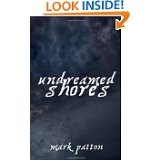
Undreamed Shores, my first novel, set in 2400 BC, opens like this:

On a warm afternoon in the Month of Bluebells, four boats slipped from the white sand into the turquoise sea.”

MarkP Bluebells on Sark

Bluebells on the Island of Sark

Why “the Month of Bluebells?” Well, we don’t know how Bronze Age people divided up the seasons. “Months” are likely to have been related to the waxing and waning of the moon and, thinking about the Channel Islands, where both I and my protagonist grew up, bluebells are one of the most noticeable aspects of the month we call May. Hence, the Month of Bluebells. One has to be careful: I originally planned to use “the Month of Snowdrops” for February, until further research revealed that snowdrops were introduced much, much later.

The novel ends like this:

On a bright afternoon in the Month of Ground-Roses, four boats slipped from the golden sand into the turquoise sea.”

The device of linking a book’s opening and closing lines is a tried and tested one, probably used by story-tellers back in the days of woolly mammoths, but why has the white sand become “golden?” At the beginning of the book, my protagonist, Amzai, has no knowledge of metals. During the course of his journey he is introduced to gold and learns how to work it. “Gold” has become part of his consciousness, and he can use it as a metaphor as well as making it into jewellery.

MarkP Hair Clasps

A gold hair-clasp of c2400 BC (the first metal object Amzai has ever seen)

Amzai’s journey takes him to a land that lies beyond what he has believed to be the limits of the world. To make sense of that world, and survive in it, he has had to master two languages that are entirely new to him. I have tried to imagine how this process would have seen to him:

A thought flashed in Amzai’s mind like a spark catching on dry tinder. Jusip spoke differently from Nanti…Nanti’s voice rose and fell like the song of a blackbird, full of soft “ssshu” and rounded “orr” sounds, like water flowing over pebbles or boiling gently over a fire. Jusip’s was more guttural, with hard “kke” and “gge” and “hle” sounds, like the chattering of starlings, or the sound of grain being ground in a quern.

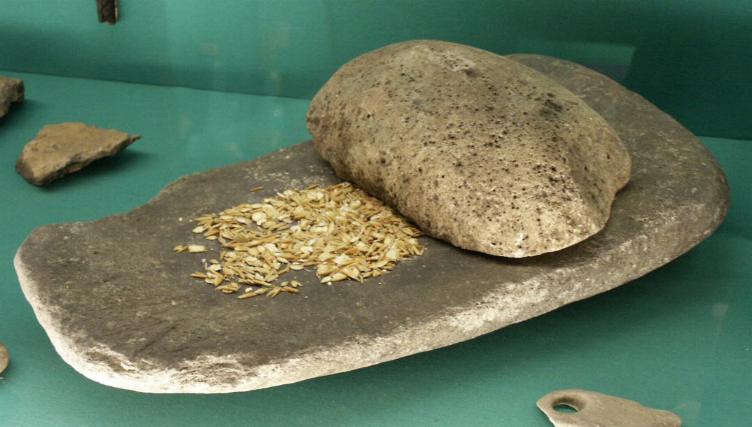
A stone quern for the grinding of wheat and barley.

Birdsong would have been far more noticeable in a world without cars, planes or even the neighing of horses. Any child old enough to be able to walk and talk is likely also to have been skilled at the most basic of tasks: the tending of fires and the grinding of grain for bread.

In the process of imagining this world, I found myself drawing on an extraordinary range of my own life experiences: from youthful nature rambles and camping expeditions; to sailing and swimming in the English Channel; to my more recent attempts at making myself understood in countries where I don’t speak the language. I also walked the route followed by Amzai from Abbotsbury in Dorset to Stonehenge, making notes on everything I saw, heard, felt, smelled and tasted, and all the time asking myself how Amzai’s perceptions of them might have differed from my own.

Mark Patton’s novels are published by Crooked Cat Publications. Further information can be found on his website (www.mark-patton.co.uk) and blog (http://mark-patton.blogspot.co.uk).

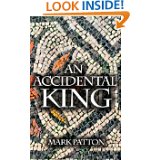
An Accidental Kind Undreamed shores

You can find my review of his excellent first novel, Undreamed Shores, HERE (Sorry – you need to scroll down to the second bottom of the list!)

Posted in Authors | Tagged , , , , , , | Comments Off on Other Worlds Through Other Eyes

One More One More

If you love London, and are uplifted by soaring poetic prose, then WATCHING SWIFTS is for you. Even if, like me, you dont know London, you will be carried away by the magical quality of this little book, which should be on everybody’s shelf. Here is a foretaste into its making from the author himself:

RonAskew (2)

Ron Askew – indie author of WATCHING SWIFTS a contempory fiction set in London’s Kew Gardens

One more tweet. One more try. One more one more.Such is the life of the indie author, living in hope.One more one more. It’s a way of life: long hope, short luck, long dreams, short success. Never knowing when we’re done. Never seeing how we are. Never able to face the truth.So, mirror, mirror on the net, show me truth is here well met.Hi! Who am I? A man. A bag of this n that’s. The same as you in all that counts. I read. I write. I sleep and snore. I like porridge. I hate porridge. I have a small shifting hiatus hernia. and the middle nail on my right foot has a split personality. I’m writing this on a train between St.Albans and St.Pancras.

I wrote my refusnik donkey of a novella Watching Swifts in 2000 or 2001. I was stuck in the orbit of a certain proud intellect (English, Jesus College, Oxford) a super-uber-realist who steadfastly refused to follow her vibrant creative spark, who simply refused to play, having decided she was not good enough.

Such folk are black holes. All goes in, nought comes out. Most of us suffer one.

In a bit to escape said black hole’s dismal gravity, I wrote Watching Swifts as a homage to the power of dreams and beauty.

Life demands we dream because dreams inspire us to create and achieve. This is what life wants. It is how we are. A dreamless life is a poor life.

Super-uber-realists are sperm who refuse to swim, duds, inert.

We indie authors – hurrah! hurrah! – are nature’s natural swimmers. Backstrokes, Ozzy crawlers, frog-kicking butterfliers,
Old English sidestrokers, we soooo swim. God, how we do SWIM! Millions of us, keystroking our lives through the creative waters.

I have The Prodigy, HOT RIDE, blasting my brains out as I write. The lyrics are soooo indie author: “You’ve gotta push it, push it. You’ve gotta push it. Up, up, and wasy, y’hear me!”

Ach, and now Foreigner’s URGENT’S on my mind.. “I know what I need and I need it now. Urgenttttt, so urgennnntttttt! Emer-gen-ceeeeee!”

We emerging indie authors are the emergcen-cy, following our sparks for all we’re worth.

This is brilliant. We are in an exciting time. It is brilliant. I love it. I love reading new stuff. I love seeing people go for it. Old publishing is like some old skin and we, The Emergent, are sloughing it off. And it feels great.

Whoa boy!

Time for a little calming meditation: be still .. join with all .. feel new goodness flow throughout .. give anew .. be true.
One more one more. It’s how we The Emergent are, deluded dreamers, creative to a fault perfected.
So, a billion writers hit ‘upload’, and another billion stories hit the .. What? What becomes of all those words, hopes, hours, days, weeks, months,years, decades of work, life?

Most die, are lost, fail, as if they never were. And yet, if you pause for a moment here.. Listen .. Can you hear it? The sound of another billion writers around this globe keystroking away. There is a beauty in this instinct to create. It is how we humans are. It is part of what defines us. To create, to try, a collective dream.

The first billion writers meanwhile, are tweeting their hearts out: “36th 5* review #bestseller #freebie. The universe just isn’t big enough for all the tweets. It’s “only words”, I’m told. I don’t think so. Tis something more.

There is a joy in language, in being in it, as we writers are. We are lucky in that at least, because language.. Language is at the essence of what we are, what life in us is, how life expresses itself. Imagine your life without language. Imagine your English is stripped from you. Of course this happens to many of us as we grow old. But for now, while we can, we who are creatively alive follow our destinies as best we can. For the joy of it. That is what this is all about, this writing malarky, the joy of it, not sales figures, 190,000 downloads, but the joy of that moment when something happens within us. Joy. Joy. Joy, me loves!

That said. We are also slaves to the chain of demand, readers. *bows to lick reader’s ankle – no reader knowingly unlicked*

Dearest readerkins, what do you want today? Please would you tell your Golumsy here. Please o please, won’t you tellsy-wellsy me..

Silencio.

The readers are not for saying what they want because they don’t know until they have it.

That said I am a reader, too, a great reader in that I read a great deal. So what do I want? A book like Watching Swifts of course, me loves, that’s what I wants, a novella. Why because I love novellas, little big books: THE GREAT GATSBY, BREAKFAST AT TIFFANY’S, A DAY IN THE LIFE OF IVAN DENISOVICH, THE OLD MAN AND THE SEA.

Old publishing and its retainers tell me that novellas are just not what agents and publishers want, dahling. I tweet you not, I have been told, in The Groucho Club no less, at the very core of London’s establishment. In the Mary Lou room to be exact. “Agents and publishers will not want a 44,000 worder.” That is what I was told. In other words, “Naff off and die, you worm.”

What do you think? Should we naff off and die? Or should we do a creative writing course and turn ourselves into yet another bland-brand wannabe old publishing style numpty-dumpty?

So here we my bruvs, deep in the Indie Authors’ Cage Fight, deep in the raw talent reactor of creativity, slugging away for all we are worth. No rules. No referees. Milling around up to our waists in talent, beautiful talent. Trying not to have our lungs sucked out of our chests by obsessive compulsive killer winners. You know the archetype, nine-tenths determination, one-tenth essence of evil. Trying, trying, o so trying.

No one knows who runs the gig, why it is as it is, where it’s going. All we know is that we are in the midst of it, loving it, living it, that we are primal parts of something big, bold and beauteously wild. Some die, some fly, some kill, some thrill, all made the more alive for being in this moshing mill of hopes and dreams emergent hot.

I tweet you not, THIS! it what it is to be an indie author bigging it up in search of eyes, eyes, eyes, eyes. Sighs.
And should we ever be lucky enough to find ourselves out in space, out on the wing, with a ball of swirling, whirling words a-hurtling towards our inky hands.. with a gap up ahead and a view of the line.. Should it fall to us to make the catch of our lives, to run, faster, to run, faster! faster! than the chasing pack.. to hurl ourselves across said line.. to slam our word-catch down with all our might, secure in the primal certitude that we were born to write and win.. Should we ever..

Until then: one more one more. And you will find my novella, a damn fine novella, at ..

Watching Swifts
Ron Askew *bows*
Ron’s website: http://rjaskew.com
Related articles
Posted in Authors | Tagged , , , , , , , , | 2 Comments

The DI Frank Lyle Mystery series.

Another Authonomy friend takes my guest spot today. She wishes to hide behind her pen-name, so I left it to Juliet B. Madison to decide the format. She has treated us with a Q & A session on her popular mystery series.

 What made you decide to write crime fiction?

Juliet B Madison:  It’s one of the most popular fiction genres. I have read virtually nothing else for years so I decided to have a go and see if I could pull it off myself.

What do you think makes DI Frank Lyle different from other detectives in the genre?

Juliet B Madison:  Frank Lyle may have a broken marriage behind him; like so many fictional detective’s wives Frank’s ex wife, Sarah, got sick of coming second place to the job. But he doesn’t have problems with alcohol or recreational drugs or a prescription drug addiction. Frank is not a maverick though, he tries not to break the rules and gets results by toeing the thin blue line. He has a passionate commitment to justice and the truth. He also believes that murder victims lose their dignity in the manner of their death, however it was carried out so he insists on the victim always being referred to by their real name wherever possible. Frank also gets on well with his senior and junior colleagues and has a real love for his family and friends. He isn’t a lone wolf; he values his team and their contributions to whatever case he happens to be working.

What are DI Lyle’s passions and pet-hates?

Juliet B Madison: Frank loves his son, James. He is also rather partial to the music of folk singer Joan Baez, especially her 1975 Diamonds & Rust album.  He hates injustice and those who exploit others for personal gain, whether it be financial or sexual. He also hates corruption.

What do you think are the hardest lessons Frank will learn during the series?

Juliet B Madison:  In the first book, Second Chances, Frank learns about the pain of personal and professional loss. He also learns that following your gut instincts doesn’t always prove right. In the second novel, Heir to Misfortune (my current WIP) he learns that things are not always what they seem so nothing can be taken for granted.

How many books do you plan to write in the DI Frank Lyle series?

Juliet B Madison: (laughs) I’ll keep writing until people either get fed up, the series gets stale or I run out of ideas, whichever comes first.

When will Heir to Misfortune (the second DI Frank Lyle mystery) become available?

Juliet B MadisonI’m not sure yet. I am aiming for the end of the summer but why put unnecessary constraints on myself since I have to sacrifice a large part of my weekday evenings to a yawn-fest office cleaning job.

Can you tell us a little bit about Heir to Misfortune?

Juliet B MadisonHeir to Misfortune is set around Christmas 1990 with the discovery of a body by two beat coppers. The victim appears to have been a vagrant but subsequent enquiries reveal he is actually the young heir to a corporate fortune and he appears to have been blackmailing a prominent local politician. Enough said for now. You will have to wait but if you can’t then you can read the prologue and first 8 chapters on Authonomy.

Have you had to do much research so far?

Juliet B Madison:  I have had to research coroner’s inquests, post- mortems (autopsies) and determining time of death. There is also detail in Second Chances about Type 1(Insulin Dependent) Diabetes but after nearly 34 years of living with the condition I think I am pretty accurate on that score. I also had to do some research on the Hindu faith and for that I turned to my good friend, Malika Gandhi.

Other than DI Frank Lyle who are your favourite and least favourite police characters in the series so far?

Juliet B MadisonI like Detective Sergeant Andrew Redfern but we don’t meet him until the second half of the first book. I think my least favourite police character is Assistant Chief Constable John Henderson because I believe he punishes Lyle unfairly.

Who are your favourite and least favourite civilian characters?

Juliet B Madison:  My favourites are Frank’s son, James, and Fiona Harper, the best friend of the two girls who get murdered. My least favourite is Suzanne Wilson, the stepmother of Fiona’s friend, Becky, as she is totally self absorbed to the point of failing to provide any form of emotional support to her stepdaughter whose best friend has just been murdered.

Finally, who would be your ideal casting couch choice for the role of DI Frank Lyle?

Juliet B Madison:  My ideal choice would be British actor Robert Bathurst, star of Cold Feet, Downton Abbey and comedy series Joking Apart. I especially loved his portrayal of British Vet Ed lynch in series 7 of Wild at Heart.

Second Chances is also available on Lulu.

Juliet may be contacted on Twitter: @JulietBMadison

You can find out more from her website:  http://julietmadisoncrimeauthor.wordpress.com/second-chances/

And request an Authorgraph here: http://www.authorgraph.com/authors/JulietBMadison

Posted in Authors | Tagged , , , | 1 Comment

Curiosity – The Simple Answer

I was privileged to meet Kim Walker at our Crooked Cat get-together in Edinburgh last month. I only wish we’d had more time to get to know each other, especially as our taste in books is similar.

Tell us a bit about yourself and how you became a writer.

I was born and raised in the USA but met and married my English husband in 1977. We’ve lived in Yorkshire ever since.

Writing has always been a pleasure/compulsion for me, taking different forms through my life, as time allowed, but I never thought I could be an “author”. My memoir demanded to be written, though, and when I had the opportunity to have-a-go, I grabbed it with both hands.

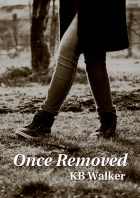
What prompted you to write your wonderful poignant story, “Once Removed”?

Image

Curiosity is the simple answer. I wanted to know what would bring someone to self-harm and what people who care can do to help. The novel grew out of my research.

What books / authors have most influenced you in your writing?

I’m an avid reader across a wide range of genres so this is a very difficult question. Jodi Picoult has certainly been an influence. Her books tend to feature challenging social issues and I love the way she’ll lead me down one path of opinion then rip the rug out from under me by presenting another facet that is equally persuasive.

I like books that take me to new places/understanding, books that challenge me with characters that I care about. I loved John Green’s The Fault in our Stars, Annabel Pitcher’s My Sister Lives on the Mantlepiece, Gavin Extence’s The Universe Verses Alex Woods, Barbara Kingsolver’s Poisonwood Bible and Khaled Hosseini’s Thousand Splendid Suns just to name a tiny few.

Would you care to describe the differences between living in the US as you knew it, and the Yorkshire moors?

This is an interesting question because I lived my childhood in the States but my adulthood in England so I find it very hard to compare the two. My daughter-in-law is Finnish and we have fun talking about the differences between the three countries. The similarities are also striking. For example, mothers across the world teach their children things like, “If you don’t have anything nice to say, don’t say anything at all.”

You have had prolific success as an author. What do you enjoy writing most – autobiography, novel, short stories, articles.

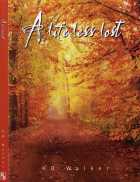
Image

My memoir, A Life Less Lost, wrote itself although I had much to learn and took five years redrafting and redrafting until it was good enough to share with others. Short stories and articles are a good vehicle for learning writing skills and I’ve been lucky to have a few published. A friend and I co-wrote a couple of radio plays, which was great fun. They didn’t make it onto the airwaves but may end up as novels. I enjoy writing poetry but my real passion is novels because they are what I read most.

Are you going to try anything new? Like to give us an insight into your typical day at the office?

I’ve started two novels but have taken the summer off from writing. Normally, I spend the morning at my computer and the rest of the day out in the real world. I’m a keen gardener (fruit and veg), help my husband doing up old houses for resale, tripping off, walking the dog, badminton and crafts (sewing, knitting, crocheting unusual things).

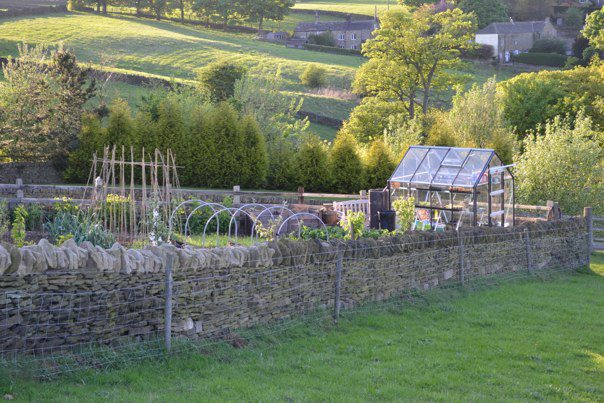
This is my veg plot! I can’t imagine a more wonderful place to spend time.

Kim's veg patch

What books would you take with you on holiday?

Whatever takes my interest, things recommended by friends, magazines, Amazon, Goodreads. I’ve read a fair few of the books published by Crooked Cat. They have a good eye for engaging stories.

How did you find Crooked Cat?

A friend recommended I have a look at Crooked Cat when Once Removed was ready for submission and I was impressed from the start by their openness and professionalism. They have exceeded my expectations and I’m happy to recommend their books to reader friends and their company to author friends.

I love the name of Kim’s Blog, Nuts and Crisps 

276719_301592883274755_578428817_n

Posted in Authors | Tagged , , , , | 1 Comment

It’s quite something to be compared with Doris Lessing

Two Reviewers have mentioned BREATH OF AFRICA in connection with Doris Lessing, Nobel Prizewinner for Literature, 2007.

Image

5.0 out of 5 stars A book of breath-taking scope, 18 Jun 2013

This review is from: Breath of Africa (Paperback)

This is a book of breath-taking scope, spanning three decades. The story of a group of friends and their complex and interwoven personal lives is set against the backdrop of the momentous political upheavals of Kenya in the second half of the Twentieth Century in a way that, for me, recalls Doris Lessing’s masterpiece, “The Golden Notebook.” Bwye also has something of Lessing’s talent for evoking the physical landscape of Africa, counter-balancing its permanence with the changeability of the human institutions and relationships that exist within it. The book addresses serious themes (colonialism and its inheritance; the the interaction of expatriate and indigenous communities; the plight of the individual caught up in the sweep of history), but it does so with a lightness of touch that comes from being anchored in the experiences of the characters and, most of all, rooted in a deep love and profound understanding of a particular place.

***
5.0 out of 5 stars Gets in your blood, 15 July 2013
This review is from: Breath of Africa (Paperback)

I fell in love with the continent of Africa as an adolescent and was fortunate to visit a couple of countries some years back. Africa definitely gets in your blood. And this is clearly evinced by Jane Bwye’s book. Spanning almost thirty years, this novel follows the trials and tribulations of Caroline, a girl from a privileged background in Kenya. Her childhood with best friend Teresa is scarred by the State of Emergency that existed due to the Mau Mau uprising. Two other significant characters are Charles Ondiek, a farm labourer who aspires to study in Oxford and Mwangi, a wielder of effective black magic curses. Interwoven in the story is Kenya’s transition to independence under Jomo Kenyatta.
`The great canopy of sky overwhelmed her; she breathed in deeply, savouring the immensity of the scene. The breath of Africa filled her being. This was her country, her home.’ This quotation comes from p92 – but the breath of Africa permeates the entire book and certainly reminds me of Doris Lessing’s The Grass is Singing in the depth of feeling by Jane Bwye for the dark continent.
Despite tragedy and disappointments, Caroline survives, an excellent example of fortitude in an uncertain world.
Breath of Africa is a novel of recent history that sheds light on the place and the period. There’s a useful glossary at the back.

Posted in Breath of Africa | Tagged , , , | 1 Comment

Vying for That 10th Spot

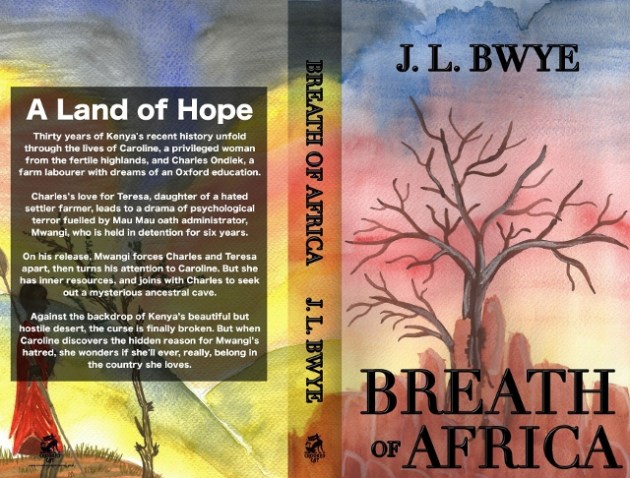
There’s a whole new world out there, and I’m not sure that I want to venture that far. But BREATH OF AFRICA is drawing me inexorably into the unknown. Don’t know whether at my ripe old age I’ll be able to keep the pace…

Excitement has been intense since the news of my book’s nomination for The Guardian First Book Award 2013.

Guardian First Book Award

My Author Page (Please, Oh please just go HERE and “Like” it? I still don’t entirely understand all the implications, but I’m assured it is important to gain as many “Likes” as possible. It’s all to do with Reach!)

What was I saying? Oh – the announcement on my Author Page achieved a Reach of over 1,000 people in the space of a week – such is the power of the internet. (Wish that could have translated into book sales, but if wishes were horses…)

But I digress. Back to that literary prize, pricking like a far off beacon in the fog. Mine is only a nomination, for the 10th spot, on the shortlist. The first nine have already been allocated – by the big publishers way out of Crooked Cat league.

The 10th spot is special. Through their website on 1st July, The Guardian called for nominations to be submitted by 14th July. They were especially looking for books from small Independent publishing houses who can’t afford the immense cost of vying for literary prizes. On the 15th July my publishers announced that Breath of Africa, and A guide to Becoming Distinctly Average had been nominated, and they were submitting copies to be assessed for a short list. My heart leapt, but my mind was far behind. I sent profuse thanks to Crooked Cat.

Oh no – they said – only the big publishers are asked to put forward their books. It wasn’t them who made the nomination. Must have been one of my reviewers. I still have no idea who it was.

These people in high places work fast. By 1st August, the short list will be decided. Will I make it? Will my heart survive the suspense? I’m glad there’s only a week to go. But it’s really only the long list … That final short list won’t be announced until November.

Meanwhile my wonderful friends are going bananas. Joyous expletives, exclamations of delight and ‘I’m not surprised;’ refined congratulations. Some scrambles to buy. Cries from countries far afield: ‘we’re still waiting to read your book – it’s not in the shops!’

But that’s another story –

276719_301592883274755_578428817_n

Posted in Breath of Africa | Tagged , , , , , , | Comments Off on Vying for That 10th Spot